
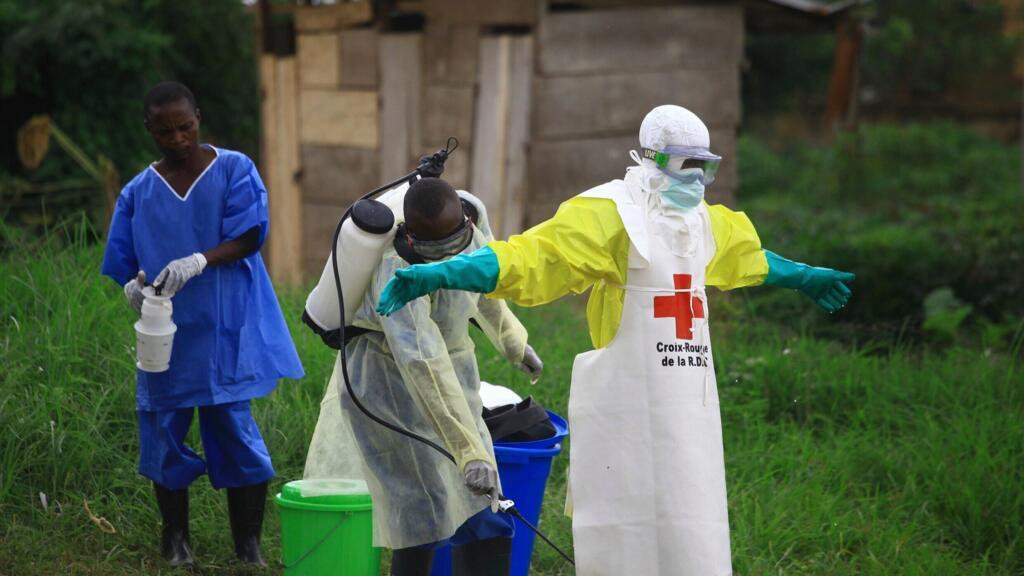


A fresh Ebola outbreak in the Democratic Republic of the Congo has killed at least 80 people, with health authorities warning that the virus strain involved has no approved vaccine or targeted treatment.
The outbreak, caused by the Bundibugyo strain of Ebola, has triggered alarm across Central Africa due to its high fatality rate and the risk of cross-border transmission into neighbouring countries.
Speaking at a press briefing in Kinshasa on Saturday, DR Congo Health Minister Samuel-Roger Kamba said the outbreak posed a serious threat.
“The Bundibugyo strain has no vaccine, no specific treatment,” Kamba said, adding that the strain carries a “very high lethality rate” that can reach up to 50 percent.
Death Toll Rises Rapidly
Health officials confirmed that the number of deaths linked to the outbreak had risen sharply from 65 to 80 within 24 hours.
According to the health ministry, authorities have so far identified 246 suspected cases in the northeastern Ituri province, which borders Uganda and South Sudan.
The outbreak has also spread beyond Congo’s borders. Ugandan officials confirmed one death linked to the virus — a 59-year-old Congolese national who died in Kampala after being admitted to hospital earlier this week.
Uganda’s health ministry said tests confirmed the patient was infected with the Bundibugyo strain, which was first identified in 2007.
Why The Bundibugyo Strain Is Raising Concerns
Unlike the more widely known Zaire strain of Ebola, which has approved vaccines available, the Bundibugyo strain currently has no vaccine or dedicated antiviral treatment.
The Zaire strain, first discovered in 1976, has historically shown fatality rates ranging between 60 and 90 percent. While Bundibugyo is considered slightly less deadly, experts warn its lack of treatment options makes it extremely dangerous.
African health officials formally confirmed the latest outbreak on Friday through the Africa Centres for Disease Control and Prevention.
Authorities fear the outbreak could spread rapidly due to significant population movement across borders in the affected region.
Patient Zero Was A Nurse In Bunia
According to DR Congo’s health ministry, the outbreak’s first identified patient was a nurse who sought treatment at a medical facility in Bunia, the capital of Ituri province, on April 24.
The patient reportedly showed classic Ebola symptoms, including fever, vomiting and haemorrhaging.
Ebola is a highly infectious viral disease believed to originate in bats. It spreads through direct contact with bodily fluids, blood or contaminated surfaces from infected individuals.
The virus is not contagious before symptoms appear, but the incubation period can last up to 21 days.
WHO Warns Of High Transmission Risk
The World Health Organization has expressed concern over the scale and severity of the outbreak.
“Given the uncertainties and severity of the illness, there is concern about the scale of transmission in affected communities,” the WHO said in a statement.
The global health agency is preparing to airlift nearly five tonnes of emergency supplies, including infection prevention equipment, from Kinshasa to affected regions.
However, transporting medical aid remains a major challenge in DR Congo, a country with more than 100 million people and limited transport and communication infrastructure.
Congo’s Long Battle With Ebola
This marks the 17th Ebola outbreak recorded in DR Congo, which has faced repeated waves of the deadly disease over the past several decades.
The previous outbreak, declared in August last year in the country’s central region, killed at least 34 people before authorities announced it had been contained in December.
The deadliest Ebola outbreak in DR Congo occurred between 2018 and 2020, when nearly 2,300 people lost their lives.
Across Africa, Ebola has claimed around 15,000 lives over the last 50 years despite advances in vaccines, surveillance systems and treatment methods.
According to the WHO, Ebola outbreaks historically have mortality rates ranging from 25 percent to as high as 90 percent depending on the strain and healthcare response.
Global Health Agencies Monitoring Situation Closely
Health agencies worldwide are closely monitoring the outbreak amid fears of wider regional spread.
The combination of limited healthcare infrastructure, population movement and the absence of a vaccine for the Bundibugyo strain has heightened concerns among international health authorities.
Officials in both Congo and Uganda have intensified surveillance efforts and emergency response measures to prevent further transmission.