
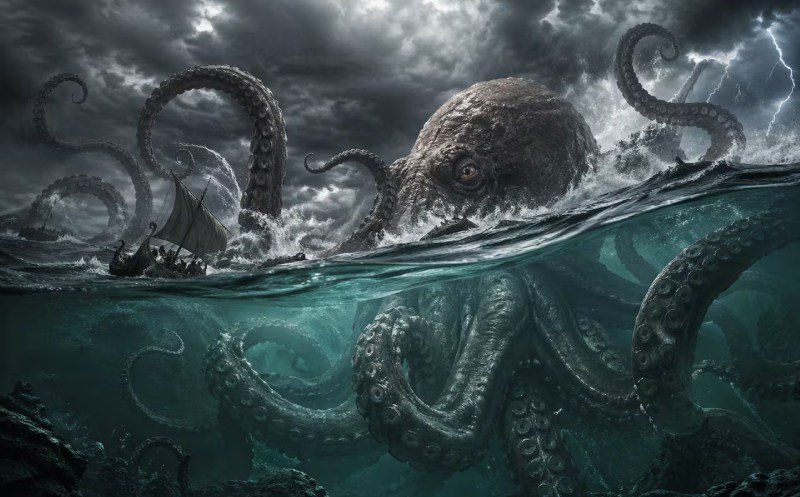


Researchers recently examined some of the world’s oldest specimens to understand how these creatures lived. They found the Giant Octopus Fossil, showing a predator with incredible physical power. These animals used muscular arms to snatch prey, while their sharp, beak-like jaws easily crushed through thick bone and heavy shells.
How Big Was This Ancient Beast?
According to a report by the BBC, experts from Hokkaido University found exceptionally well-preserved fossil jaws. These remains suggest the animal’s body measured between 1.5 and 4.5 metres long. However, once you include their sprawling arms, their total length likely reached between 7 and a massive 19 metres.
Consequently, the giant octopus fossil confirms these were the largest invertebrates to ever live. They shared the water with giant fish and marine reptiles, holding their own as top-tier hunters of the Cretaceous period.
Left-Handed Intelligence in the Deep
The giant octopus fossil also offers clues about how these animals thought. Interestingly, jaw wear patterns show that these octopuses preferred feeding on their left side. Scientists link this type of specialized behavior to high cognitive abilities and advanced intelligence.
- Smart Hunters: Ancient octopuses likely used complex strategies to find food.
- Modern Comparison: The Giant Pacific Octopus today uses similar strength to hunt sharks.
- Evolutionary Success: Intelligence has been a key trait for octopuses for millions of years.
Unlocking the Secrets of the Cretaceous Seas
Although we know they were huge, many details about the giant octopus fossil remain a mystery. For instance, we still don’t know exactly how they swam or what their full bodies looked like. Since scientists haven’t found fossils with stomach contents yet, their exact diet is still a bit of a guess.
Most experts believe they hunted ammonites, but they likely ate anything they could catch. As more people find these rare remains, the giant octopus fossil continues to provide an exciting look at a dangerous predator that once dominated the waves.