
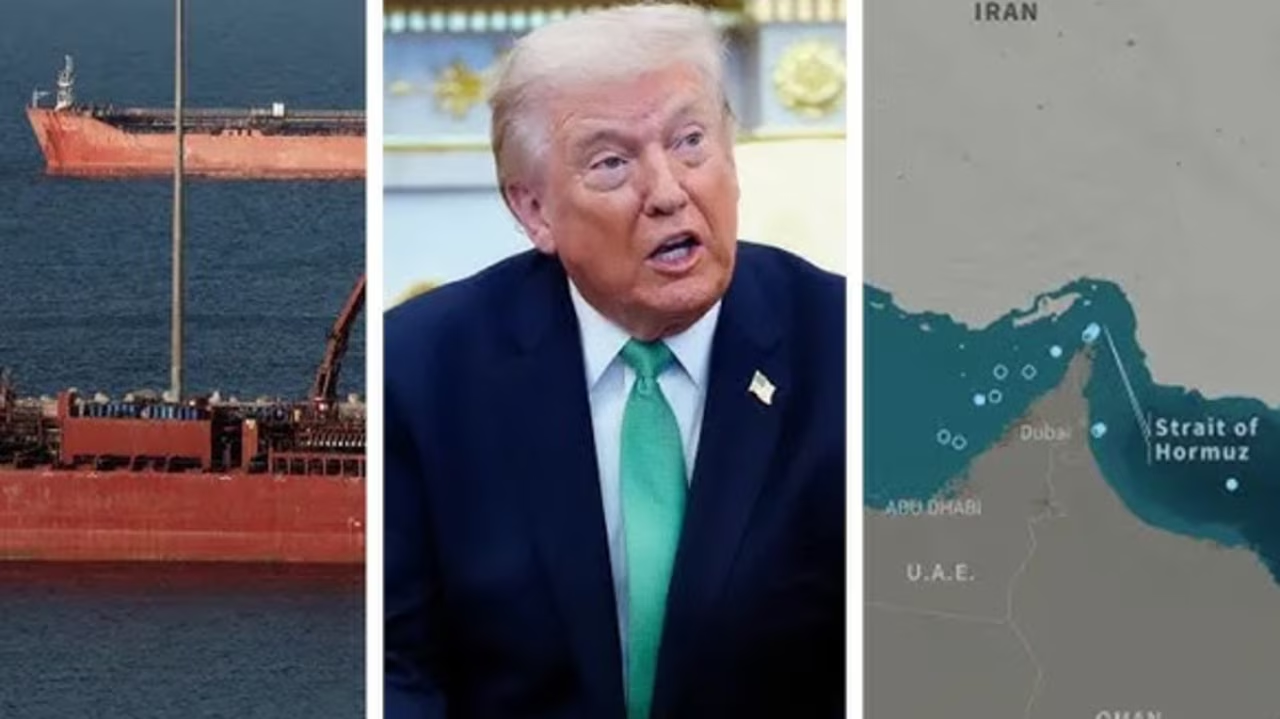


The Strait of Hormuz, the world’s most vital energy artery, has ground to a near-total standstill. A “dual blockade”—comprising a U.S. Naval blockade on Iran-linked vessels and Iran’s retaliatory closure of the waterway—has triggered a historic shipping crisis.
As of April 26, 2026, daily commercial transits have plummeted from an average of 135 ships to nearly zero, leaving hundreds of vessels and approximately 20,000 seafarers stranded within the Persian Gulf.
The Mechanics of the Blockade
President Donald Trump’s administration has shifted from passive patrolling to active maritime interdiction. The current blockade entails:
- Targeted Interdiction: U.S. CENTCOM is authorized to board, search, and seize any vessel entering or departing Iranian ports.
- “Shoot and Kill” Orders: In a significant escalation, Trump has ordered the U.S. Navy to use lethal force against Iranian “mosquito fleet” vessels caught laying naval mines.
- Fee Interception: The U.S. is actively intercepting ships in international waters that have paid the controversial $2 million “transit tolls” demanded by Tehran.
- Global Reach: Seizures are no longer confined to the Strait; conflict has spilled into the Arabian Sea and waters East of Sri Lanka.
Economic Fallout: Oil, Food, and Logistics
The disruption is being cited as the most significant energy shock since the 1970s.
| Sector | Impact Detail | Current Status |
| Energy | 25% of seaborne oil & 20% of global LNG | Halted; Brent Crude hit $126/barrel |
| Agriculture | 35% of global urea (fertilizer) exports | Critical Shortage; Food price spike expected |
| Logistics | Alternative routes (e.g., Panama Canal) | Overburdened; Rerouting premiums up to $4M |
Timeline of Escalation (2026)
- February 28: U.S.-Israel air strikes against Iran begin; Iran retaliates by harassing commercial shipping.
- Mid-April: President Trump orders a formal blockade to “zero out” Iranian oil exports.
- April 17: After Iran briefly claims the Strait is open, Trump declares the U.S. blockade permanent on Truth Social, prompting Iran to reimpose its own restrictions.
- April 25: U.S. forces begin minesweeping operations to clear alleged Iranian naval mines to create a “safe pathway” for non-aligned traffic.
The “Islamabad Talks” Uncertainty
Diplomatic efforts in Islamabad remain fragile. While Pakistan has indicated that negotiators from both sides (including U.S. Vice President JD Vance and Iranian officials) may meet, Trump has signaled no extension of the current ceasefire, stating that “the clock is ticking.”
Expert Analysis
Shipping executives warn that even if the Strait were declared open today, the logistical backlog and the persistent threat of unexploded sea mines mean that a return to “normal” shipping operations is likely several months away. The crisis has fundamentally reshaped global trade routes, with many firms permanently eyeing alternatives to the Middle Eastern chokepoint.