
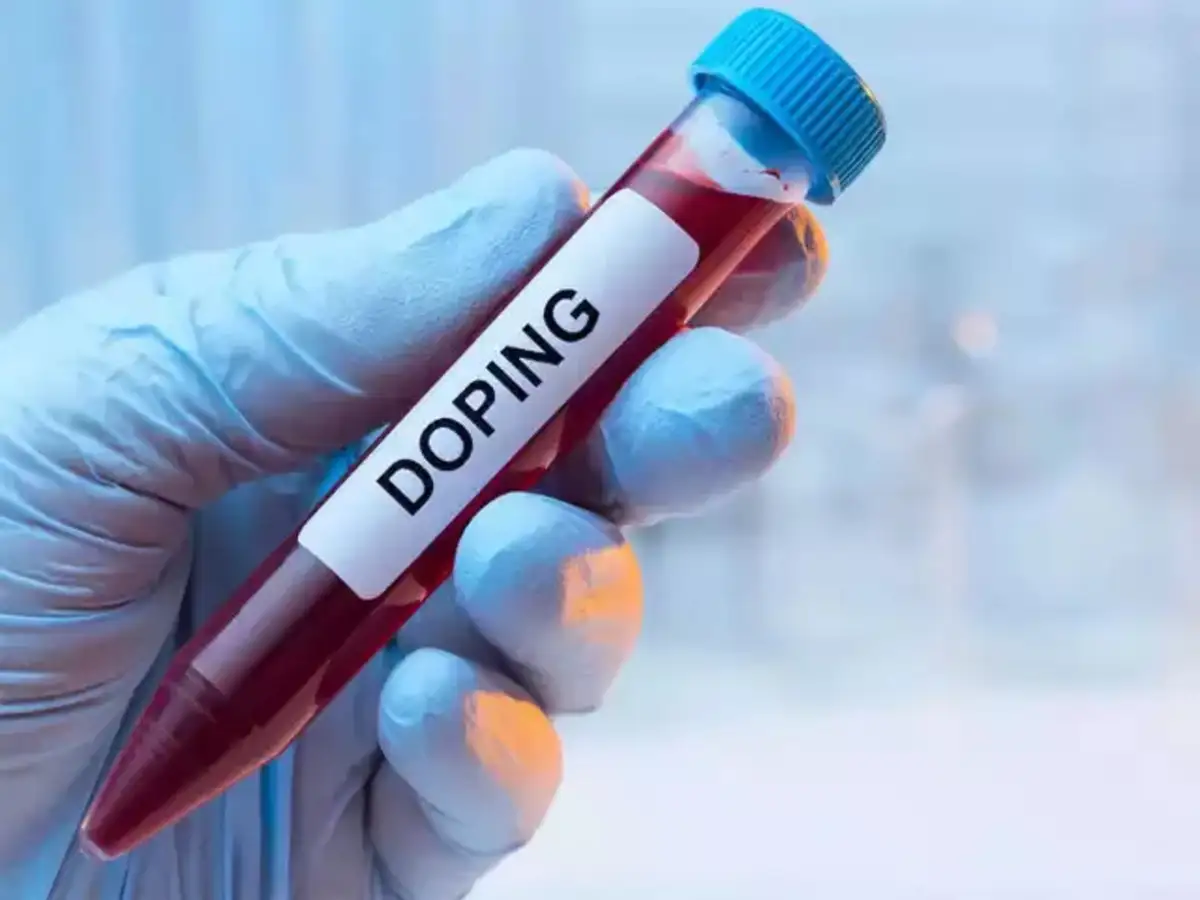


In a major move to shed the “high-risk” label attached by World Athletics, the Indian government has announced a zero-tolerance policy that includes a plan to criminalize doping. This legislative shift aims to strengthen the National Anti-Doping (Amendment) Act and align India’s institutional mechanisms with the strictest global standards.
The announcement comes as NADA India (National Anti-Doping Agency) significantly ramps up its monitoring and testing infrastructure following a visit from WADA President Witold Bańka.
⚖️ From Civil to Criminal: The Policy Shift
The Department of Sports is set to introduce provisions that treat doping as a criminal offense.
- Zero-Tolerance: The move is designed to deter not just athletes, but the ecosystem of coaches and suppliers who facilitate the use of banned substances.
- Institutional Strength: The National Anti-Doping (Amendment) Act will provide the legal teeth necessary to enforce these criminal provisions.
📊 Testing by the Numbers (2023–2025)
NADA has reported a massive expansion in sample collection, showing that as testing volume increases, the “positivity rate” is actually dropping.
| Year | Total Samples Collected | Athletics Specific Samples | Adverse Analytical Findings (AAF%) |
| 2023 | 5,606 | 1,306 | 3.8% |
| 2024 | 7,113 | 1,991 | 3.6% |
| 2025 | 7,939 | 1,825 | 1.7% |
| 2026 (Plan) | 8,500+ | 2,100 | — |
🛡️ Strengthening the “Safety Net”
To better monitor athletes, NADA has overhauled its testing pools:
- Registered Testing Pool (RTP): The number of athletes in the high-priority athletics pool has jumped from 66 to 120 for 2026—an 81% increase.
- Secondary Testing Pool (STP): Introduced in late 2025 to monitor athletes just below the elite level, ensuring a wider net for intelligence-led testing.
- Global Collaboration: NADA is working in lockstep with the Athletics Integrity Unit (AIU) and the Athletics Federation of India (AFI) to meet international compliance requirements.
🌍 Global Recognition
WADA President Witold Bańka recently acknowledged India’s progress during the Global Anti-Doping Intelligence & Investigations Network (GAIIN) Conference in New Delhi. While recognizing the improvements, he emphasized the need for continued intelligence-sharing and structural reforms to ensure the long-term integrity of Indian sport.
The Goal: By criminalizing doping and expanding the testing pool, the Indian government aims to remove the “extremely high risk” designation and establish the nation as a global leader in clean athletics.