
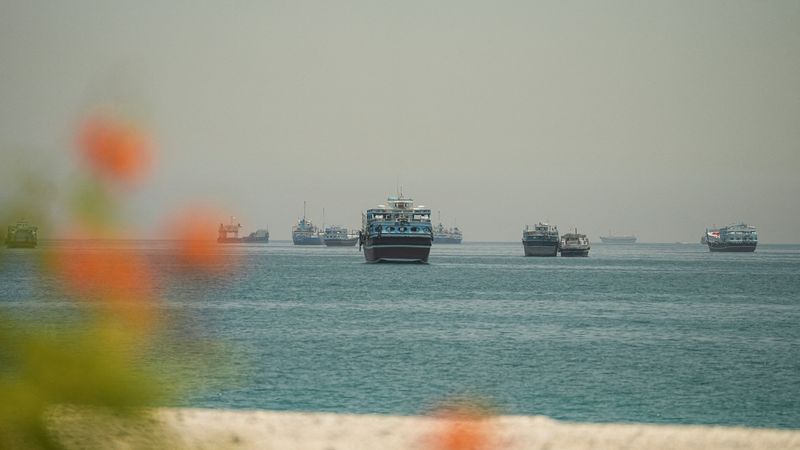


Iran on Wednesday claimed that shipping movement through the Strait of Hormuz could return to pre-war levels within a month under a proposed framework agreement with the United States, even as Washington strongly denied the existence or authenticity of such a deal.
According to Iranian state television, the draft “memorandum of understanding” outlines a potential roadmap for easing tensions between Tehran and Washington after months of military escalation and diplomatic uncertainty. However, the broadcaster itself clarified that the document had not yet been finalised.
The reported draft suggests that the United States would lift what Iran described as a “naval blockade” and stop interfering with ships travelling to and from Iranian waters. In return, Iran would reopen shipping access through the strategically critical Strait of Hormuz while continuing to oversee maritime traffic, inspect vessels and charge service fees.
The Strait of Hormuz remains one of the world’s most important energy chokepoints, with a significant portion of global oil and gas shipments passing through the narrow waterway every day. Any disruption in the region has immediate consequences for global energy prices and international shipping markets.
Iran Says Hormuz Reopening Will Not Be ‘Unconditional’
The Iranian television report added that the reopening of the strait would come with conditions. The draft reportedly states that Iran’s commitments would not extend to military vessels and that Tehran would continue exercising operational control over shipping lanes.
The document also allegedly includes a US commitment regarding military deployments in the region. However, it remains unclear whether the proposed withdrawal applies only to forces deployed during the recent conflict escalation or extends to long-standing American military bases across the Gulf region.
Under the reported framework, Iran and the United States would enter a 60-day negotiation period to finalise broader terms of engagement. The draft does not specify the full list of issues to be negotiated during that phase.
Iranian state media further claimed that if negotiations succeed within the proposed timeline, the agreement could eventually be endorsed through a binding United Nations Security Council resolution.
White House Rejects Iranian Report
The United States quickly rejected the claims, calling the reported memorandum entirely false.
“This report from Iranian controlled media is not true and the MOU they ‘released’ is a complete fabrication. Nobody should believe what Iranian state media is putting out. FACTS MATTER,” the White House posted on X.
The denial comes amid continuing diplomatic uncertainty between the two countries despite ongoing mediation efforts reportedly led by Pakistan.
Fresh US Strikes Deepen Tensions
The latest controversy unfolded just hours after the US military launched fresh strikes in southern Iran. According to American officials, the operation targeted Iranian missile facilities and boats allegedly attempting to deploy naval mines.
Washington described the strikes as acts of “self-defence”.
Soon after the attacks, US President Donald Trump stated on social media that Iran should hand over its enriched uranium stockpile to the United States for destruction or agree to dismantle it inside Iran under international supervision.
The uranium issue continues to remain one of the most sensitive sticking points between Tehran and Washington during the current negotiations.
Iran Says Full-Scale War Appears Unlikely
Despite the recent escalation, Iranian officials said on Wednesday that a full-scale war with the United States now appears unlikely.
The statement came a day after Tehran accused Washington of violating an existing ceasefire arrangement that has reportedly been in place since April. Iran had warned earlier that it was prepared to retaliate if attacks continued.
The current phase of tensions follows weeks of military threats, sanctions pressure and diplomatic manoeuvring between both sides. At the same time, international observers remain focused on the Strait of Hormuz because of its direct impact on global energy markets.
Oil prices had recently fallen below $90 per barrel following reports suggesting a possible reopening of the strategic shipping route, easing concerns over prolonged supply disruptions.