
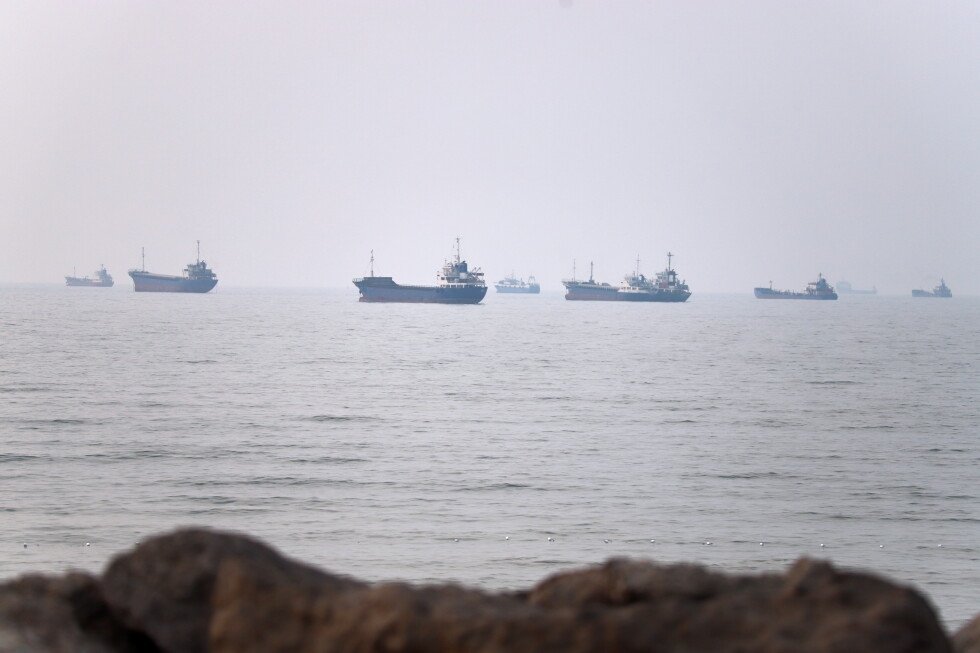


The United States launched a series of large-scale military strikes against Iran, targeting more than 80 military sites in response to recent attacks on commercial vessels transiting the Strait of Hormuz.
The operation marks a sharp escalation in tensions between Washington and Tehran, raising fresh concerns that the two countries could slide back into open conflict just weeks after signing a ceasefire memorandum aimed at easing hostilities.
CENTCOM Details Military Operation
According to the US Central Command (CENTCOM), American forces used precision-guided munitions to strike a wide range of Iranian military assets.
The targeted infrastructure included:
- Air defence systems
- Command and control networks
- Coastal radar installations
- Anti-ship missile capabilities
- More than 60 small boats operated by the Islamic Revolutionary Guard Corps (IRGC) in and around the Strait of Hormuz
CENTCOM said the objective was to weaken Iran’s ability to launch further attacks against international shipping.
“US forces struck Iranian air defense systems, command and control networks, coastal radar sites, anti-ship missile capabilities, and more than 60 Islamic Revolutionary Guard Corps small boats in and near the strait to degrade Iran’s ability to continue attacking international commerce flowing through the international trade corridor.”
The command added that the strikes were intended to impose “heavy costs for targeting and attacking commercial shipping crewed by innocent civilians in an international waterway,” describing Iran’s actions as “unwarranted, dangerous, and a clear violation of the ceasefire.”
Trump Holds High-Level Security Meeting
According to Axios, citing a US official, President Donald Trump convened a high-level security meeting in Ankara, Turkey, on the sidelines of the NATO summit.
The meeting reportedly included:
- Defence Secretary Pete Hegseth
- Secretary of State Marco Rubio
- Treasury Secretary Scott Bessent
- Chairman of the Joint Chiefs of Staff Dan Caine
Axios journalist Barak Ravid reported that senior officials reviewed the evolving situation before the military operation.
A US official said it remains uncertain whether additional strikes will follow.
“We’ll get the assessment about the results of the strikes and make decisions after,” the official said.
Strikes Follow Attacks on Commercial Shipping
The US military action came after three separate attacks on commercial vessels in the Strait of Hormuz on Monday and Tuesday.
The incidents effectively shattered the fragile pause in hostilities established after last month’s memorandum of understanding between the United States and Iran, which had sought to restore maritime security and restart negotiations over Tehran’s nuclear programme.
Earlier on Tuesday, the US Treasury Department also revoked sanctions waivers that had allowed Iran to continue certain oil exports, increasing economic pressure on Tehran alongside the military response.
Regional Tensions Continue to Rise
The renewed confrontation represents the most serious test yet of the ceasefire memorandum signed by President Donald Trump and Iranian President Masoud Pezeshkian on June 17.
Diplomatic efforts had already stalled after recent negotiations in Doha reportedly ended without progress on resolving disputes surrounding the Strait of Hormuz.
Meanwhile, US Defence Secretary Pete Hegseth is expected to travel to Israel on Wednesday for meetings with Prime Minister Benjamin Netanyahu and Defence Minister Israel Katz, according to CNN.
Among the issues expected to be discussed are Israeli concerns over a potential sale of F-35 stealth fighter jets to Turkey, an idea reportedly floated by President Trump during the NATO summit.
It remains unclear whether the latest military developments will affect Hegseth’s planned visit.
As military operations continue and diplomatic channels face renewed strain, global attention remains focused on the Strait of Hormuz—a strategic waterway through which a significant portion of the world’s oil supplies passes—amid fears of further escalation in the region.