
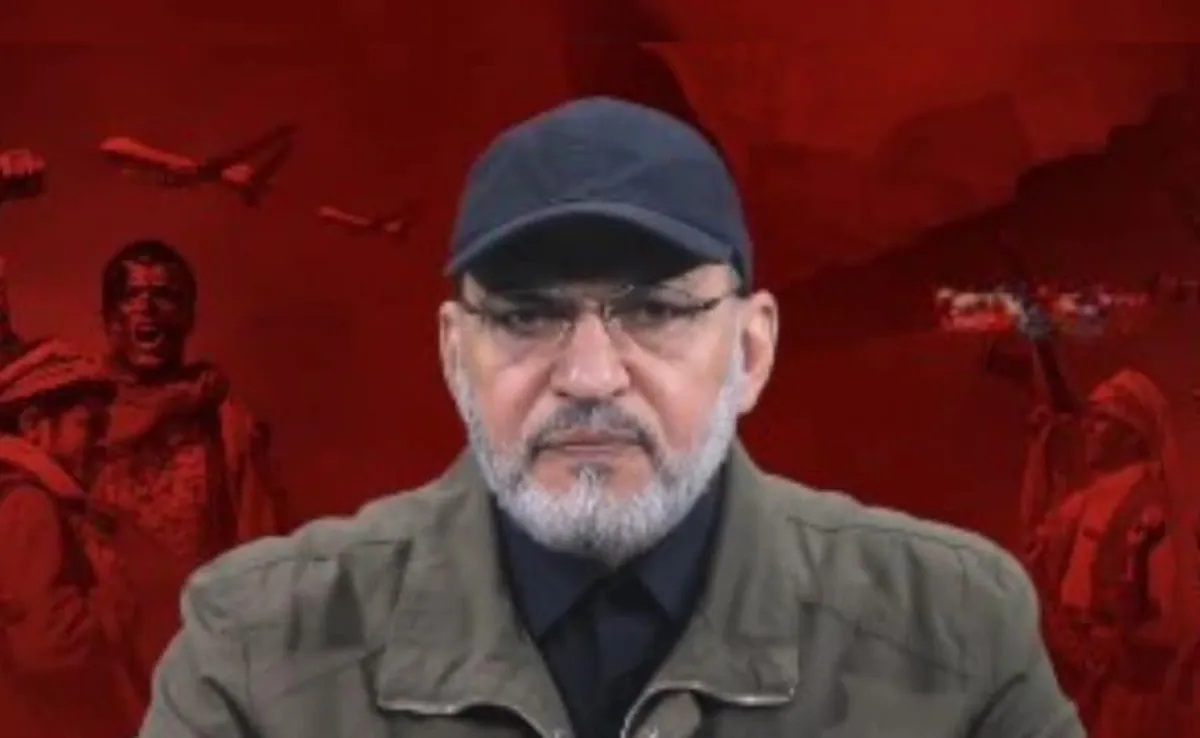


Washington: The United States has announced a reward of up to $10 million (around Rs 94 crore) for information leading to the arrest of Hashim Finyan Rahim al-Saraji, a key leader of an Iran-aligned militia group operating in Iraq.
Wa’eli currently serves as the secretary-general of Kata’ib Sayyid al Shuhada (KSS), a militia backed by and ideologically aligned with Iran’s powerful Islamic Revolutionary Guard Corps (IRGC).
The announcement comes as Washington intensifies pressure on Iranian-backed militias in Iraq, amid ongoing regional tensions and continued attacks targeting US forces and diplomatic facilities.
US Accuses Group of Attacks on Civilians and Diplomats
The reward has been issued under the US Department of State’s Rewards for Justice Program, which offers financial incentives for information on individuals accused of terrorism.
KSS has been responsible for attacks on Iraqi civilians as well as US diplomatic facilities and personnel in both Iraq and Syria.
Authorities stated that individuals who provide credible information may also be eligible for relocation support alongside the monetary reward.
Over the past decade, Iran-aligned militias in Iraq have carried out repeated attacks on US forces and diplomatic missions.
During the ongoing regional conflict involving Iran, these groups have significantly increased their activities, reportedly carrying out nearly 1,000 strikes, including attacks beyond Iraq, such as in Saudi Arabia.
Designated Global Terrorist Since 2023
Due to KSS’s continued role in advancing Iran’s strategic interests and launching attacks against US forces, the United States designated Wa’eli as a Specially Designated Global Terrorist on November 17, 2023.
Wa’eli has also publicly voiced support for Yemen’s Houthi movement, and has previously stated that KSS operates as a faction aligned with broader Iranian-backed networks in the region.
Early Links With Kata’ib Hezbollah
Before joining KSS, Wa’eli was a member of Kata’ib Hezbollah (KH), another US-designated anti-American Shiite militia operating in Iraq with activities extending into Syria.
His involvement in militant activities during his time with KH reportedly led to his arrest and imprisonment in the United States. He was later released in 2010.
When Syria’s civil war began in the early 2010s, members from KH factions, particularly those from the Abu Hussein and Abu Fadak wings, went on to form Kata’ib Sayyid al Shuhada, with Wa’eli joining the newly established group.
Rise of KSS After ISIS Expansion
KSS significantly expanded its influence after the rise of ISIS in Iraq in 2014, when militant groups across the region mobilised in response to the growing security crisis.
Its fighters later became affiliated with Iraq’s Popular Mobilisation Committee (PMC), a network of militia units that was integrated into Iraq’s national security structure.
The group maintains operational guidance from the Quds Force, an elite branch of the IRGC responsible for coordinating Iran’s support to allied militias abroad.
Growing Regional Pressure on Militia Networks
The reward announcement reflects broader US efforts to curb the influence of Iranian-backed militias in Iraq, which Washington views as a major threat to regional security and political stability.
US officials believe targeting militia leadership structures could help weaken these networks and support Iraqi authorities in strengthening state control over armed groups.