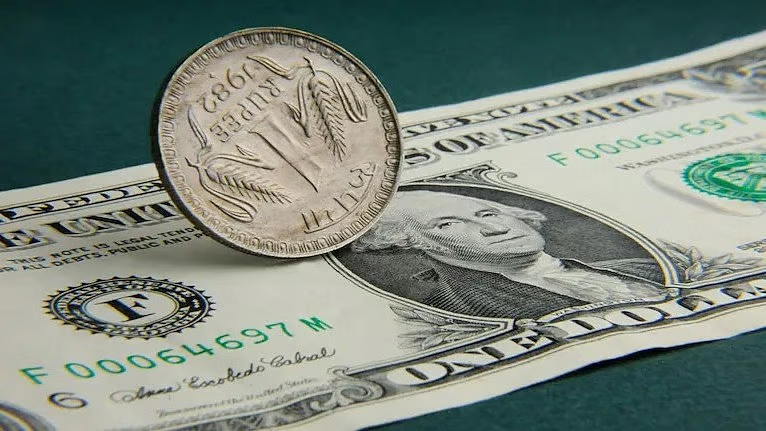
The Indian rupee posted its strongest single-day gain in over a decade on Thursday, rising sharply by 188 paise to close at 92.82 against the US dollar. The rally comes after decisive steps by the Reserve Bank of India (RBI) to curb speculative trading in the currency market.
Why the Rupee Is Rising
The surge in the rupee is primarily driven by regulatory action and market sentiment shifts:
- RBI clamps down on speculation:
The central bank restricted banks from offering rupee non-deliverable forwards (NDFs) to clients and barred companies from rebooking cancelled forward contracts. These steps aim to reduce excessive speculative bets against the rupee. - Short-covering by traders:
Traders who had bet against the rupee rushed to unwind positions, leading to increased dollar supply in the domestic market and boosting the currency. - Improved market sentiment:
RBI’s intervention signaled stronger oversight, restoring confidence among investors and currency traders.
Recent Volatility in the Rupee
Just days earlier, the rupee had come under heavy pressure, briefly breaching the 95-per-dollar mark amid global uncertainty. The volatility was largely linked to geopolitical tensions and rising crude oil prices.
Global Factors Still a Concern
Despite the sharp rebound, risks remain:
- Rising crude oil prices:
Oil prices surged to around $106 per barrel amid escalating tensions involving Donald Trump and Iran. Since India imports a large portion of its oil, higher prices can pressure the rupee. - Capital outflows:
Foreign portfolio investors (FPIs) continue to sell Indian equities, which can weaken the currency, although domestic investors have partly offset this trend.
Outlook
While the RBI’s steps have provided immediate relief and triggered a strong recovery, the rupee’s future trajectory will depend on global oil prices, geopolitical developments, and capital flows. Sustained stability will require both domestic policy support and easing external pressures.