
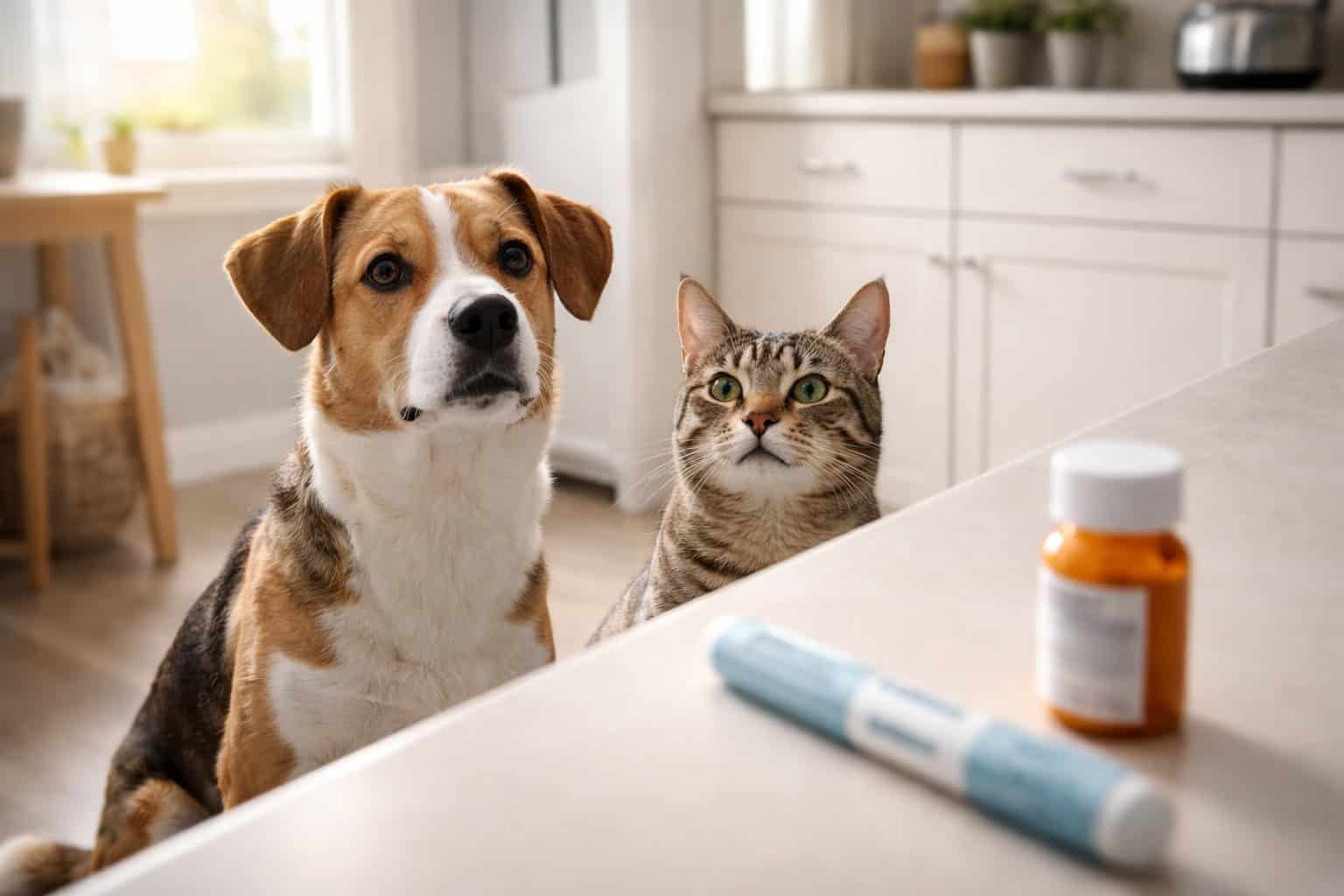


Weight-loss drugs that have transformed obesity treatment in humans may soon find a place in veterinary medicine. Researchers and biotechnology companies are testing GLP-1-based treatments for overweight cats and dogs, offering a possible new way to manage one of the most common health problems among pets.
Several companies have already started early-stage clinical trials to evaluate whether these medicines can safely help pets lose weight while improving their overall health.
Pet obesity is becoming a growing health concern
Obesity has become a major issue for household pets, especially in the United States. According to the Association for Pet Obesity Prevention, nearly 61% of cats and 59% of dogs examined by veterinarians in 2022 were classified as overweight or obese.
Extra body weight can increase the risk of several serious health conditions. These include diabetes, arthritis, heart disease, urinary tract problems and a shorter lifespan.
Cats are particularly vulnerable because neutering often lowers their metabolic rate. In addition, indoor cats usually get less physical activity, while free-feeding practices make portion control more difficult.
Companies are developing ‘Ozempic-like’ treatments for pets
San Francisco-based OKAVA Pharmaceuticals has begun testing a long-acting implant known as OKV-119 for overweight cats.
The implant is slightly larger than a standard pet microchip and is placed beneath the skin. Once inserted, it slowly releases medication for up to six months. As a result, pet owners may not need to give their cats daily tablets or weekly injections.
However, the treatment remains in the early stages of clinical testing and has not yet received regulatory approval. The company must first demonstrate that it is safe and effective before it becomes available for veterinary use.
How the GLP-1 implant works
OKV-119 belongs to the GLP-1 receptor agonist class of medicines, the same category as popular human weight-loss drugs such as Ozempic and Wegovy.
These medicines mimic natural hormones that regulate appetite and blood sugar levels. Consequently, they help reduce food intake while improving the body’s metabolism.
According to OKAVA CEO Michael Klotsman, the implant is designed to reproduce many of the health benefits associated with fasting. These include:
- Improved insulin sensitivity
- Reduced body fat
- Better energy metabolism
- Appetite control
Importantly, the treatment aims to achieve these benefits without requiring major changes to a pet’s feeding routine.
Another clinical trial is already underway
Meanwhile, biotechnology company Akston Biosciences is sponsoring a clinical study at Cornell University to evaluate a once-weekly GLP-1 therapy for overweight and obese cats.
The study, known as the MEOW-1 clinical trial, is exploring another possible treatment option for feline obesity.
Speaking about the project, Akston CEO Todd Zion said obesity remains one of the most widespread yet least effectively treated medical conditions in cats. Therefore, researchers are looking for safer and more practical long-term treatment options.
Dogs may also benefit from the new therapy
Researchers are not limiting these treatments to cats.
OKAVA Pharmaceuticals has partnered with Vivani Medical to develop a similar GLP-1 implant for dogs. Like the feline version, the implant is expected to release medication continuously for as long as six months.
Certain dog breeds, including Labradors, Beagles, and Pugs, are naturally more prone to overeating and weight gain. Because of this, researchers believe they could particularly benefit from long-lasting obesity treatments if clinical trials prove successful.
Klotsman noted that calorie restriction is one of the most effective ways to improve metabolic health and extend a dog’s lifespan. However, maintaining strict dietary control over long periods can be difficult for many pet owners. The implant aims to deliver similar metabolic benefits without disrupting the relationship between owners and their pets.
When could these treatments become available?
Despite the growing interest, these medicines are not yet approved for veterinary use.
The ongoing studies are still focused on evaluating safety, effectiveness, and long-term outcomes. Regulatory approval will depend on the results of these clinical trials.
If successful, GLP-1 therapies could provide veterinarians with an additional option to manage obesity in pets alongside balanced nutrition, regular exercise, and routine medical care.