


A sudden, intense urge to skip the dessert aisle and reach for a high-protein meal instead is a common experience. For decades, traditional nutritional counseling categorized these sudden shifts in appetite as simple psychological preferences or a lack of strict dietary discipline.
However, public health data within urban India continues to reflect an alarming trend. Despite rising caloric intake, a staggering percentage of the population suffers from subclinical protein malnutrition due to carbohydrate-heavy diets. Generic dieting often fails because it ignores the body’s internal nutrient sensors.
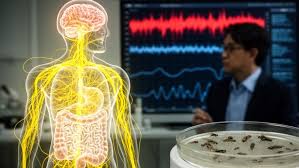
Fortunately, a groundbreaking global study published in the Science journal provides the definitive biological answer to this nutritional puzzle. The phenomenon of protein cravings is not a mental battle. Instead, it is driven by a precise, newly mapped gut-brain link that fundamentally re-engineers daily eating behavior.
What the Study on Gut-Brain Connection Found
To decode how the digestive tract dictates neurological impulses, the landmark study looked at international data. The research was led by Director Suh Seong-Bae of the Center for Microbiome-Body-Brain Physiology within the Institute for Basic Science (IBS), alongside researchers from Seoul National University and Ewha Womans University.
The investigation reveals that the gastrointestinal tract operates as a highly sophisticated sensory organ that actively manages nutrient selection.
“The gut does not simply digest food; it acts as an intelligent sensory system that continuously monitors nutritional state and directly guides behavioral decisions,” states Director Suh Seong-Bae. “When a state of protein deficiency occurs, the intestinal epithelial cells initiate an immediate, dual-track communication protocol with the central nervous system to alter dietary priorities.”
The Dual-Track Signaling Pathway
The study outlines a complex interplay of neuronal and hormonal gut-brain responses to an essential amino acid deficit. When your body runs low on amino acids—the critical protein building blocks the human body cannot synthesize on its own—the gut triggers a highly coordinated emergency response.
1. Hormone Secretion
Immediate Detection
Upon detecting a depletion of essential amino acids, the gut secretes a specific peptide hormone called “CNMamide” (CNMa).
2. Neural Activation
30 to 60 Seconds
Within 30 to 60 seconds, this peptide activates gut-associated enteric neurons. This flashes an immediate warning directly to the brain via fast-acting neurological pathways.
3. Circulatory Travel
Delayed Reinforcement
Concurrently, the CNMa peptide enters the circulatory system as a blood-borne hormone. Because it travels through the bloodstream, it reaches the brain more slowly.
4. Sustained Alarm
Behavioral Shift
The slower-moving blood hormone acts as a sustained biological alarm. This mechanism maintains protein-seeking behavior over an extended period until the nutritional deficit is corrected.
How the Gut Curbs the Sweet Tooth
The most significant revelation from the research changes how science understands dietary control. The activation of the gut-brain circuit does not simply increase overall hunger. Instead, the brain selectively adjusts feeding priorities to favor the exact nutrients that are lacking.
To force the organism to hunt for protein, the gut-brain axis actively engages in suppressing sugar cravings. The study demonstrated that the release of the CNMa peptide physically restrains the activity of specific sugar-sensing brain cells known as DH44 neurons.
By silencing the brain’s carbohydrate-sensing centers, the gut effectively clears away the desire for sweets. This forces the mind to focus its cognitive and behavioral attention entirely on finding savory, protein-dense foods.
The Microbial Influence and Weight Management
The research team further established that this gut-brain communication system is heavily modulated by the gut microbiome. Laboratory models lacking native commensal gut bacteria exhibited an aggressively heightened activation of amino-acid-seeking brain neurons. This indicates that a disrupted or imbalanced microbiome can distort natural nutrient signaling, potentially triggering erratic, uncontrollable food cravings.
Crucially, this system was found to be evolutionarily conserved across mammals. It operates entirely independently of FGF21, a liver hormone long assumed to be the sole regulator of protein appetite.
| Core Management Area | Current Framework Limitations | Future Biotech Applications |
| Appetite Control | Current blockbuster drugs (like GLP-1 receptor agonists) target generic satiety centers to reduce total food volume. | Developing targeted treatments for metabolic disorders by repairing broken CNMa and DH44 pathways. |
| Dietary Strategy | Processing food to be low-calorie often strips out natural proteins, causing overeating later. | Designing foods that prioritize structural satiety to satisfy internal amino acid sensors directly. |
| Microbiome Health | Diets high in processed carbohydrates alter gut flora, causing distorted survival signals. | Utilizing targeted prebiotics to stabilize the bacterial modulation of nutrient-seeking neurons. |
The clinical consensus underscores a vital truth: true nutritional balance cannot be achieved by counting calories alone. To maintain an optimized metabolic rate and steady appetite, individuals must respect the gut’s biological demands for amino acids. Attempting to override protein hunger with low-protein, highly processed diet foods will keep the brain’s survival alarms ringing indefinitely.