
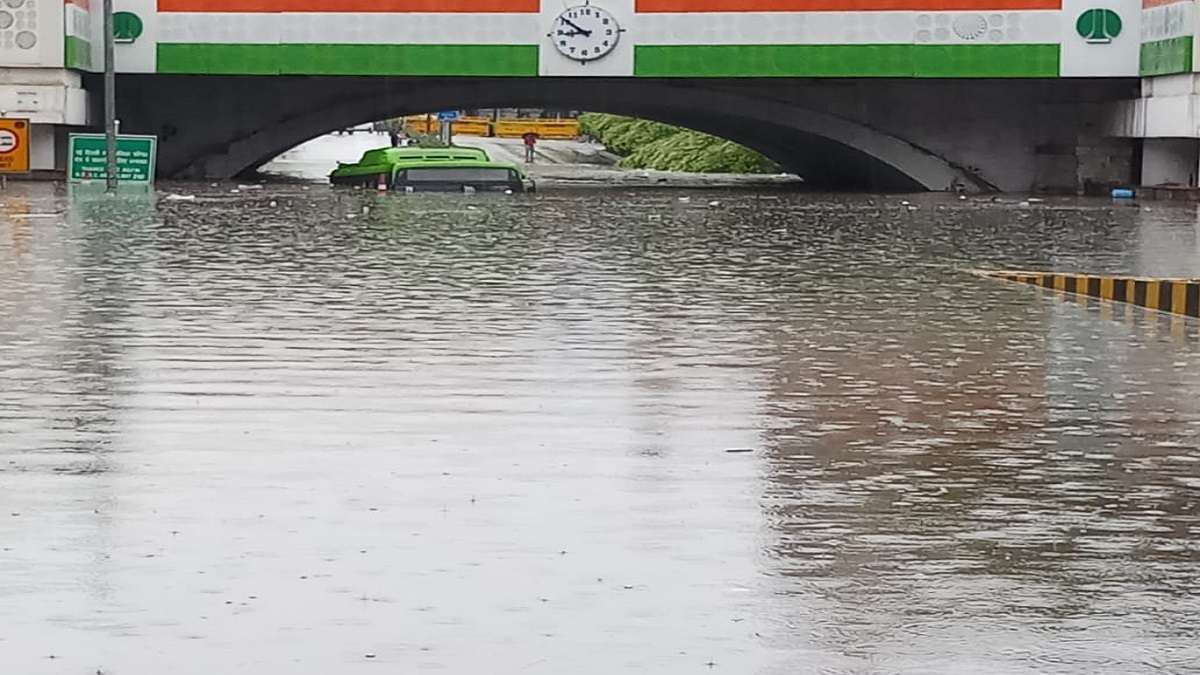


New Delhi: Every monsoon, Delhi’s biggest challenge is not just the intensity of the rainfall but whether its notorious waterlogging hotspots can withstand it. Thursday’s downpour put that question to the test—and several of the city’s most flood-prone locations passed.
Although heavy rain caused waterlogging and traffic disruptions in some parts of the national capital, an NDTV ground survey found that several chronic flooding hotspots, including Minto Bridge, Dhaula Kuan underpass, Moolchand underpass, Zakhira underpass, the AIIMS corridor, the ITO stretch, Azadpur underpass, and Sarai Kale Khan, remained free of waterlogging, allowing traffic to move without major interruptions.
Delhi’s Most Flood-Prone Roads Show Significant Improvement
The performance of these locations during Thursday’s rainfall is particularly significant considering their history of severe monsoon flooding.
Minto Bridge Avoids Familiar Flooding
Minto Bridge has become synonymous with Delhi’s monsoon woes over the years, often making headlines with visuals of submerged vehicles and stranded commuters.
In 2020, a mini-truck driver lost his life after his vehicle became trapped beneath the flooded underpass. The location flooded again in 2021, despite the installation of high-capacity pumps and water-level monitoring systems. After drainage infrastructure upgrades, the underpass remained largely free of waterlogging during last year’s monsoon, and Thursday’s rainfall indicated that those improvements continue to deliver results.
Other Key Trouble Spots Stay Functional
Several other traditionally vulnerable locations also remained operational during the heavy showers.
The Dhaula Kuan underpass, a crucial route connecting central Delhi with the Indira Gandhi International Airport, has frequently witnessed severe water accumulation that disrupted traffic. Similarly, the Moolchand and Zakhira underpasses have long been among Delhi’s chronic flooding hotspots during the monsoon.
The ITO stretch and the AIIMS corridor, two of the capital’s busiest traffic corridors, have also regularly experienced rainwater accumulation that slowed vehicle movement in previous years.
Meanwhile, the Azadpur underpass, which saw vehicles stranded during the 2024 monsoon due to flooding, remained clear this time. Sarai Kale Khan, one of Delhi’s busiest transport hubs known for recurring monsoon disruptions, also witnessed smooth traffic flow despite continuous rainfall.
Why Thursday’s Rain Stood Out
Against the backdrop of previous monsoons, Thursday’s spell painted a noticeably different picture.
Despite sustained rainfall across the city, commuters travelling through these traditionally flood-prone corridors did not encounter the usual scenes of submerged roads, stranded vehicles or lengthy traffic jams. Traffic continued to move normally through many of Delhi’s busiest routes even as rain lashed the city.
Delhi Government Credits Extensive Monsoon Preparedness
The Delhi government attributed the improved situation to months of pre-monsoon planning and infrastructure upgrades.
Public Works Department (PWD) Minister Parvesh Verma reviewed the situation from the department’s 24×7 Monsoon Control Room, where officials monitored vulnerable locations through live CCTV feeds while coordinating emergency response teams.
According to the PWD, 45 priority waterlogging locations are under round-the-clock surveillance through 179 CCTV cameras.
To strengthen drainage capacity, the department has deployed:
- 754 permanent pumps across 167 locations
- 305 temporary pumps at 273 locations across Delhi
Officials also informed the minister that approximately 120 complaints had been received over the previous 48 hours through the Monsoon Control Room, helpline, and WhatsApp chatbot. Most complaints related to waterlogging were reportedly addressed within 15 to 30 minutes, depending on rainfall intensity and site conditions.
“There was a time when Delhiites would worry every time it rained because waterlogging meant blocked roads, stranded vehicles and hours of inconvenience. Today’s rainfall has shown that when preparation meets commitment, results are visible on the ground,” Verma said after reviewing the situation.
Some Areas Still Faced Waterlogging
While many of Delhi’s most notorious flood-prone roads remained functional, the city was not entirely free from monsoon-related problems.
Heavy rainfall led to waterlogging in Burari and along stretches of Mehrauli-Badarpur Road, slowing traffic and causing inconvenience to commuters. Several other low-lying localities also reported water accumulation, fallen trees and congestion following the downpour.
The contrasting situation underscored that while Delhi has made noticeable progress in tackling waterlogging at several long-standing trouble spots, other vulnerable areas continue to face significant challenges during heavy monsoon rains.