
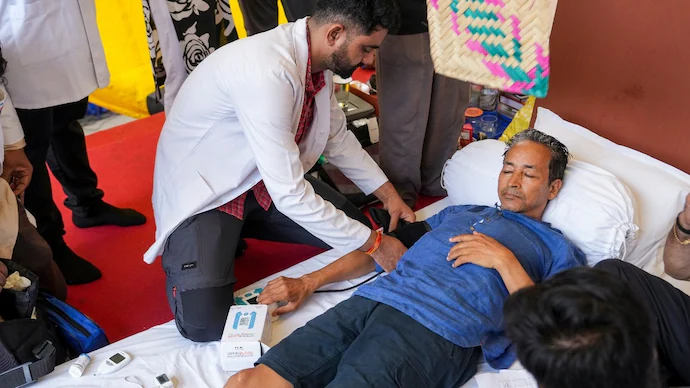


As climate activist Sonam Wangchuk’s hunger strike continues beyond two weeks, concerns over his health have brought renewed attention to the effects of prolonged fasting. While the body has short-term mechanisms to cope without food, extended fasting places increasing stress on vital organs and can eventually become life-threatening.
Here’s a look at what happens inside the body over time.
First 24 Hours: The Body Uses Stored Energy
In the initial hours after the last meal, the body relies on glycogen—its stored form of glucose in the liver and muscles—for energy. Hunger pangs are strongest during this phase as levels of the hormone ghrelin rise, signalling the need for food.
Days 2–3: Fat Becomes The Primary Fuel
Once glycogen reserves are exhausted, usually within 24 to 48 hours, the body begins breaking down fat for energy. Hunger often feels less intense during this stage, but this reflects the body’s shift into survival mode rather than recovery.
Days 4–7: Ketosis Begins
As fat breakdown continues, the body produces ketones to fuel the brain and other organs. During this phase, fatigue, reduced concentration, dizziness, fluctuations in blood pressure and blood sugar levels may become more noticeable, particularly if fluid intake is also limited.
Days 8–12: Muscle Loss Starts
When fat reserves become insufficient, the body begins breaking down muscle tissue for energy. This includes skeletal muscles and, over time, even heart muscle. Weakness increases, muscle mass declines and the risk of dangerous electrolyte imbalances, such as low potassium and sodium, rises significantly.
Days 13–15: Organ Stress Increases
Prolonged fasting at this stage places considerable strain on the heart, kidneys and immune system. Blood pressure may fall, confusion or drowsiness can develop and the risk of serious medical complications increases. Close medical supervision and supportive treatment become essential.
Beyond Two Weeks: Higher Risk Of Permanent Damage
After more than two weeks without adequate nutrition, the chances of irreversible organ damage grow substantially, particularly affecting the kidneys and heart. Doctors closely monitor patients during this period, as recovery must also be carefully managed.
Reintroducing food too quickly after prolonged starvation can trigger refeeding syndrome, a potentially life-threatening condition caused by rapid shifts in fluids and electrolytes. For this reason, nutritional rehabilitation is typically carried out under medical supervision.