
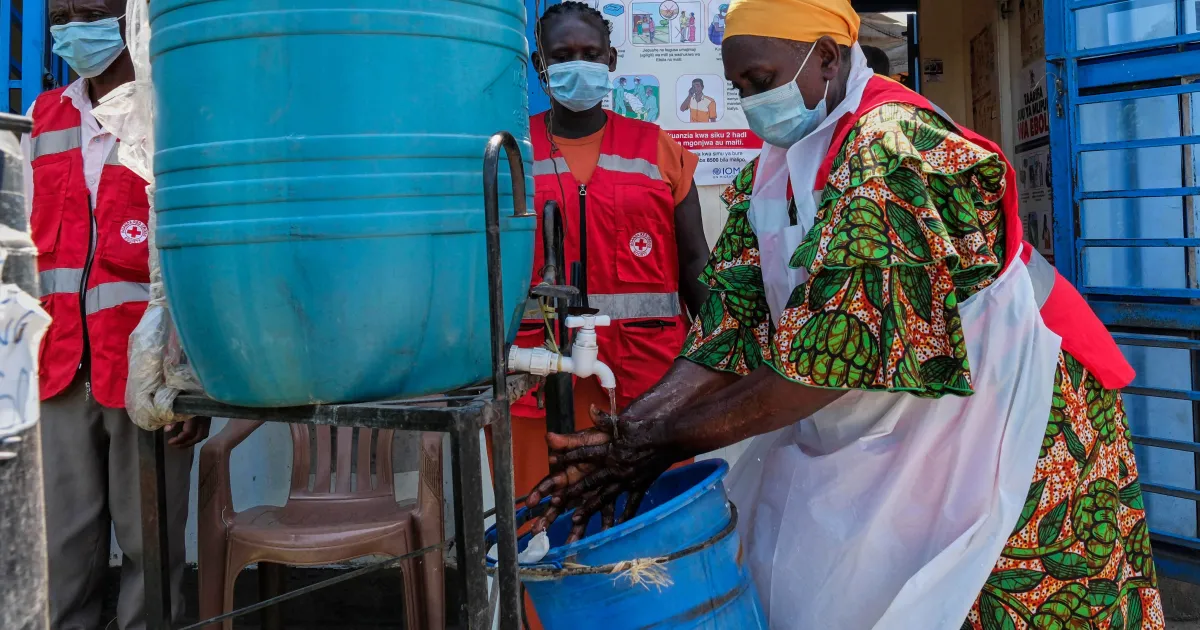


The joint June-November strategy aims to strengthen surveillance, testing, clinical care, and community engagement while containing the Bundibugyo-strain outbreak in the Democratic Republic of the Congo and Uganda.
WHO and Africa CDC Launch Joint Ebola Response Plan
World Health Organization Director-General Tedros Adhanom Ghebreyesus said on Friday that WHO and the Africa Centres for Disease Control and Prevention will run a coordinated Ebola preparedness and response plan from June through November 2026.
The plan focuses on emergency coordination, disease surveillance, laboratory testing, infection prevention and control, clinical care, and community engagement. It is designed as a continent-wide framework that brings governments, health partners, and local communities into what officials describe as a unified “one response” approach.
“The joint plan gives the continent a clear path to act with speed and unity to save lives, support the affected countries, and protect neighboring communities,” Africa CDC Director-General Jean Kaseya said in a statement.
What the Six-Month Plan Will Cover
Health agencies said the June-November strategy will strengthen several critical areas of outbreak control:
- Emergency coordination between national governments, WHO, Africa CDC, and partner organizations.
- Expanded disease surveillance to detect new cases quickly and monitor transmission chains.
- Laboratory testing capacity to confirm infections faster.
- Infection prevention and control measures in hospitals and clinics.
- Clinical care for confirmed and suspected patients.
- Community engagement to improve reporting, contact tracing, and safe health practices.
- Research, logistics support, and continuity of essential health services during the outbreak.
Why the Plan Is Being Activated Now
The initiative comes as authorities race to contain a rapidly expanding outbreak of the Bundibugyo strain of Ebola in the Democratic Republic of the Congo.
The outbreak was first declared in the DRC on May 15. According to the latest figures cited in the report, the country has recorded at least 452 confirmed Ebola cases and 82 deaths.
Health officials have warned that sustained community transmission remains a major concern, particularly in affected areas of Ituri and North Kivu provinces.
Uganda Also Reports New Cases
The outbreak has crossed borders into Uganda. Ugandan authorities announced three additional cases on Friday, bringing the country’s total confirmed infections to 19.
Because of the cross-border risk, WHO and Africa CDC are emphasizing regional coordination, surveillance at points of entry, and rapid sharing of epidemiological data among neighboring countries.
Emergency Supplies Already Moving Into the Region
WHO has been shipping emergency medical supplies and protective equipment into affected areas. One recent delivery moved supplies from Nairobi into the DRC as part of the ongoing response effort.
Officials say strengthening logistics, treatment capacity, and infection-control resources will be essential if the outbreak continues to spread across communities and borders during the coming months.