
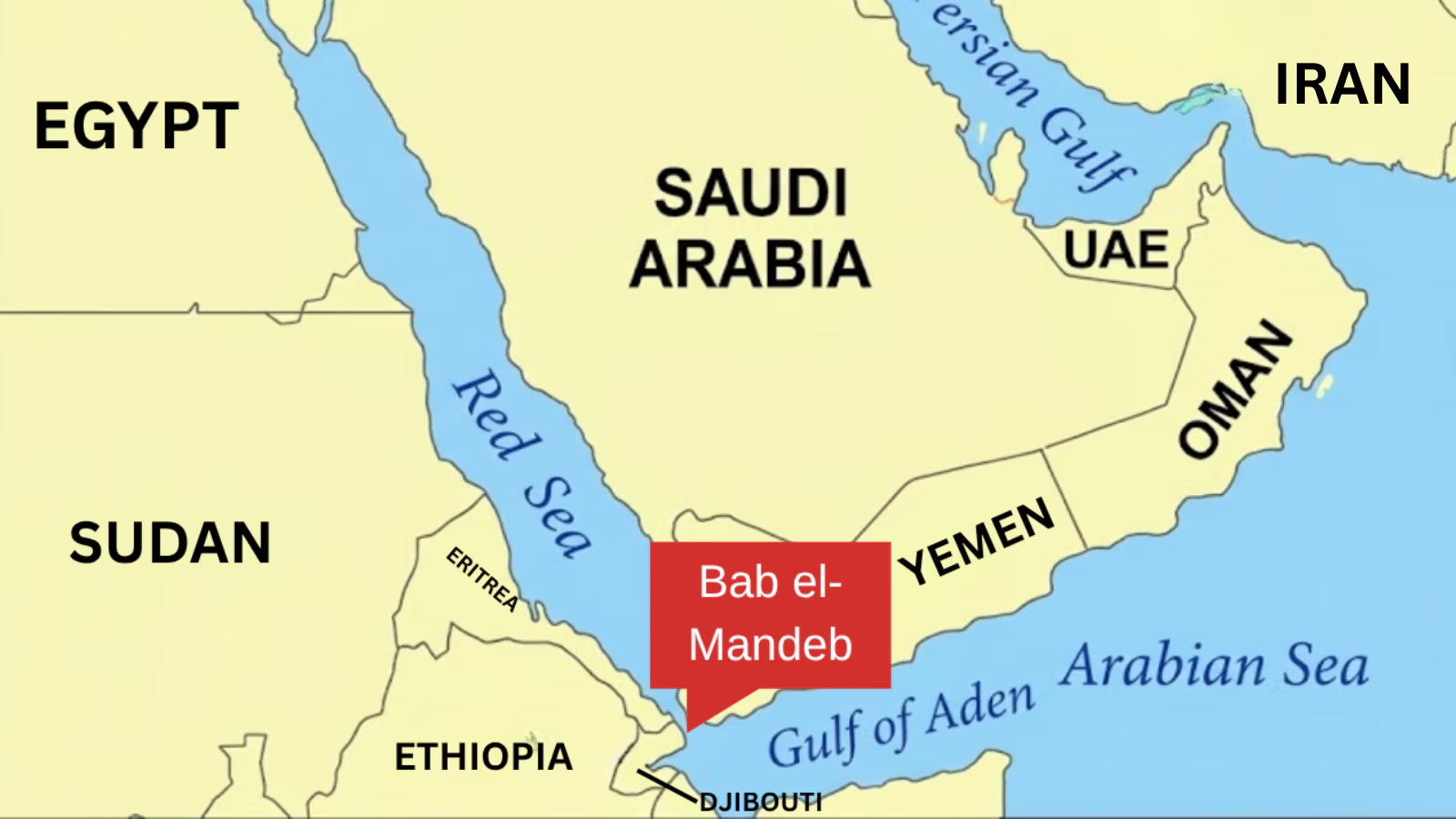


The Bab el-Mandeb Strait, often called the “Gate of Tears,” has once again moved into global focus amid rising geopolitical tensions in the Middle East. Located between the Arabian Peninsula and the Horn of Africa, the narrow waterway is considered one of the world’s most critical maritime chokepoints.
Recent reports suggesting that Iran and its regional allies are exploring pressure tactics involving strategic sea routes, including the Bab el-Mandeb Strait, have raised fresh concerns over global shipping, trade and energy security.
Where Is The Bab el-Mandeb Strait?
The Bab el-Mandeb Strait lies between Yemen on the Arabian Peninsula and Djibouti and Eritrea in the Horn of Africa. It connects the Red Sea to the Gulf of Aden, which then opens into the Indian Ocean.
Its location makes it a crucial gateway to the Suez Canal, one of the busiest trade routes in the world. Thousands of cargo vessels, oil tankers and commercial ships pass through this corridor every year while travelling between Europe, Asia and the Middle East.
Any disruption in the region could force ships to reroute around the Cape of Good Hope in southern Africa, significantly increasing shipping time, transportation costs and fuel expenses.
Why The Strait Is Strategically Important
The Bab el-Mandeb Strait plays a major role in global trade and energy transportation. A substantial portion of the world’s oil shipments and commercial cargo move through this narrow maritime corridor.
Security experts say tensions in the region can immediately impact international markets, oil prices and global supply chains.
The latest concerns emerged after Iran’s Revolutionary Guards reportedly discussed exerting pressure on strategic waterways following escalating conflict in the Middle East.
Global powers closely monitor the region because even temporary disruptions could affect international shipping routes and economic stability.
A Hidden Travel Wonder Between Two Continents
Despite its geopolitical importance, the Bab el-Mandeb Strait is also considered one of the world’s lesser-known travel wonders.
At its narrowest point, the strait is only about 30 kilometres wide, creating dramatic landscapes where desert terrain meets deep blue waters.
The region features volcanic islands, rugged coastlines, rocky cliffs and untouched natural scenery that remain largely unexplored by mainstream tourism.
On the African side, Djibouti offers a unique cultural blend of African, Arab and French influences. The country is known for its striking landscapes, salt lakes, marine biodiversity and access to the Horn of Africa’s remote natural beauty.
The surrounding waters are also famous for marine life, coral ecosystems and diving opportunities, making the area attractive for adventure and nature-focused travellers.
Crossroads Of Trade, Conflict And History
For centuries, the Bab el-Mandeb Strait has served as a bridge between Africa, the Middle East and Asia. Historically, it has been a major route for traders, travellers and empires moving goods and influence across continents.
Today, the region remains at the centre of global politics because of its strategic position connecting international shipping lanes.
Experts believe the waterway will continue playing a critical role in global trade, military strategy and geopolitical negotiations in the years ahead.