
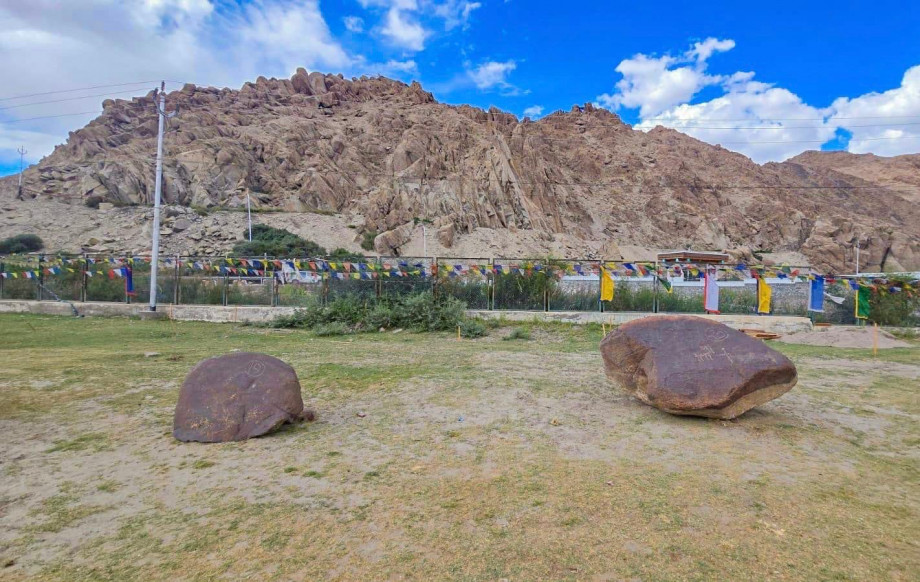


India is set to strengthen its heritage conservation efforts with the development of the country’s first Petroglyph Conservation Park at Sindhu Ghat in Leh, Ladakh. The initiative aims to protect centuries-old, and in some cases thousands-of-years-old, rock carvings that offer valuable insights into the region’s prehistoric past.
Located along the banks of the Indus River, the conservation park is taking shape with 31 ancient petroglyphs already relocated and preserved at the site. The facility will serve as a dedicated centre for conservation, research and public education, making Ladakh’s rich archaeological heritage more accessible to visitors, students and scholars.
What Are Petroglyphs?
Petroglyphs are ancient images, symbols and inscriptions carved directly into rock surfaces using stone or metal tools. Unlike cave paintings, these engravings are etched into the rock itself, preserving records of early human civilisation.
Ladakh is home to nearly 400 petroglyph sites, making it one of South and Central Asia’s richest regions for rock art. The carvings depict hunting scenes, wildlife such as ibex and snow leopards, human figures, trade routes and later Buddhist symbols. Some also feature inscriptions in ancient languages, including Sanskrit, Chinese and Arabic.
Why The Conservation Park Is Important
Many of Ladakh’s petroglyphs are located in remote areas along the Indus and Zanskar rivers, leaving them vulnerable to road construction, infrastructure development, weathering, climate-related damage and unregulated tourism.
The new conservation park will help safeguard endangered carvings by relocating them from high-risk locations to a secure environment where they can be scientifically preserved while remaining accessible for education and research.
Joint Initiative By Ladakh Administration And ASI
The project is being implemented through a collaboration between the Ladakh Administration’s Department of Archives, Archaeology and Museums and the Archaeological Survey of India (ASI). The two organisations have signed a Memorandum of Understanding (MoU) to ensure the long-term conservation and scientific management of Ladakh’s rock art heritage.
Officials have described the petroglyphs as “open-air museums” and stressed the need to integrate heritage conservation into future development planning.
Boost For Heritage Tourism
Apart from preserving ancient history, the Petroglyph Conservation Park is expected to become a major cultural attraction in Leh. By bringing together vulnerable rock carvings in one location, the park will offer visitors an opportunity to explore Ladakh’s prehistoric heritage while promoting awareness about the importance of protecting India’s archaeological treasures.
Once completed, the project will mark a significant milestone in India’s heritage conservation journey, ensuring that Ladakh’s ancient rock art is preserved for future generations.