
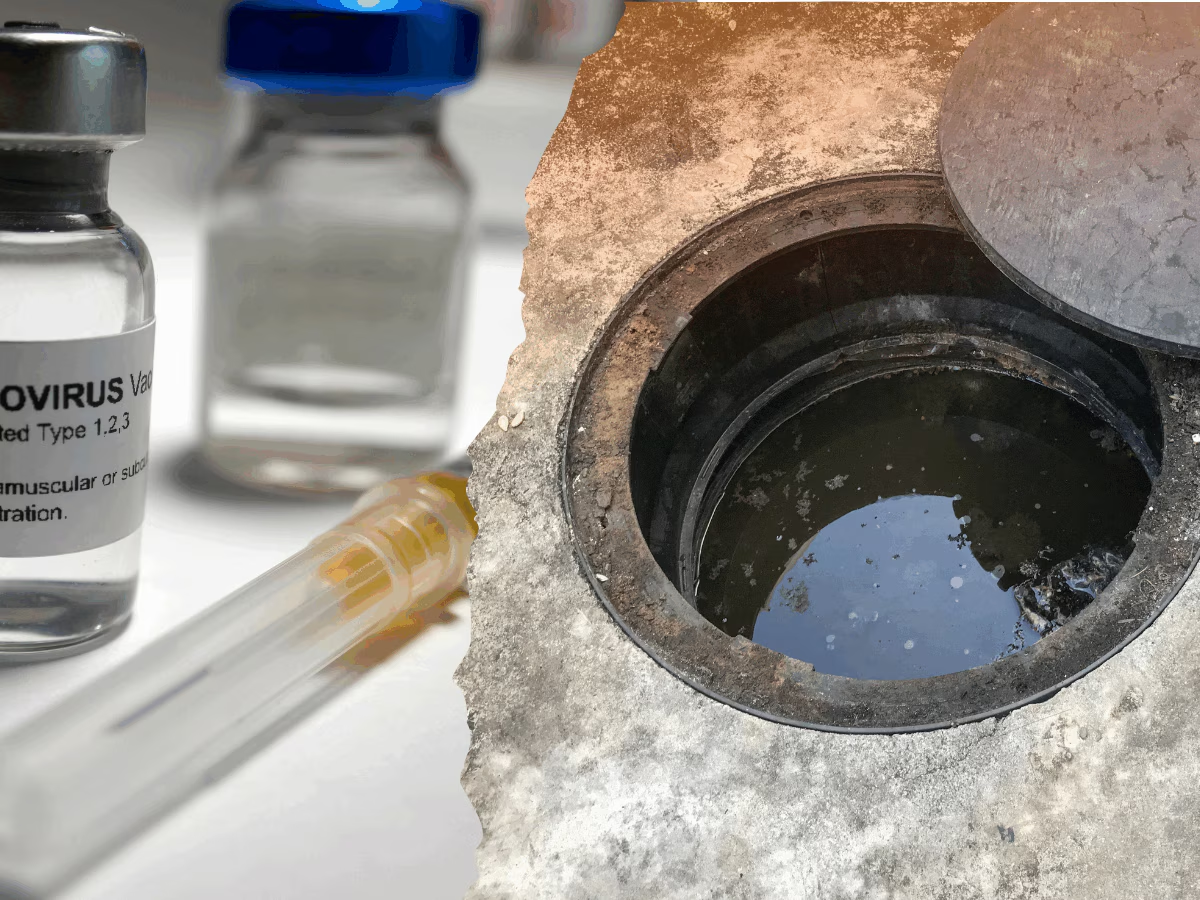


Health authorities in Ghaziabad have detected a vaccine-derived poliovirus Type-1 (VDPV1) in sewage samples collected from the Dundahera Sewage Treatment Plant and the Vijay Nagar pumping station. The finding has prompted an extensive surveillance and vaccination review exercise across several localities, but officials stress that there is no cause for panic.
The virus was identified during routine environmental monitoring carried out under India’s polio surveillance programme in collaboration with the World Health Organization (WHO). So far, no confirmed human cases of polio have been reported.
Why Has the Detection Triggered a Response?
Following the discovery, health officials launched door-to-door surveys across 12 localities in Ghaziabad. More than 100 health teams have been deployed to assess vaccination coverage among young children and monitor for any symptoms that could indicate poliovirus infection.
The survey is expected to cover nearly 30,000 households and around 1.5 lakh residents, with special attention being given to children below the age of five.
What Is Vaccine-Derived Poliovirus?
Vaccine-derived poliovirus originates from the Oral Polio Vaccine (OPV), which contains a weakened form of the virus. After vaccination, this weakened virus can be shed through stool for a short period.
In areas where vaccination coverage is low and sanitation conditions are poor, the virus can continue circulating and, in rare situations, mutate into a form capable of causing illness. This is known as circulating vaccine-derived poliovirus (cVDPV).
Health officials have clarified that the strain detected in Ghaziabad is currently considered non-virulent and remains under close observation.
Should Residents Be Worried?
Experts say there is no immediate public health emergency. The detection highlights the effectiveness of India’s environmental surveillance system, which is designed to identify potential threats before they result in human infections.
India was declared polio-free in 2014 after successfully eliminating wild poliovirus transmission. Similar vaccine-derived virus detections have occurred in other parts of the country in the past without leading to outbreaks.
As long as vaccination levels remain high, the risk to the general population remains extremely low.
Symptoms Parents Should Watch For
Most poliovirus infections do not cause serious illness and may produce mild symptoms such as:
- Fever
- Fatigue
- Headache
- Vomiting
- Muscle pain
- Neck stiffness
In rare cases, the virus can affect the nervous system and cause sudden muscle weakness, acute flaccid paralysis, or permanent disability.
Parents should seek medical attention immediately if a child experiences sudden weakness or loss of movement in the arms or legs.
Why Vaccination Remains Critical
Health experts emphasize that complete immunisation is the most effective protection against both wild and vaccine-derived poliovirus.
Parents should ensure their children receive all scheduled doses under India’s Universal Immunisation Programme, including both Oral Polio Vaccine (OPV) and Inactivated Polio Vaccine (IPV).
High vaccination coverage not only protects individual children but also prevents the virus from spreading within communities.
Precautions for Families
Authorities have advised residents to:
- Verify that children have received all recommended polio vaccine doses.
- Maintain strict hand hygiene with soap and water.
- Drink clean, filtered, or boiled water.
- Follow proper sanitation and waste disposal practices.
- Monitor children for unusual symptoms.
- Cooperate with health workers conducting surveys and immunisation checks.
A Reminder of the Importance of Vigilance
While no human cases have been linked to the sewage detection, the incident serves as a reminder that continuous surveillance and strong vaccination coverage remain essential to keeping India polio-free. Officials from the Uttar Pradesh government, WHO, and the National Centre for Disease Control are closely monitoring the situation and have assured residents that preventive measures are already in place.