
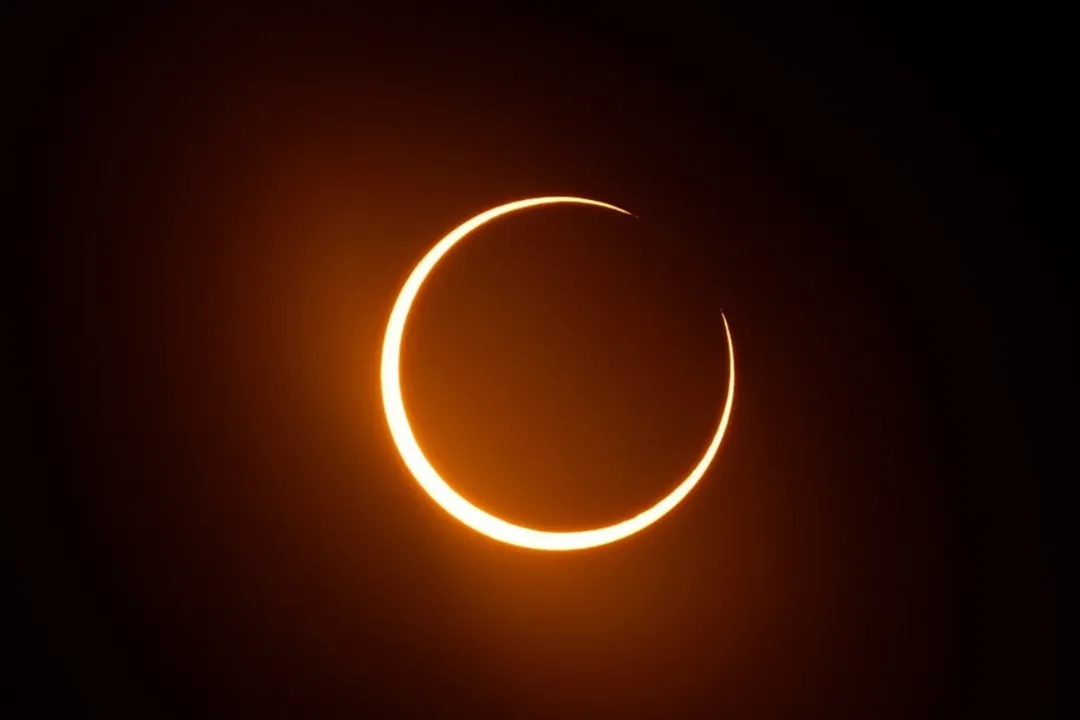


The second Surya Grahan or solar eclipse of 2026 is set to occur on August 12. This celestial phenomenon will be an annular solar eclipse, creating the spectacular ‘Ring of Fire’ effect in the sky. Although the eclipse will be visible in several countries worldwide, it will not be visible from India.
Here is everything you need to know about the solar eclipse, its timings, visibility, Sutak rules, and important precautions.
Surya Grahan 2026: Date And Timings
According to Indian Standard Time (IST), the annular solar eclipse will begin late at night on August 12 and continue into the early hours of August 13.
Eclipse Date
August 12, 2026
Eclipse Timing
9:04 PM on August 12 to 4:25 AM on August 13 (IST)
Will The Solar Eclipse Be Visible In India?
No, the August 2026 solar eclipse will not be visible in India.
Since the eclipse will occur during nighttime according to Indian time zones, Indian residents will not be able to witness the celestial event directly.
Sutak Timings For Surya Grahan 2026
As the eclipse is not visible in India, Sutak timings will not apply for Indian observers.
Sutak Details
- Sutak Begins – Not Applicable
- Sutak Ends – Not Applicable
- Sutak For Children, Elderly And Sick – Not Applicable
In Hindu traditions, Sutak is considered an inauspicious period observed before and during eclipses. During this time, people usually avoid eating, sleeping, travelling, worship rituals, and auspicious activities. Temples also remain closed in many regions during visible eclipses.
What Is An Annular Solar Eclipse?
An annular solar eclipse occurs when the Moon passes between the Earth and the Sun but does not completely block sunlight because the Moon appears slightly smaller than the Sun.
As a result, a bright ring of sunlight remains visible around the Moon, creating the famous “Ring of Fire” appearance.
Unlike a total solar eclipse, the Sun is never fully covered during an annular eclipse.
Countries Where The Eclipse Will Be Visible
The August 2026 annular solar eclipse will be visible from several parts of the world, including:
- Canada
- Greenland
- Iceland
- Northern Spain
- Arctic regions
- North-eastern Russia
- Parts of Europe
- Atlantic Ocean region
Skywatchers in these areas may witness the complete annular phase depending on weather conditions.
Safety Tips For Watching A Solar Eclipse
Experts warn that looking directly at a solar eclipse without proper protection can seriously damage eyesight.
Important Precautions
- Never look directly at the Sun with naked eyes
- Use certified eclipse glasses or solar viewers
- Use proper solar filters with telescopes, cameras, or binoculars
- Avoid ordinary sunglasses as they do not provide adequate protection
- Children should watch the eclipse only under adult supervision
Why The ‘Ring Of Fire’ Eclipse Is Special
Annular eclipses are among the most visually stunning astronomical events because of the glowing circular ring formed around the Moon. The phenomenon attracts astronomers, photographers, and skywatchers worldwide.
The August 2026 eclipse is expected to become one of the most talked-about celestial events of the year due to its wide visibility across multiple continents and the rare Ring of Fire effect.