
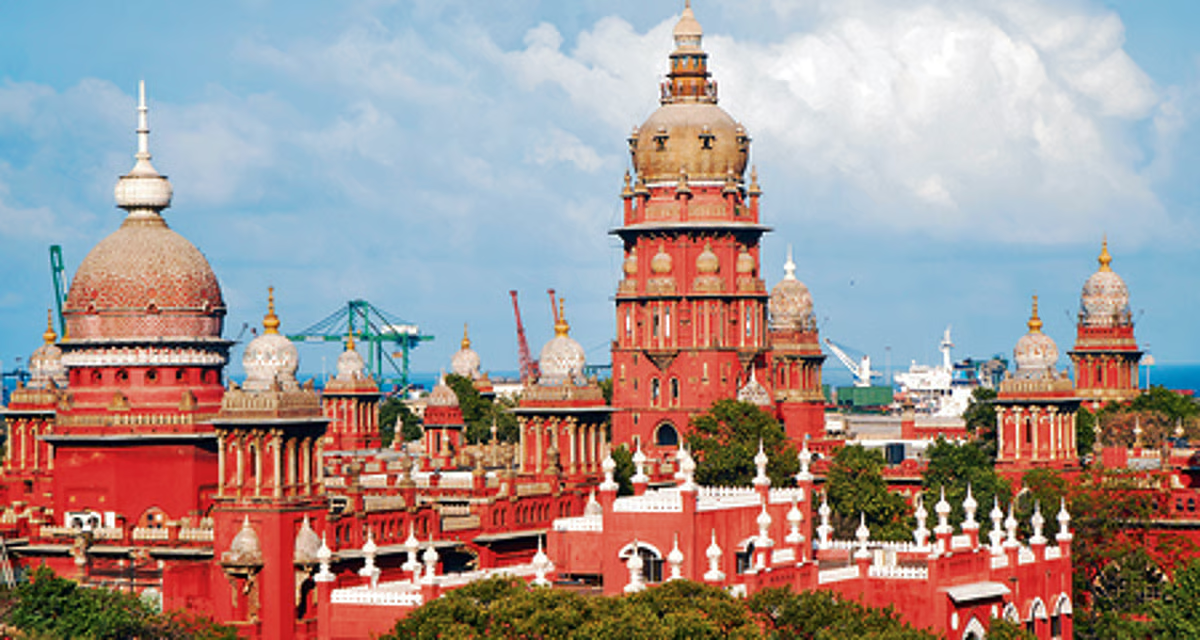


The Madras High Court has questioned the practice of granting VIP darshan privileges in temples, observing that all devotees stand equal before God and that special treatment for ministers, legislators and other dignitaries should not come at the expense of ordinary worshippers.
The court’s remarks came during a hearing on a petition seeking the abolition of VIP and special darshan facilities in temples managed by Tamil Nadu’s Hindu Religious and Charitable Endowments (HR&CE) Department.
‘God Will Not Wait for Ministers’
A division bench comprising Justice G.R. Swaminathan and Justice V. Lakshminarayanan expressed strong reservations about the culture of preferential access in places of worship.
During the hearing, the judges orally remarked that public representatives should not assume they are entitled to special treatment in temples.
“Let not Ministers and MLAs think that they can walk into a temple at any time and God will be waiting for them. Why do we need VIP darshan? Everyone is equal before God,” the bench observed.
State Defends Special Darshan System
Representing the Tamil Nadu government, Additional Advocate General P.V. Balasubramaniam argued that special darshan arrangements help manage crowd congestion and also generate significant revenue for temples.
The state further denied allegations that temple schedules were altered to accommodate VIP visits.
Controversy Over Minister’s Temple Visit
The issue gained attention following allegations that the closing time of the Subramaniya Swamy Temple in Thiruparankundram was delayed during a recent visit by Minister C.T.R. Nirmal Kumar.
However, the state government rejected the claims and submitted a report before the court. It also sought additional time to file a detailed counter affidavit.
Accepting the request, the High Court adjourned the matter for six weeks.
Petition Challenges Paid Priority Access
The petition was filed by P. Chockalingam, president of the North Tamil Nadu unit of the Vishwa Hindu Parishad (VHP).
According to the plea, Sanatana Dharma does not permit discrimination based on wealth, social status or caste, and therefore all devotees should receive equal treatment while offering prayers.
The petitioner argued that neither Hindu scriptures nor provisions under the HR&CE Act authorize special darshan facilities in exchange for additional payment.
Equality and Religious Freedom Concerns Raised
The petition further contended that charging devotees for priority access was introduced primarily as a revenue-generating mechanism and amounted to exploitation of worshippers.
It also argued that the system violates constitutional principles of equality and religious freedom by creating different categories of devotees based on their ability to pay.
Exemptions Sought for Vulnerable Groups
While seeking the abolition of VIP darshan, the petitioner requested that certain categories of devotees continue to receive special assistance.
These include senior citizens, persons with disabilities, pregnant women, newly married couples, artists performing temple-related duties, heads of state and constitutional authorities.
The plea also sought directions to ensure that all temples under the HR&CE Department provide wheelchairs and accessibility facilities for elderly and differently-abled devotees.
Matter to Be Heard Again After Six Weeks
The High Court has not passed any final order on the issue and will continue hearing the matter after the state files its detailed response. The case is expected to reignite the broader debate over equality, accessibility and revenue generation in temple administration across the country.