New Delhi: It was a scorching afternoon on May 11, 1998 — a day that would permanently alter India’s strategic position in the world and become one of the most defining moments in the country’s modern history.
At the time, I was working as a correspondent covering the Ministry of External Affairs (MEA), the Prime Minister’s Office (PMO) and Parliament for news agency ANI.
That afternoon, I received an unexpected call from Prime Minister Atal Bihari Vajpayee’s office. I was informed that the Prime Minister would address a press conference within the next couple of hours and was asked to immediately reach his residence at “7 Race Course Road” — now Lok Kalyan Marg — along with my camera crew.
The sudden message caught me completely off guard.
Atal Bihari Vajpayee was not known for convening abrupt press conferences, especially without prior indication. Naturally, questions began racing through my mind.
I rushed to my editor’s cabin and informed him about the development.
“The Prime Minister is holding a press conference around 5 pm,” I said.
Without hesitation, my editor asked, “Is J Jayalalithaa withdrawing support from the government?”
At the time, speculation about instability within the BJP-led coalition government had become common in political circles. Rumours surrounding support from allies frequently dominated conversations in Delhi’s corridors of power. The announcement of a sudden media briefing by the Prime Minister himself only fuelled curiosity among journalists.
Suspense Inside 7 Race Course Road
We quickly reached the Prime Minister’s residence after passing through multiple security checks.
Even today, the visuals from that afternoon remain crystal clear in my memory.
We had arrived early. Officials were still arranging the podium on the lawns where Vajpayee was expected to address the media. I noticed senior BJP leader and Vajpayee confidant Pramod Mahajan instructing officials to bring the national flag to the venue.
Curious, I walked up to him.
“Pramod ji, what’s the big news?” I asked.
“Just wait. You will hear it from the man himself,” he replied with a smile.
That response surprised me even more.
Mahajan was widely regarded as media-friendly and was known for discreetly sharing information with journalists. His refusal to reveal anything signalled that something extraordinarily significant was about to happen.
As preparations continued, more journalists began arriving. Senior officials close to the Prime Minister also started appearing at the venue.
“What is all this about?” I asked some of them.
None answered directly. Most simply smiled and walked ahead.
The Moment India Announced Itself As A Nuclear Power
Soon, the podium was ready. The national flag had been placed behind it. The lawn was now packed with reporters and television crews.
Then came the moment.
Atal Bihari Vajpayee slowly walked out of his residence and approached the podium. A prepared statement was placed before him. He adjusted the sheet, looked up briefly, and began speaking.
“Today, at 1545 hours, India conducted three underground nuclear tests in the Pokhran range…”
For a few seconds, everything around me seemed to stop.
My hands froze.
There was complete silence across the lawn. I could see the same stunned expression on the faces of other journalists standing nearby. Even the usual sounds of birds in the Prime Minister’s garden appeared to disappear in that moment.
India had just declared itself a nuclear weapons state.
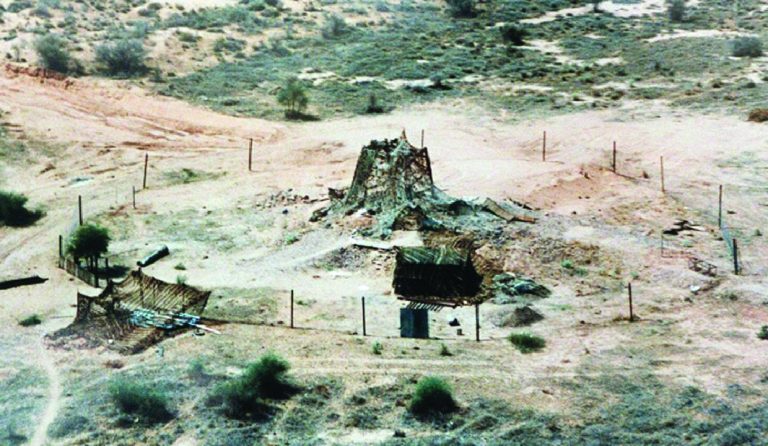
The announcement marked the beginning of Pokhran-II — a series of nuclear tests conducted in Rajasthan’s Pokhran desert under “Operation Shakti.” The tests fundamentally transformed India’s global standing and strategic posture.
The Race To Break The Biggest Story
The moment Vajpayee completed his brief statement and walked back inside, panic and adrenaline took over.
We were not allowed to carry mobile phones into the PMO complex in those days, so I rushed outside to collect my phone from the reception area.
I immediately called the newsroom and informed them that India had conducted three nuclear tests.
Before I could finish properly relaying the details, my phone battery died.
Without wasting another second, I ran toward the car with my cameraperson and used the walkie-talkie system installed inside the vehicle to contact the office again.
I instructed the newsroom to arrange a satellite feed immediately so that Vajpayee’s statement could be transmitted to Reuters, ANI’s international partner at the time.
Those were very different times for television journalism in India. Live broadcasts were rare and largely limited to the state broadcaster. Satellite transmission itself was still a major logistical exercise.
How Global Media Reacted
The newsroom moved quickly.
Within less than half an hour of Vajpayee’s announcement, I had reached Videsh Sanchar Nigam Limited (VSNL) to uplink the footage.
I still remember the conversation with the Reuters duty editor.
“Hold for a second,” he told me. “BBC, CNN and several international broadcasters want to carry Vajpayee’s statement live.”
The world had suddenly turned its attention to India.
The Pokhran nuclear tests triggered immediate global reactions, diplomatic shockwaves and international sanctions. But within India, the announcement generated an enormous sense of national pride.
“I Still Get Goosebumps”
Twenty-eight years later, the memories remain vivid.
What had begun as an ordinary, slow-moving Delhi afternoon suddenly became one of the most consequential days in India’s history.
On May 11, 1998, India did not merely conduct nuclear tests — it announced to the world that it had entered the league of nuclear powers, a reality that reshaped its geopolitical identity forever.
Even today, thinking back to those moments gives me goosebumps.