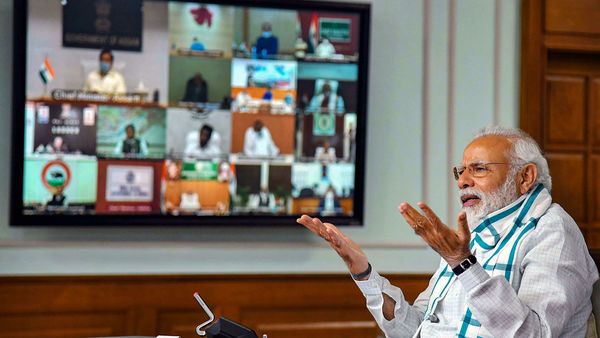
New Delhi: Prime Minister Narendra Modi’s appeal encouraging employees to work from home to conserve fuel amid disruptions linked to the ongoing Iran conflict has triggered fresh debate across India’s corporate sector. The remarks have prompted companies, HR leaders and employees to reassess whether the country is prepared to return to Covid-era style remote working if the global situation worsens further.
With peace talks between the US and Iran remaining stalled and fears growing over prolonged disruptions in global oil supplies, many believe remote work may no longer be viewed merely as a convenience, but as a practical economic response.
Speaking in Secunderabad while inaugurating projects worth around Rs 9,400 crore in Telangana, PM Modi urged citizens to cut unnecessary travel, conserve petrol and diesel, and revive habits that became common during the pandemic.
“We must prioritise work from home, online conferences, and virtual meetings again,” the Prime Minister said, framing the appeal as an act of national responsibility amid rising geopolitical tensions and soaring crude oil prices.
The Prime Minister also encouraged people living in metro-connected cities to use public transport wherever possible and adopt carpooling to reduce fuel consumption.
“In this time of global crisis, we have to make a resolution keeping duty paramount,” he said. “A big resolution is to use petrol and diesel sparingly.”
Employees Say Hybrid Work Is Already The New Normal
For many professionals, the transition back to remote or hybrid work no longer appears difficult.
Shruti Pal, a communications professional based in Mumbai, said work culture has evolved significantly since the pandemic years.
“The Prime Minister’s appeal has sparked a much-needed conversation around flexibility, productivity and wellbeing. Work today is less about physical location and more about outcomes. If organisations balance business priorities with employee needs, hybrid and remote work models can continue to be effective,” she said.
Abhishek T, an employee at a telecom company in Gurugram, said many offices are operationally prepared for remote work if needed.
“Remote and hybrid work are already more accepted now. From an operational perspective, our office can adapt, although there may be some coordination challenges initially. Personally, I feel confident that productivity and timelines can still be maintained while working remotely,” he said.
Industry Leaders Back Flexible Work Policies
Several business leaders also believe the current situation presents an opportunity to rethink workplace structures.
Raghunandan Saraf, Founder and CEO of Saraf Furniture, said the conversation around remote work is no longer just about convenience.
“It is about building a resilient and productive workforce. Hybrid and remote models improve employee wellbeing, optimise resources and increase accountability. When implemented responsibly, work-from-home delivers sustainable outcomes for both employers and employees,” he said.
Nikhar Arora, CEO of Mentoria and BOTS.AI, said the pandemic permanently changed perceptions around productivity.
“Employees have experienced relief from long commutes and better work-life balance. Employers have also seen positive results. Work should now be measured by outcomes rather than time spent sitting in an office,” he said.
HR Experts Say Future Workplaces Will Be Built On Trust
HR professionals believe flexible work arrangements are becoming closely linked to employee wellness and retention.
Yogish Arora, former VP HR at ING Investment Management and CEO of HR Anexi, said companies are increasingly recognising the mental health benefits of flexible work.
“WFH improves time management, reduces daily stress and keeps employees more energised. Future workplace models will be built around flexibility and trust rather than rigid office structures,” he said.
Dipal Dutta, CEO at RedoQ, said companies can use this moment to build a stronger long-term remote work framework.
“A Hybrid 2.0 model with digital-first operations can reduce fuel consumption while improving employee morale and retention. Companies can adopt satellite hubs and outcome-based performance systems without compromising collaboration,” he said.
Not Every Sector Can Shift Easily To Remote Work
However, experts caution that work-from-home cannot be implemented uniformly across industries.
Balasubramanian A, Senior Vice President at TeamLease Services, said remote work readiness depends heavily on the nature of the job.
“Employers are more open to flexible work today, but the shift is role-specific. Organisations will enable remote work where it improves outcomes, not as a blanket policy. The future will likely be a structured, role-based hybrid model,” he explained.
Anil Agarwal, Founder of InCruiter, echoed similar concerns and pointed out that many sectors still lack the required infrastructure.
“Tech firms can pivot quickly, but manufacturing companies and SMEs may struggle. Successful remote work requires trust, technology and disciplined processes. Many organisations are still not fully equipped,” he said.
Fuel Conservation And Economic Concerns In Focus
The Prime Minister’s remarks come at a time when crude oil prices are witnessing sharp volatility due to the escalating West Asia conflict. Concerns over disruptions in the Strait of Hormuz, a critical global oil supply route, have also intensified fears of rising fuel prices and inflationary pressure.
Against this backdrop, PM Modi’s appeal has widened the discussion beyond corporate flexibility to include energy conservation, economic preparedness and national resilience.
While no formal directive has been announced, many in the corporate sector believe the message serves as an early warning to prepare contingency plans should geopolitical tensions continue to escalate.