
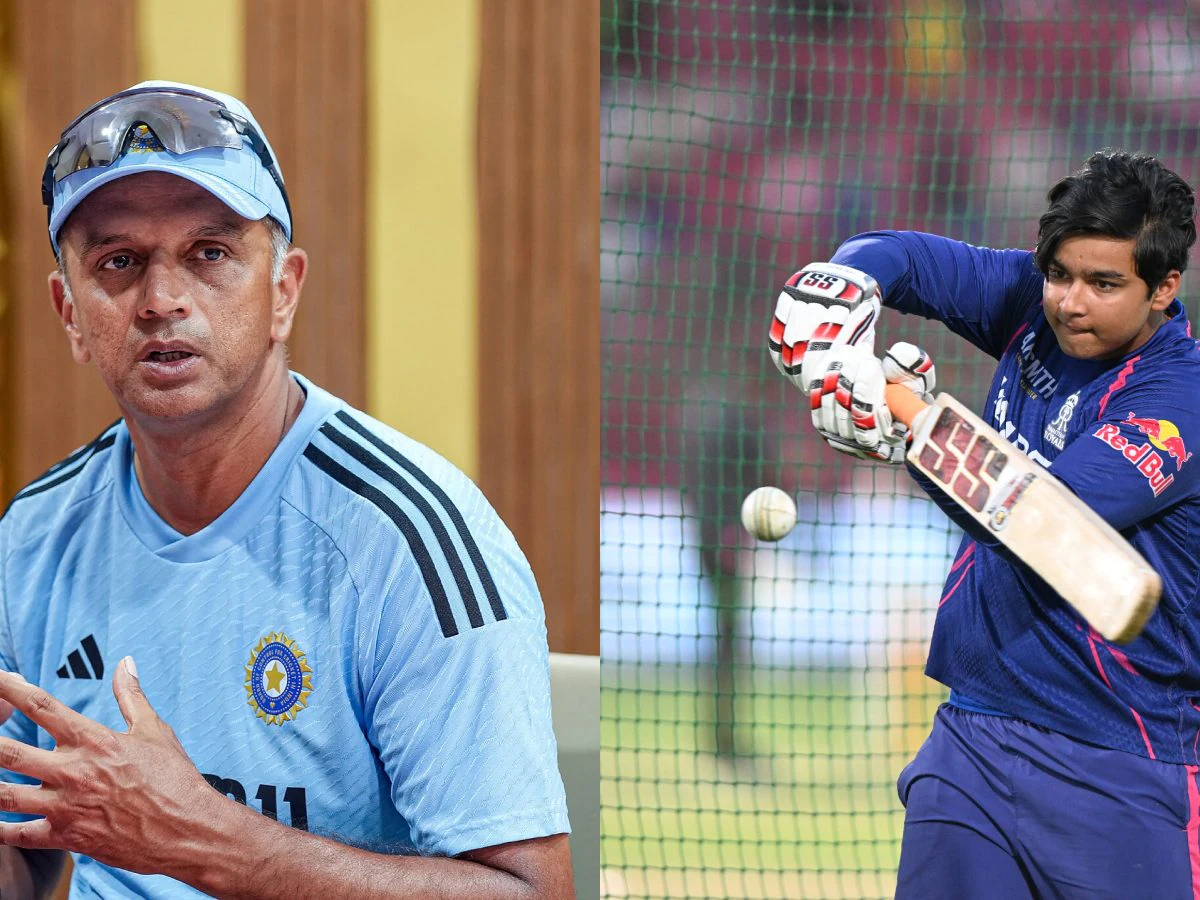


Batting legend and former India head coach Rahul Dravid has said that bowlers in T20 cricket have some “catching up” to do as modern batting standards continue to rise rapidly. He also stressed that more challenging pitches are needed to restore balance in the shortest format of the game.
Dravid noted that over the past few years, batting in T20 cricket has evolved significantly, with players becoming more aggressive and innovative in clearing boundaries and accessing all parts of the ground.
“In a sense, to see the quality of batting that has happened over the last two or three years, I think the bowlers in that format of the game will slowly have to do some catching up,” Dravid said, adding that batters now seem better equipped for modern T20 demands.
He said the ability to hit sixes consistently and adapt to different match situations has improved “leaps and bounds,” putting additional pressure on bowlers to continuously upgrade their skills. However, he expressed confidence that bowlers will adapt over time and remain competitive.
Dravid, who coached India to the 2024 T20 World Cup title, said the balance in T20 cricket has currently tilted in favour of batters. According to him, more bowl-friendly conditions could help restore equilibrium.
“I think they may need a little bit of support and the way is probably to have more challenging wickets, whether it is tracks that turn or offer more pace and bounce,” he explained.
He also pointed out that adjusting boundary sizes is no longer a practical option, making pitch conditions the most realistic way to assist bowlers.
Dravid added that the game naturally goes through cycles where either batting or bowling dominates, and currently white-ball cricket is in a phase where batters have the upper hand. He, however, expects bowlers to bounce back in the coming years.
While open to rule changes that could assist bowlers, Dravid cautioned against over-correcting the balance in either direction, saying the sport must avoid becoming overly favourable to either batters or bowlers.
“I think at some stage we don’t want the balance to be too skewed either way,” he said, emphasising the need for a fair contest between bat and ball.