
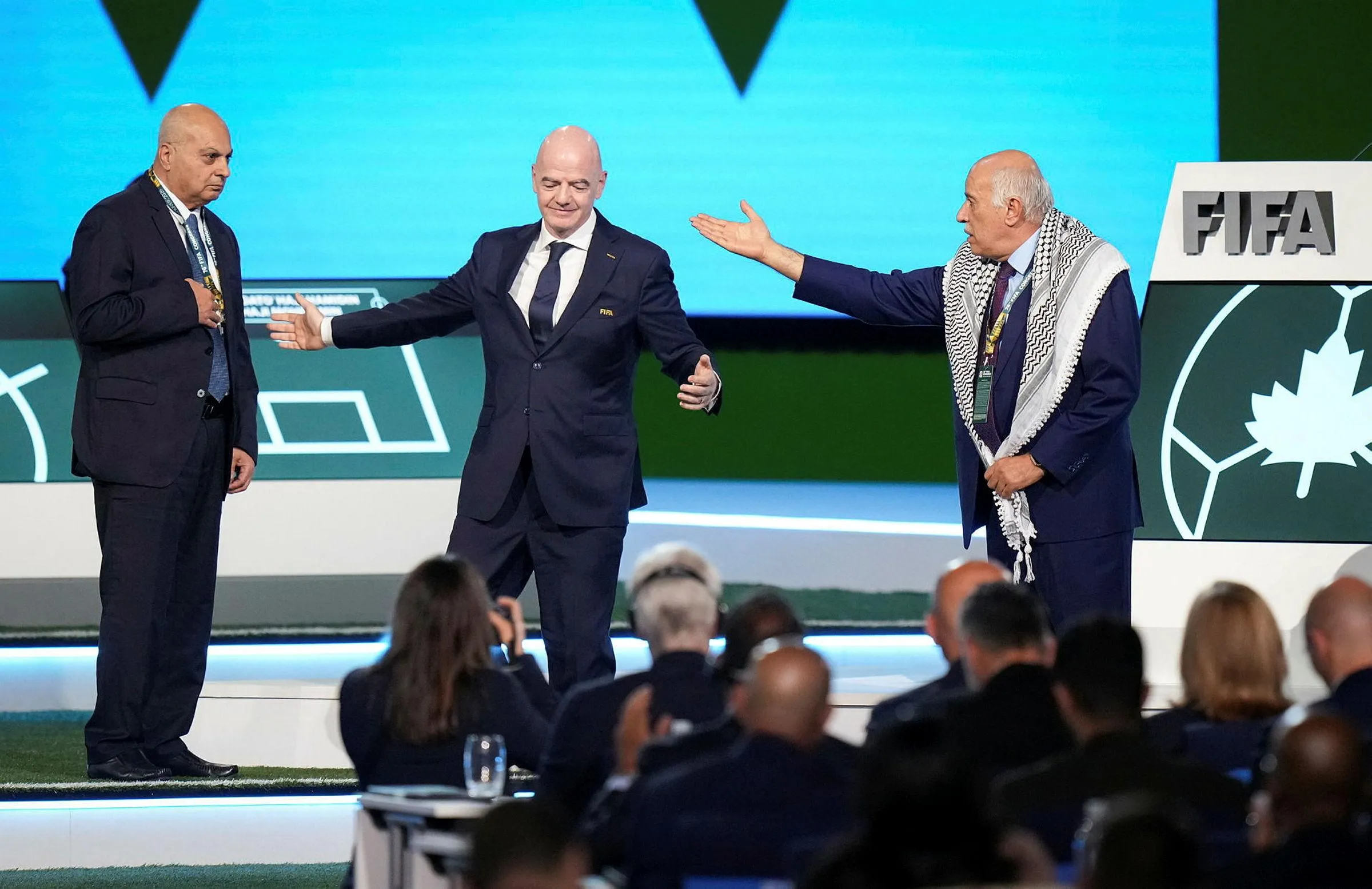


The 76th FIFA Congress witnessed a moment of intense diplomatic friction on Thursday, April 30, 2026, as Palestinian Football Association (PFA) President Jibril Rajoub flatly refused to shake hands or share the stage with Israel Football Association (IFA) Vice-President Basim Sheikh Suliman.
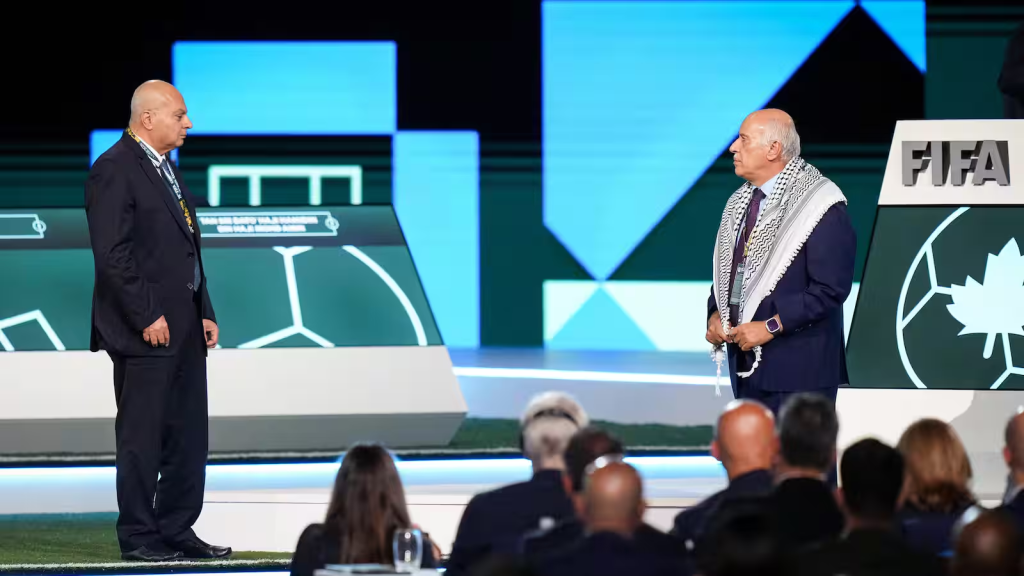
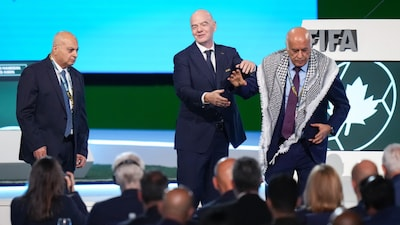
The incident occurred at the Vancouver Convention Centre when FIFA President Gianni Infantino attempted to bring both officials together in a gesture of unity. Rajoub’s refusal left the FIFA head visibly caught off guard, highlighting the deep-seated political tensions spilling into the world of international football.
“No Handshake for Fascism”: The PFA’s Hardline Stance
As Infantino placed a hand on Rajoub’s arm to guide him toward Suliman, the Palestinian chief walked away, later citing the ongoing conflict and humanitarian crisis in Gaza as the reason.
Susan Shalabi, Vice-President of the PFA, defended the move, stating, “I cannot shake the hand of someone the Israelis have brought to whitewash their fascism and genocide.” Rajoub echoed these sentiments, questioning how he could participate in a “photo-op” with a representative of a government he views as criminal. “Sport is sport, but if the other side is representing [Benjamin] Netanyahu… how can I shake hands?” Rajoub remarked to reporters.
The Legal Battle Over West Bank Clubs
The confrontation follows the PFA’s recent appeal to the Court of Arbitration for Sport (CAS). The PFA is challenging FIFA’s decision not to sanction Israel for allowing clubs based in West Bank settlements to compete in IFA-run leagues.
- The PFA Argument: Clubs based in these territories violate FIFA statutes regarding the rights of member associations.
- The FIFA Ruling: Last month, FIFA declined to take action, citing the “unresolved legal status” of the West Bank under public international law.
- Infantino’s Response: Despite the snub, Infantino maintained a diplomatic tone, stating, “We will work together… to give hope to the children. These are complex matters.”
Global Politics Shadows the 2026 World Cup
The drama in Vancouver didn’t end on the stage. As the Palestinian delegation exited the venue, they were confronted by protesters demanding that FIFA also ban Iran from the upcoming 2026 World Cup, alleging the team represents the Islamic Revolutionary Guard Corps (IRGC). This intersection of Middle Eastern geopolitics—including the recent US-Iran oil tensions and Israel’s internal political shifts following Prime Minister Netanyahu’s health disclosures—continues to pose a significant challenge for FIFA as it prepares for the global tournament in North America.