
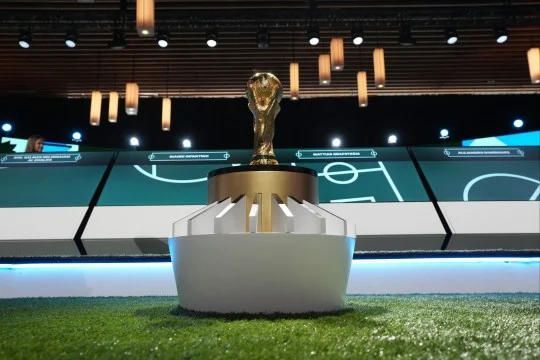


With the 2026 FIFA World Cup set to begin on June 11 across the United States, Canada, and Mexico, Indian football fans are facing an unusual situation—there is still no confirmed broadcaster for the tournament in the country.
While FIFA has already finalised media rights deals in over 175 territories, negotiations in India remain stuck due to a significant gap between the governing body’s valuation and broadcasters’ expectations.
Standoff Over Media Rights Pricing
At the centre of the deadlock is pricing. FIFA had initially sought close to $100 million for the combined India media rights package for the 2026 and 2030 editions, before reportedly lowering its expectations.
JioStar—formed after the merger of Reliance-backed Viacom18 and Disney Star—offered around $20 million for the 2026 edition, but the bid was rejected.
This has left the world’s biggest football tournament without a broadcast partner in one of its largest potential markets.
Lessons From Qatar 2022
The 2022 FIFA World Cup marked a turning point for football viewership in India. The rights were acquired by Viacom18 for about $60 million, with matches streamed for free on JioCinema and telecast on Sports18.
The tournament recorded massive engagement:
- Over 110 million digital viewers
- Around 32 million viewers for the Argentina vs France final alone
Despite that success, the current market dynamics have changed significantly.
Why Broadcasters Are Holding Back
Several factors are making broadcasters cautious:
1. Unfavourable Match Timings
Unlike Qatar 2022, matches in 2026 will be played in North American time zones, meaning late-night and early-morning kickoffs in India, impacting viewership and ad revenue.
2. Rising Costs And Competition
Broadcasters are already heavily invested in cricket rights, which dominate the Indian sports market.
3. Advertising Challenges
Football offers fewer ad breaks compared to cricket, limiting revenue opportunities during live matches.
4. Regulatory Changes
New restrictions on certain advertising categories, including real-money gaming, are also affecting revenue models.
Can DD Sports Step In As A Backup?
Speculation has grown around Prasar Bharati and its channel DD Sports stepping in if private negotiations fail.
As a free-to-air broadcaster, DD Sports could ensure nationwide access, but challenges remain:
- Limited large-scale digital streaming infrastructure
- High production and operational costs for a 104-match tournament
- Multiple simultaneous matches requiring extensive coverage
While not impossible, industry insiders still see this as a fallback option rather than the primary outcome.
Late Deal Still Most Likely Outcome
Despite the stalemate, experts believe a last-minute agreement is the most probable scenario. Reports suggest a revised deal in the range of $15–20 million could be the middle ground between FIFA and JioStar.
However, with the countdown ticking, every delay reduces broadcasters’ ability to promote the tournament and secure advertising deals.
A Historic World Cup, But Uncertain Access
The 2026 edition will be the largest World Cup in history, featuring:
- 48 teams
- 104 matches
- Hosted across three countries
Yet, despite its scale and global appeal, Indian fans still do not know where they will watch the action—an extraordinary situation for a tournament of this magnitude.