
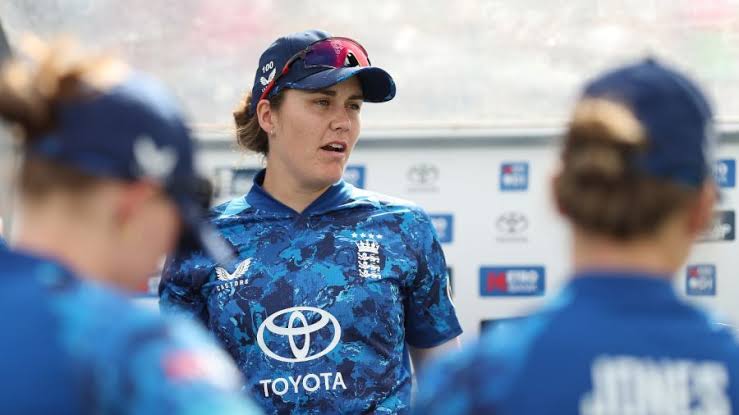


In a moment that will forever be etched in cricket history, England captain Nat Sciver-Brunt walked onto the hallowed turf of Lord’s carrying her infant son, Theo, ahead of the ICC Women’s T20 World Cup 2026 final against Australia.
Holding Theo close during the national anthems, Sciver-Brunt drew a roaring standing ovation from a packed stadium. With her wife and former England fast bowler, Katherine Sciver-Brunt, watching proudly from the stands, the heartwarming scene quickly transcended the sport to become the defining image of the entire tournament.
An Inspiring Comeback on the Pitch
Sciver-Brunt’s presence in the final was a triumph in itself. After a calf injury forced her to miss three crucial group-stage matches, the elite all-rounder made a sensational comeback for the semi-final against South Africa. She played a masterful, match-winning knock of 75 runs off just 47 balls, anchoring a record 133-run partnership with Heather Knight to propel England into their first T20 World Cup final since 2018.
Backed by ICC’s Landmark Maternity Policy
This touching pre-match moment was a direct reflection of structural progress within the sport. In June 2026, the International Cricket Council (ICC) introduced its pioneering Return to Play Post-Pregnancy Guidelines to support female athletes returning to global competition after childbirth.
Built around a holistic “6 Rs” framework, the policy ensures comprehensive structural backing for player-mothers:
- Ready & Review: Medical and mental health check-ins.
- Restore & Recondition: Tailored physical rehabilitation and flexible training programs.
- Return & Refine: Comprehensive childcare assistance, travel support, and baby-friendly amenities at venues.
“The initiative is aimed at ensuring that no player has to choose between representing her country and starting a family,” stated ICC Chair Jay Shah.
More Than a Game
As England faced off against Australia—with England chasing their first T20 crown since 2009 and Australia gunning for a record-extending seventh title—the scoreboard became secondary to a larger cultural shift. Sciver-Brunt’s walk with Theo proved definitively that motherhood and elite athletic excellence can beautifully coexist, signaling a progressive new era where family is celebrated as part of an athlete’s journey rather than a barrier to success.