
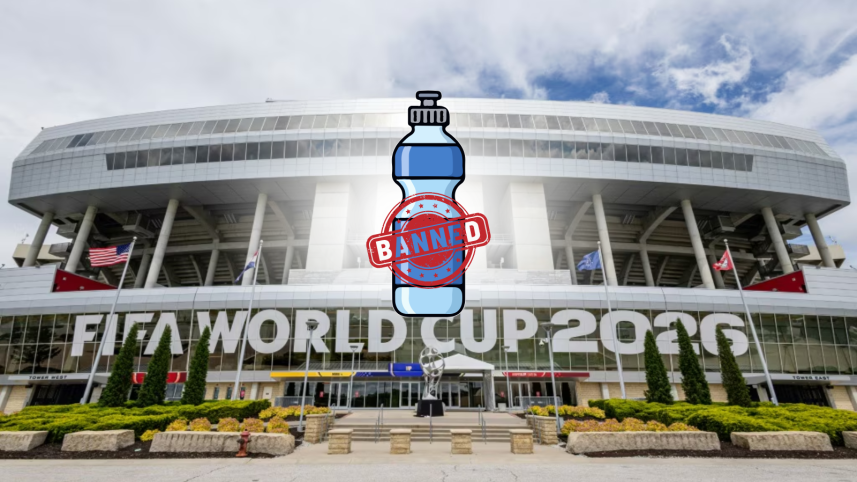


In a major, eleventh-hour policy shift that is bound to frustrate soccer fans worldwide, FIFA has officially prohibited spectators from bringing reusable water bottles into venues across North America. The unexpected amendment arrives just days before the highly anticipated kick-off of the expanded tournament, forcing hundreds of thousands of ticket holders to completely rethink how they will stay hydrated during peak summer matches.
The abrupt regulatory change was first uncovered in revisions made to FIFA’s official Stadium Code of Conduct. Originally, the governing body’s guidelines explicitly accommodated sustainability efforts, featuring a clause that permitted fans to carry “empty, transparent, reusable plastic bottles, up to 1 liter in capacity” into the match venues to utilize free in-stadium water refill stations.
“For the avoidance of doubt, reusable water bottles may not be brought into the stadium.”
— Updated FIFA World Cup 2026 Stadium Code of Conduct (Issued June 2, 2026)
Corporate Ties and Heat Waves: Fan Backlash Looms
The updated directive completely eliminates the eco-friendly concession, strictly categorizing all reusable containers alongside previously banned items like glass and metal containers. While FIFA justifies the sweeping ban on bottles by classifying them as potential projectiles that could cause injury if thrown onto the pitch, critics are pointing to commercial motivations. The decision is generating massive immediate pushback from fans who will now be entirely dependent on purchasing expensive commercial plastic bottles once inside the security perimeter.
This policy strongly mirrors the strategy observed during last year’s FIFA Club World Cup, where players and traveling supporters openly raised safety concerns regarding extreme summer heat. At those matches, standard bottled water inside the venues was sold for premium rates ranging between $4 and $6. While official concession menus for the 2026 tournament have not yet been published, FIFA’s long-standing multi-decade partnership with beverage giant Coca-Cola ensures that its mass-market bottled water brand, Dasani, will be heavily distributed across all match venues.
The Scale of the Historic Tournament
The controversial stadium rule adjustment comes right as tournament organizers finalize the unprecedented logistics for what is officially slated to be the largest single sporting event in global history.
- Expanded Roster: Official final squad registrations have confirmed a historic baseline of 1,248 active players arriving from 48 distinct nations across the globe.
- Defending Greatness: The tournament marks the final stretch for teams trying to dethrone reigning world champions Argentina, who captured the global crown following their legendary 2022 campaign in Qatar.
- Infrastructure Stress: With an unprecedented count of match fixtures distributed across three massive host nations (the United States, Canada, and Mexico), stadium security operations are under extreme scrutiny.
| Tournament Metrics | 2022 World Cup (Qatar) | 2026 World Cup (North America) |
| Competing Countries | 32 Nations | 48 Nations |
| Total Registered Players | 832 Players | 1,248 Players |
| Stadium Hydration Rules | Allowed transparent refills in select zones | Total Ban on all Reusable Bottles |
As countdown clocks tick down to the opening match, the sudden policy flip highlights the intense friction between corporate sponsorship rights, stadium safety, and fan comfort. Traveling spectators are being strongly urged by local fan groups to check individual stadium guidelines before arriving at security checkpoints to avoid losing expensive, premium reusable gear at the gates.