


A dramatic milestone in China’s space programme has reignited the global debate over technological leadership. Off the coast of Hainan, a Long March-10B booster successfully separated from its upper stage, descended vertically over the South China Sea, and was recovered using a cable-net system mounted on a recovery vessel. The demonstration marked the world’s first successful sea-based net capture of an orbital rocket, highlighting China’s growing ambitions in reusable launch technology.
While the achievement drew global attention, it also symbolised a much broader transformation taking place across the world’s technology landscape.
The End of a Unipolar Tech Order
For nearly three decades after the Cold War, the global technology ecosystem followed a familiar pattern: the United States led in innovation, China became the manufacturing powerhouse, and much of the rest of the world consumed the resulting technologies.
That model is now undergoing a profound shift.
China is no longer merely manufacturing technologies conceived elsewhere. Instead, it is developing its own innovation ecosystem across strategic sectors including artificial intelligence (AI), semiconductors, electric vehicles (EVs), batteries, robotics, renewable energy and commercial space.
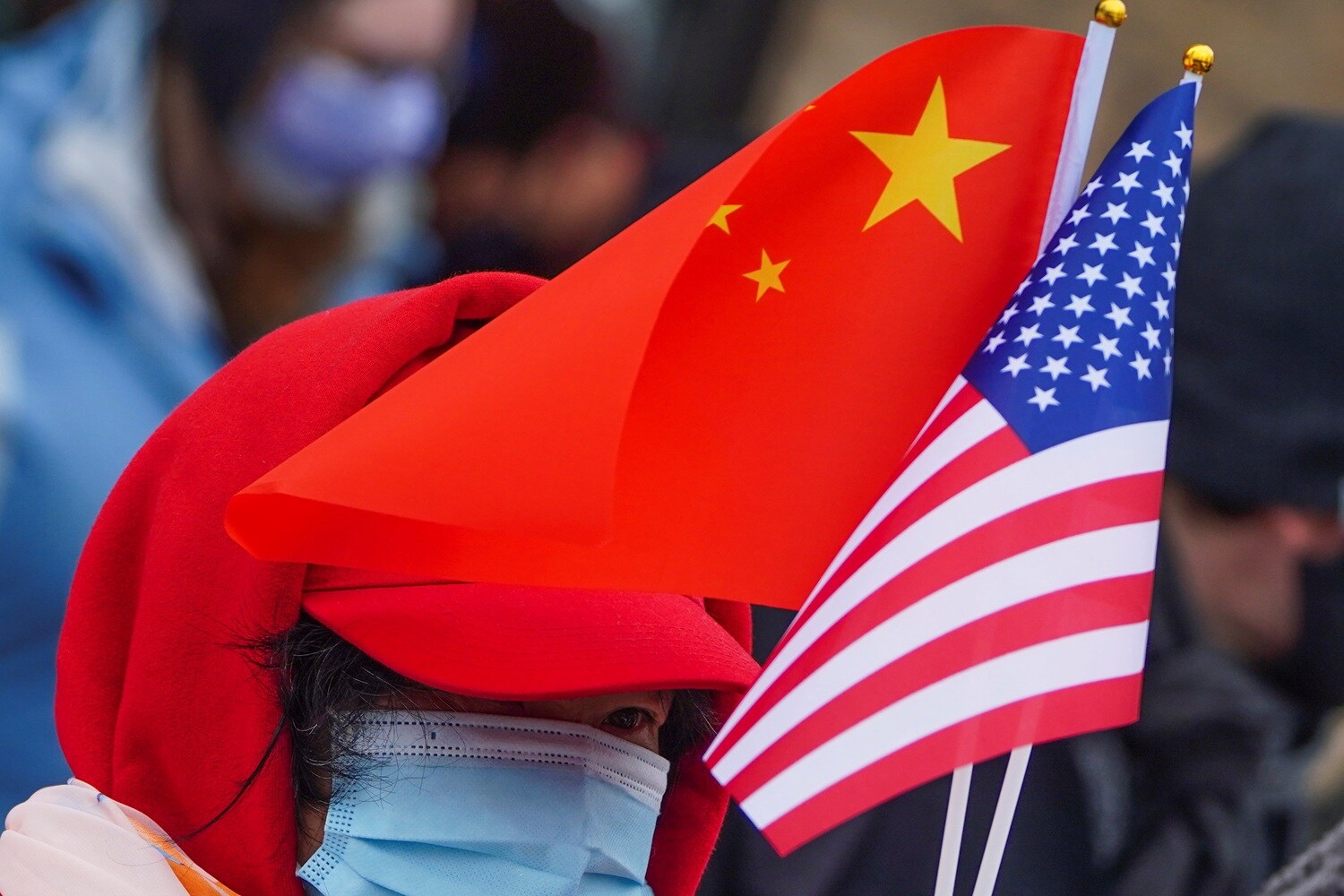
The result is not necessarily the replacement of American technological leadership but the emergence of two distinct technology superpowers pursuing different paths to innovation.
Two Different Models of Innovation
The United States continues to excel at frontier research, scientific discovery and venture-backed innovation.
Silicon Valley remains home to companies pushing technological boundaries, with firms such as OpenAI, Google, Meta and Anthropic investing hundreds of billions of dollars in advanced AI research. America’s universities, venture capital ecosystem and capital markets continue to generate groundbreaking ideas and attract global talent.
China, by contrast, has adopted a different philosophy.
Rather than focusing primarily on breakthrough discoveries, Beijing has concentrated on rapid industrialisation, manufacturing scale, supply-chain integration and cost efficiency.
While American companies often compete to build the most advanced technology, Chinese firms increasingly compete to manufacture, deploy and commercialise technologies at unprecedented speed and lower costs.
Artificial Intelligence: Two Competing Ecosystems
Artificial intelligence offers one of the clearest examples of this divergence.
In the United States, AI development has largely centred on increasingly powerful frontier models backed by massive computing infrastructure.
China has pursued a more deployment-oriented strategy.
Companies such as DeepSeek have demonstrated that highly capable AI models can be developed with greater efficiency, while Alibaba’s Qwen models have emerged as widely adopted open-weight alternatives, gaining traction beyond China’s borders.
Rather than attempting to replicate Silicon Valley exactly, China has built a parallel AI ecosystem focused on affordability, accessibility and industrial adoption.
Semiconductors: Export Controls Fuel Domestic Innovation
US export restrictions aimed at limiting China’s access to advanced chips have also reshaped the semiconductor race.
Instead of slowing technological development entirely, these restrictions have accelerated Beijing’s efforts to build domestic alternatives.
Companies such as Huawei are expanding their AI hardware and software ecosystems to reduce dependence on American-designed processors and software infrastructure.
This strategy reflects China’s broader objective of technological self-reliance across critical industries.
Electric Vehicles: Scale Versus Software
The global EV industry illustrates another contrast between the two innovation models.
Tesla revolutionised the industry through software integration, autonomous driving capabilities and digital user experiences.
China’s BYD, meanwhile, has focused on manufacturing efficiency, vertical integration and cost competitiveness.
Rather than competing solely on software, Chinese manufacturers have prioritised production scale, battery technology and supply-chain control, enabling them to become formidable global competitors.
Commercial Space Enters a New Era
Space exploration has become another arena where technological competition is intensifying.
SpaceX remains the global leader in reusable rocket technology.
However, China’s successful reusable booster recovery demonstrates that multiple engineering approaches may now coexist.
Rather than simply replicating Western models, China is pursuing state-backed innovations designed around its own industrial strengths.
The achievement also echoes an often-overlooked historical reality.
Although the Apollo programme is frequently portrayed as a triumph of American private innovation, the Moon mission relied heavily on massive government-led industrial mobilisation.
At its peak in 1966, NASA consumed approximately 4.4% of the US federal budget, illustrating how technological breakthroughs often require large-scale state support alongside scientific excellence.
China appears to have embraced a similar model, combining engineering talent with coordinated industrial policy.
Valuation Versus Manufacturing
One major difference between the two technology ecosystems lies in how success is measured.
In the United States, technology companies are frequently evaluated by market capitalisation.
Companies including Nvidia, Apple and Microsoft have crossed trillion-dollar valuations, while firms like OpenAI have become among the world’s most valuable private enterprises.
China, however, places greater emphasis on manufacturing capability, production efficiency and global market share.
Its technology companies are encouraged to build rapidly, reduce costs and dominate supply chains rather than maximise financial valuations alone.
This approach has helped China establish leadership across industries such as:
- Electric vehicles
- Batteries
- Solar panels
- Drones
- Robotics
- High-speed rail
- Artificial intelligence
Intense domestic competition, often characterised by aggressive price wars, has compressed profit margins but strengthened companies’ ability to compete internationally.
A New Kind of Technological Rivalry
Unlike the Cold War rivalry between the United States and the Soviet Union, today’s competition is unfolding within an interconnected global economy.
China remains deeply integrated into international manufacturing and supply chains even as geopolitical tensions continue to rise.
Many products assembled in countries such as Vietnam or Mexico still depend heavily on Chinese-made components and manufacturing networks.
This interdependence makes today’s technological competition far more complex than previous geopolitical rivalries.
India’s Strategic Opportunity
For India, the emergence of two competing technology ecosystems presents both opportunities and challenges.
India has developed strong capabilities in software and digital services but continues to strengthen its semiconductor manufacturing, advanced hardware production and industrial infrastructure.
Unlike China, India’s growth model must simultaneously address large-scale economic development while competing at the technological frontier.
The contrast is becoming increasingly visible.
While China is testing reusable orbital rockets, India is preparing to launch its first privately developed orbital launch vehicle, reflecting the country’s expanding ambitions in commercial space.
However, geopolitical factors also influence India’s technological trajectory.
China’s manufacturing rise benefited from decades of relatively unrestricted access to Western markets.
Today’s global trade environment is considerably more fragmented, with export controls and restrictions affecting advanced technologies such as AI chips.
Some analysts argue that broader access to frontier computing infrastructure and advanced semiconductor technologies would enable countries like India to accelerate innovation while strengthening global technological competition.
A Multipolar Technology Future
The defining feature of the post-pandemic world may not be which country produces the single greatest technological breakthrough, but which can industrialise, manufacture and deploy innovations most effectively.
The United States continues to lead in scientific research, entrepreneurship and breakthrough discoveries.
China has demonstrated remarkable capabilities in manufacturing scale, engineering execution and rapid commercialisation.
Together, these two competing ecosystems are reshaping global technology, forcing governments, businesses and investors to adapt to a world no longer driven by a single centre of innovation.
The successful recovery of the Long March-10B booster serves as a reminder that technological leadership is no longer defined solely by invention. Increasingly, it is also determined by the ability to manufacture efficiently, deploy rapidly and scale globally.