
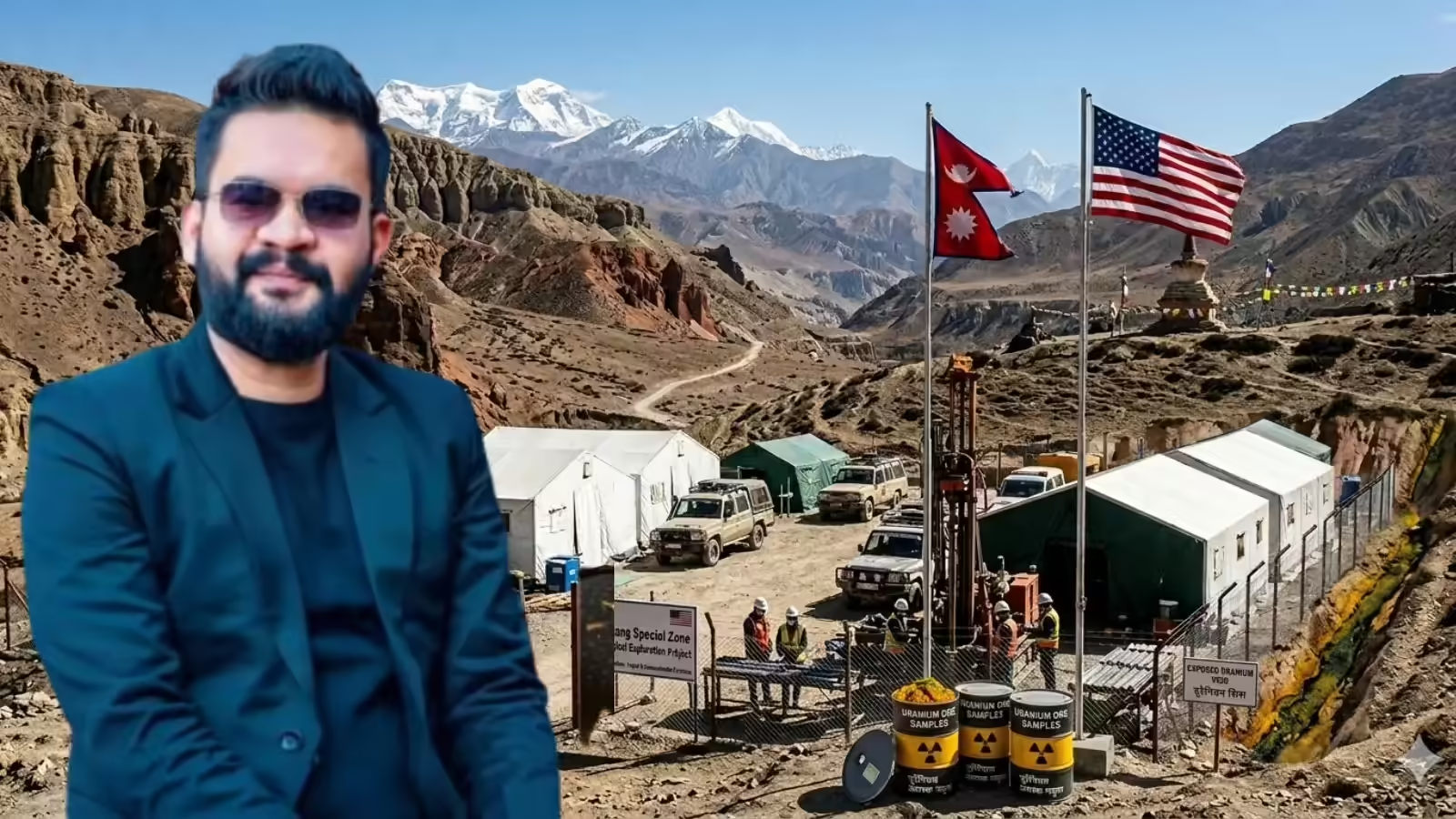


International tensions are rising over the multi-billion dollar uranium deposits hidden in Nepal’s Himalayan region of Mustang. Reports suggest the Nepal government is preparing to hand over the processing rights of this strategic reserve—located dangerously close to the Chinese border—to a joint US and Australian technical team.
The “Mustang Special Zone” (MSZ) Proposal
Claims indicate that the Nepal government plans to declare a 30-square-kilometer area in Lo Manthang, Upper Mustang, as the “Mustang Special Zone.”
- High Security: The area is expected to be developed as a “High-Security Research Zone,” with access restricted exclusively to the Nepal Army and US-Australian technical experts.
- Resource Potential: Confirmed in 2014, the mine is approximately 10 km long and 3 km wide, situated just 10 km from the Nepal-China border.
- Strategic Value: Scientists have identified the uranium as “medium grade,” making it highly significant for energy production and strategic military purposes.
The “Pax Silica” Alliance and US Involvement
The sudden, exclusive visit of US Assistant Secretary of State Samir Paul Kapoor to Nepal has fueled speculation about a covert agreement.
- The Alliance: A US-led coalition named “Pax Silica” has reportedly been formed to counter Chinese dominance over rare earth elements and critical minerals.
- The MCC Link: Reports suggest that electricity from the controversial US MCC Project will be used to power uranium processing units and new AI data centers in Mustang.
- Confidential Documents: While former PM Sushila Karki and Finance Minister Rameshwar Khanal denied the deal, leaked documents suggest that “in-principle” consent was granted in March 2026 to ensure data sovereignty and link power grids to these projects.
🌏 Geopolitical Friction: Concerns for India and China
This development transcends Nepal’s domestic policy, affecting the security landscape of South Asia:
- China: Beijing views the presence of US technical and military-adjacent teams so close to its border as a direct threat to its regional influence.
- India: New Delhi remains sensitive to the presence of any “third-party” superpower (specifically the US) near its northern borders and strategic buffer zones.
- Nepal’s Constraints: Lacking the technology, infrastructure, and capital to extract uranium independently, the Nepal government is increasingly reliant on foreign intervention.
Key takeaway: While no official contract has been publicly announced, the flurry of diplomatic activity and preliminary agreements regarding “digital hash” security suggest a new “Great Game” is unfolding in the heart of the Himalayas.