
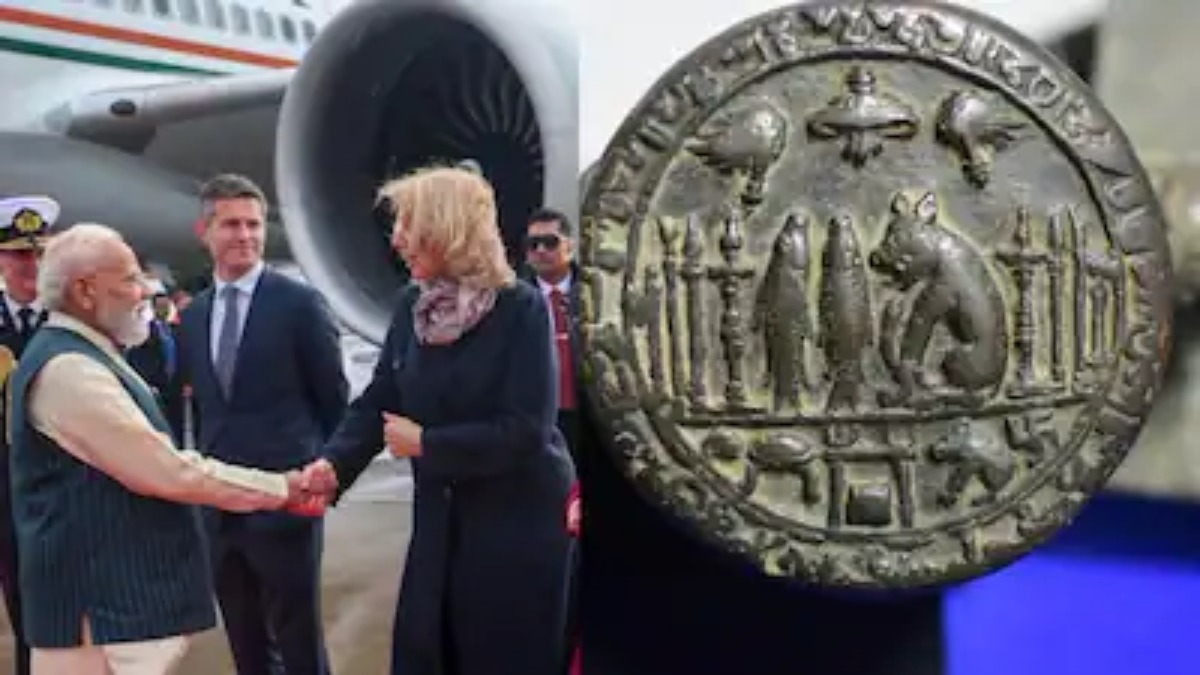


The Netherlands has formally returned the historic Anaimangalam copper plates, also known as the Leiden Plates, to India, marking a significant moment in the recovery of cultural artefacts taken during the colonial era. The handover took place during Prime Minister Narendra Modi’s official visit to the Netherlands as part of his multi-nation tour.
The copper plates, which date back to the Chola period under Emperor Rajaraja Chola I (985–1014 CE), had been housed at Leiden University for more than 100 years. Historians believe they were taken from the Coromandel Coast during Dutch colonial rule in the 18th century before eventually becoming part of the university’s Asian manuscript collection in the 19th century.
A Rare Record of Chola Era Administration and Trade
The Anaimangalam copper plates are considered among the most valuable surviving inscriptions from the Chola dynasty. They contain detailed records of land grants and tax donations made to the Chudamani Vihara, a Buddhist monastery in Nagapattinam. The monastery itself was linked to Sri Mara Vijayotunga Varman, ruler of the Srivijaya kingdom in present-day Indonesia, highlighting the extensive maritime and cultural links between South India and Southeast Asia during that period.
Historians note that the inscriptions offer rare insight into how the Chola administration functioned, particularly in relation to taxation, land revenue, and religious patronage. They also reflect the Chola dynasty’s support for Buddhist institutions alongside Hindu traditions, underscoring a broader culture of religious coexistence.
Historical and Cultural Significance of the Plates
The copper plates weigh nearly 30 kilograms and consist of 21 large and three smaller sheets bound together with a circular copper ring bearing the royal Chola seal. Scholars say they go beyond administrative records and serve as key historical evidence of the Chola Empire’s global trade networks and cultural influence.
The Chola dynasty, which rose to prominence in the 9th century, is widely regarded for its achievements in administration, temple architecture, bronze sculpture, and overseas maritime power. Monuments like the Brihadisvara Temple in Thanjavur, now a UNESCO World Heritage Site, remain symbols of this legacy.
How the Artefacts Reached Europe
Experts trace the movement of the plates to the period of Dutch control over parts of the Coromandel Coast, particularly Nagapattinam, where the Dutch East India Company established its headquarters in the late 17th century. They are believed to have been acquired through intermediaries, including missionaries, before entering European scholarly collections.
By 1862, the copper plates became part of Leiden University’s holdings through the estate of a Dutch academic and were preserved in its Asian archives for research purposes. Over time, they became one of the most important Chola-era artefacts outside India.
Return After Diplomatic Engagements
The return of the Anaimangalam plates follows sustained diplomatic discussions between India, the Netherlands government, and Leiden University. The repatriation is being seen as part of a broader global effort to restore cultural heritage items taken during the colonial period.
The plates have also gained public recognition in recent years through references in Tamil historical narratives, including the novel Ponniyin Selvan, which brought renewed attention to the Chola era’s rich history.