
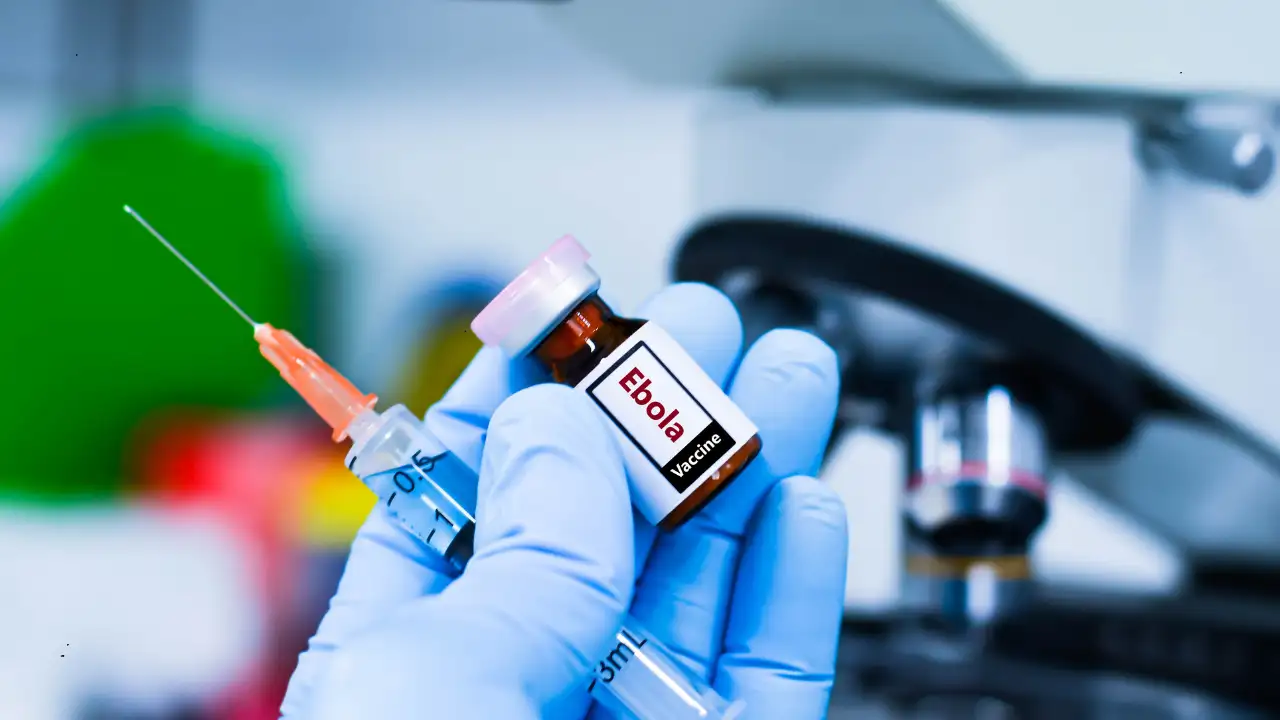


Russian health officials announced that their scientists have successfully developed a vaccine candidate targeting a newly emerging strain of the Ebola virus. This sudden development comes at a time of growing international concern over the active Bundibugyo Ebola outbreak in the Democratic Republic of Congo (DRC) and neighboring Uganda. Russian Health Minister Mikhail Murashko stated that this new vaccine may offer critical protection against the rare Bundibugyo strain. Currently, the international medical community possesses no approved vaccines or specific treatments for this particular variant.
The announcement closely follows the World Health Organization’s (WHO) decisive move to classify the ongoing outbreak as a Public Health Emergency of International Concern (PHEIC). The international body enacted this emergency classification due to growing fears of rapid viral transmission across Central Africa. According to official WHO estimates, the current outbreak has already caused dozens of confirmed cases and fatalities. Meanwhile, regional public health teams are actively investigating hundreds of additional suspected infections.
Russia Shares Vaccine Details Amid Global Outbreak Alarm
The Russian Embassy in South Africa initially shared the details of this medical development on the social media platform X. They announced that their research scientists had successfully engineered a vaccine to combat the active strain. Health Minister Mikhail Murashko later reiterated that the formulation could provide a vital shield against the dangerous Bundibugyo ebolavirus strain.
The Bundibugyo strain remains one of the lesser-known species of the Ebola virus, but it is still highly lethal. Reports from both the WHO and Reuters confirm that there are currently no fully approved vaccines or specialized therapeutics tailored for the Bundibugyo variant. This lack of treatment contrasts sharply with the more common Zaire ebolavirus strain, which scientists successfully managed to target during previous global health crises.
Current DRC Outbreak Status:
• WHO National Risk Assessment: Elevated to "Very High"
• Confirmed Infections: More than 80 cases documented
• Suspected Infections: Hundreds of active cases under investigation
The Critical Need for Diversified Ebola Vaccines
Ebola virus disease remains a severe, frequently fatal illness caused by infection with dangerous orthoebolaviruses. According to historical WHO data, public health teams observe mortality rates ranging from 25% to as high as 90% during active outbreaks. The final mortality rate typically depends on the specific virus species involved and the quality of local healthcare access.
Approved Ebola Vaccines Globally:
1. Ervebo: Designed exclusively for the Zaire ebolavirus strain; utilized in ring-vaccination strategies.
2. Zabdeno & Mvabea: A multi-dose vaccine regimen; restricted to Zaire ebolavirus protection.
Because the existing marketplace exclusively features Zaire-specific options, global research networks are racing to develop alternative vaccine candidates. Reuters recently reported that several experimental formulas are undergoing evaluation. Prominent international bodies, including the Oxford Vaccine Group and the University of Texas Medical Branch, are actively testing these candidates against the Bundibugyo strain.
Global Health Experts Call for Transparency and Scientific Data
At this moment, Russia has not publicly released comprehensive clinical trial data or peer-reviewed literature regarding its new vaccine. Consequently, international medical experts caution that independent scientific validation remains absolutely essential. While the initial announcement appears promising, the vaccine cannot undergo widespread distribution without transparent data.
“Ebola vaccine approval typically requires extensive testing for human safety, robust immune response, and real-world effectiveness during active outbreaks.” — World Health Organization Guidance
| Contributing Scientific Group | Current Action / Offering | Intended Target |
| Russian Health Ministry | Developing experimental vaccine & providing diagnostics | Emerging Bundibugyo Strain |
| Oxford Vaccine Group | Evaluating independent experimental candidates | Bundibugyo Ebola Variant |
| University of Texas | Conducting medical research on variant solutions | Bundibugyo Ebola Variant |
A historical review published in the US National Library of Medicine noted that regulatory teams can accelerate vaccine development during emergencies. Public health networks can successfully utilize emergency authorization frameworks if nations participate in transparent international collaborations. Beyond the vaccine claim, Russia has reportedly offered advanced diagnostic tools and medical logistics support to African nations. They are preparing to ship these supplies directly to emergency teams operating in the Congo and Uganda.
For the time being, global health authorities are not altering their current defensive strategies. Public health departments continue to emphasize that rapid detection, strict patient isolation, and diligent contact tracing remain the primary tools to contain the viral spread.