
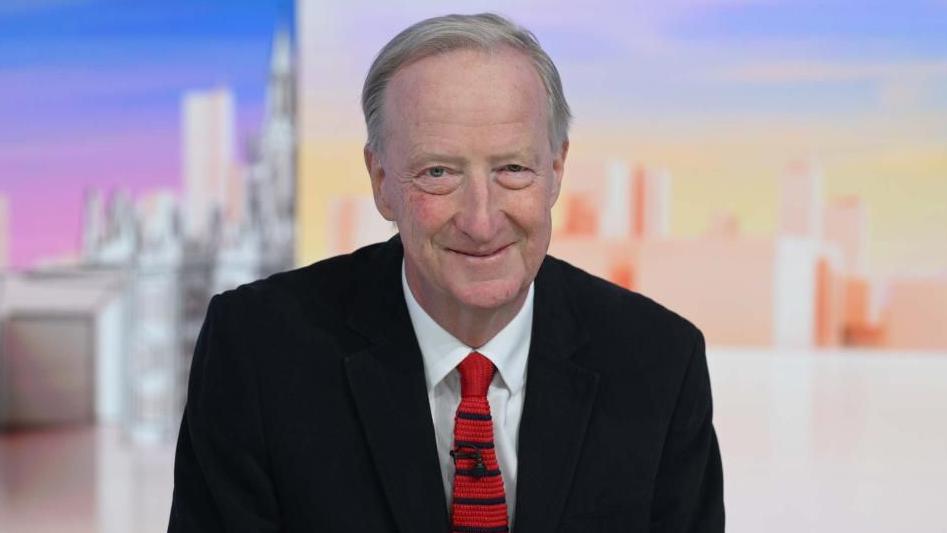


Sir Alex Younger, the former chief of Britain’s foreign intelligence agency MI6 and one of the country’s most influential intelligence leaders in recent decades, has died at the age of 62.
Younger served as the head of MI6 from 2014 to 2020, a period marked by some of the most significant geopolitical and security challenges facing the United Kingdom. His tenure spanned the rise of the Islamic State terror group, growing tensions with Russia, major terrorist attacks in Britain, and the country’s withdrawal from the European Union.
His term as MI6 chief was extended by a year in 2019 to provide continuity during the turbulent Brexit process. Known within intelligence circles by the traditional title “C,” Younger was one of the few publicly identified leaders of Britain’s intelligence services.
From Army Officer To Intelligence Chief
Born on July 4, 1963, Sir Alex Younger studied economics and computer science at the University of St Andrews before embarking on a military career. He joined the elite Scots Guards and rose to the rank of captain before leaving the British Army.
His path into intelligence came unexpectedly. Speaking at a public discussion in 2019, Younger recalled being encouraged by his then-boss, Sir John Sawers, to consider becoming the future head of MI6.
“My boss at the time John Sawers suggested to me that I might be his successor amongst others, but he said I was in the frame. That was an extraordinary moment. It had never occurred to me that that was a path I might follow,” Younger had said.
He joined MI6 in 1991, shortly after the end of the Cold War, and spent the next three decades serving in a variety of overseas and operational roles. One of his notable assignments was in Afghanistan, where he served as the agency’s senior officer.
A widely recounted anecdote from that period highlighted his unconventional approach to diplomacy. After learning that then-Afghan President Hamid Karzai enjoyed blackberry jam in his tea, Younger reportedly arranged for homemade jam prepared by his mother-in-law to be sent to him, helping strengthen relations.
Steering MI6 Through Major Crises
Before taking charge of MI6, Younger played a key role in overseeing counter-terrorism preparations ahead of the 2012 London Olympics. He later supervised intelligence operations across the globe before being appointed chief of the agency in 2014.
As MI6 chief, he found himself at the centre of several major security challenges.
His tenure included the aftermath of the 2017 Manchester Arena bombing, one of the deadliest terror attacks in modern British history, which claimed 22 lives and injured more than 1,000 people.
He also oversaw Britain’s intelligence response to the 2018 Salisbury Novichok poisoning case involving former Russian double agent Sergei Skripal and his daughter Yulia Skripal. While both survived, Dawn Sturgess later died after unknowingly coming into contact with the nerve agent.
Relations with Russia became a central concern for British intelligence during this period, as Moscow’s increasingly assertive foreign policy prompted heightened security monitoring and diplomatic tensions.
Making MI6 More Publicly Visible
Although MI6 has long fascinated the public through fictional characters such as James Bond, Britain’s intelligence services were only officially acknowledged by the government in 1994.
During his leadership, Younger sought to increase public understanding of the agency’s role while maintaining operational secrecy.
In a rare public intervention in 2017, he wrote to The Economist to explain how intelligence agencies balance national security responsibilities with legal oversight.
“We do things in defence of national security that would not be justified in pursuit of private interest. But only when they are judged by ministers to be necessary and proportionate. We break the rules, certainly; we do not break the law,” he wrote.
Life After Intelligence Service
In recognition of his service, Younger was knighted by Queen Elizabeth II in 2019.
He stepped down as MI6 chief in 2020 after nearly six years in the role. Following his retirement from public service, he joined Goldman Sachs as an adviser.
His death marks the end of a distinguished career that placed him at the forefront of Britain’s intelligence and security apparatus during a transformative period in global affairs.
From combating terrorism and navigating Brexit-related uncertainties to managing growing geopolitical tensions with Russia, Sir Alex Younger played a pivotal role in shaping Britain’s national security strategy throughout the 21st century.