
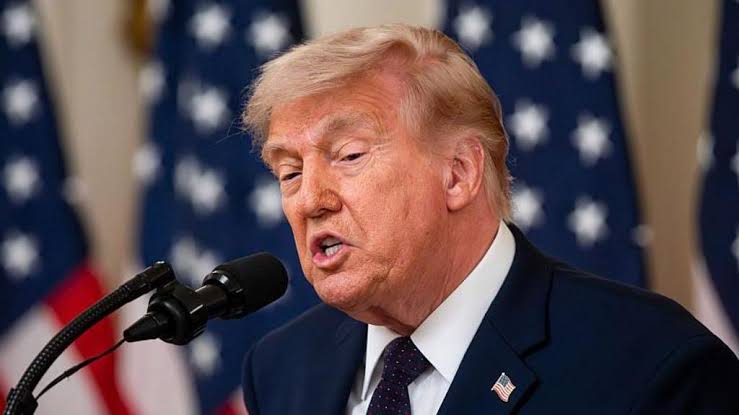


US President Donald Trump has claimed that Iran has agreed never to acquire a nuclear weapon, signaling what could become a major breakthrough in ongoing efforts to end more than 100 days of conflict between the two countries.
In a post on his social media platform, Trump wrote that Iran had agreed not to pursue nuclear weapons. He also rejected reports suggesting that the United States would provide Iran with financial payments as part of a settlement.
The statement came shortly after reports emerged that Washington and Tehran had signed a preliminary agreement designed to reduce tensions and establish a framework for broader negotiations.
Preliminary Agreement Opens Door for Further Talks
According to reports, the United States and Iran have reached a memorandum of understanding (MoU) that serves as a starting point for future discussions.
The agreement is intended to:
- End ongoing hostilities
- Create a framework for nuclear negotiations
- Address sanctions relief
- Explore long-term peace arrangements
However, officials on both sides have indicated that the current document remains preliminary, and significant negotiations are still required before a permanent settlement can be reached.
JD Vance Backs Trump’s Position
US Vice President JD Vance quickly supported Trump’s statement.
Vance said preventing Iran from obtaining a nuclear weapon has remained a key objective of the administration since the conflict began.
He also described the emerging agreement as an important diplomatic achievement and suggested it could pave the way for greater stability in the region.
Iran Calls Agreement an Important First Step
Iranian President Masoud Pezeshkian reportedly welcomed the memorandum as a positive development.
However, he emphasized that the current understanding is only the beginning of a longer process and that a lasting ceasefire and comprehensive peace agreement still need to be negotiated.
Iranian officials have repeatedly stated that economic relief and reconstruction support will be critical components of any final settlement.
Debate Continues Over the $300 Billion Figure
One of the most discussed aspects of the negotiations involves reports surrounding a potential $300 billion economic package.
Trump dismissed claims that the United States was directly paying Iran, calling such reports false.
However, different accounts have emerged regarding the figure.
Iran’s Position
According to Iranian media reports, Tehran has requested:
- Reconstruction support worth at least $300 billion
- Access to approximately $24 billion in frozen assets
- Relief from oil and petrochemical sanctions
- Access to overseas financial resources
Iran argues that substantial economic assistance is necessary to recover from damage caused during the conflict.
Western Interpretation
Some Western reports describe the $300 billion figure not as direct government payments but as a broader investment and reconstruction framework.
Under this interpretation, international investors and private-sector funding could play a significant role in rebuilding efforts.
Nuclear Programme Remains Central Issue
The future of Iran’s nuclear program remains at the heart of the negotiations.
According to US officials, key areas under discussion include:
- The future of Iran’s uranium enrichment programme
- Management of enriched uranium stockpiles
- Expanded inspections by the International Atomic Energy Agency
- Guarantees that Iran will not develop nuclear weapons
Vance indicated that inspectors from the IAEA are expected to return to Iran under the framework being discussed.
Sanctions Relief Tied to Compliance
US officials have suggested that any significant sanctions relief would depend on Iran meeting several conditions.
These reportedly include:
- A commitment not to develop nuclear weapons
- Cooperation with international inspectors
- Progress on regional security concerns
Negotiators are expected to continue discussions in the coming days as both sides work toward a more detailed and permanent agreement.
What Happens Next?
While both Washington and Tehran are presenting the memorandum as a positive step, many crucial details remain unresolved.
The current framework is viewed as an opening stage rather than a final deal. Negotiators must still address nuclear restrictions, sanctions relief, reconstruction funding, and long-term security arrangements before a comprehensive agreement can be finalized.
For now, the announcement marks a significant diplomatic development in one of the world’s most closely watched geopolitical disputes.