
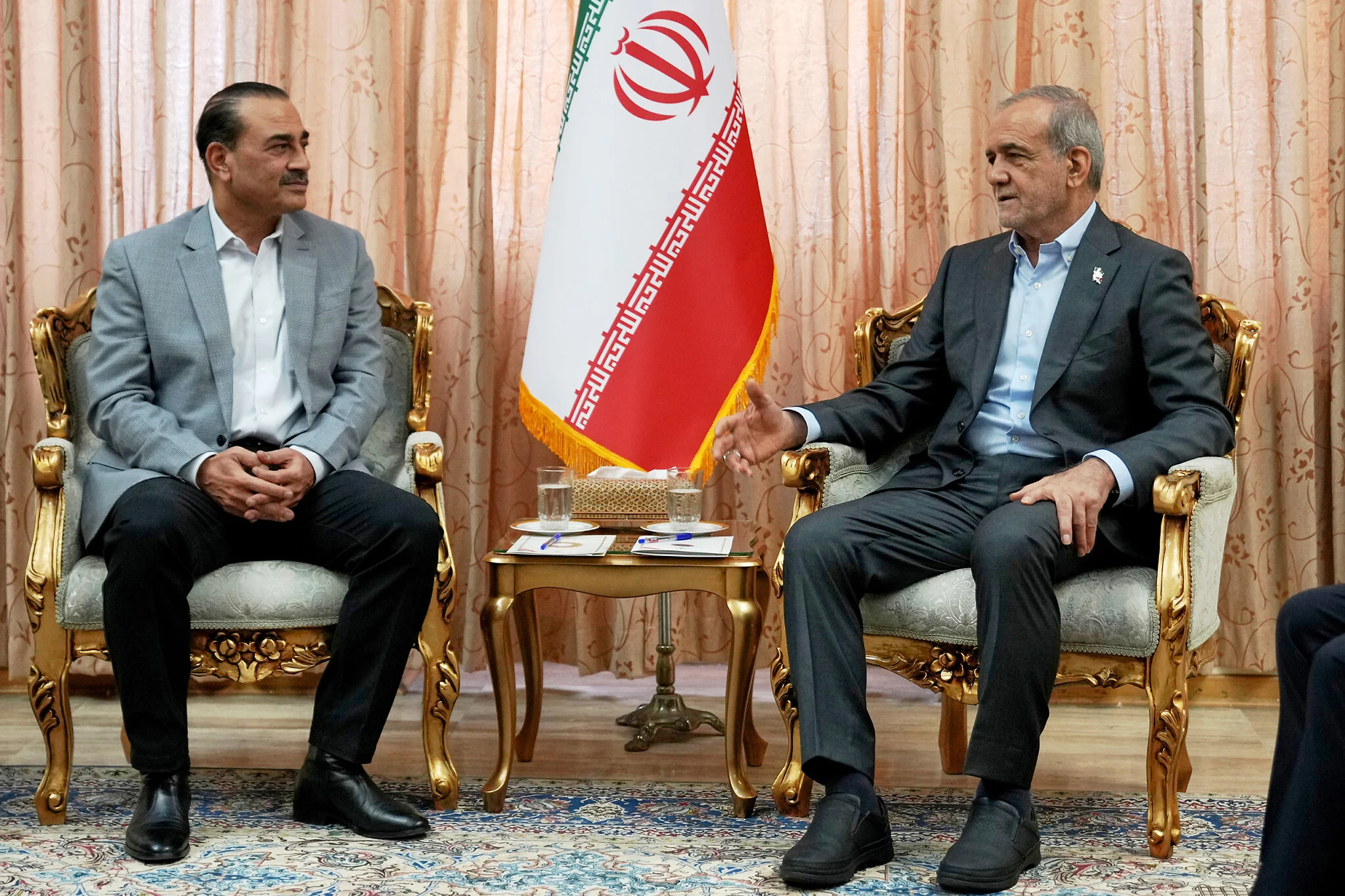


The memorandum of understanding aimed at ending the Gulf War has reportedly already been signed by key representatives from both the United States and Iran, according to a US official, even as a formal signing ceremony remains scheduled for later this week in Switzerland.
The agreement was reportedly signed by US President Donald Trump, Vice President JD Vance and Iran’s negotiating team led by Parliament Speaker Mohammad Bagher Ghalibaf. However, Tehran has not immediately responded to reports confirming that the document has already been executed.
Earlier statements from both sides had indicated that the agreement would be formally signed during a ceremony in Geneva on Friday. The latest developments suggest that while the official event remains on schedule, the memorandum itself may already be in effect through a digital signing process.
According to a Reuters report citing a US official, Israel’s withdrawal from Lebanon is not part of the agreement. The official stressed that the ceasefire would not be unilateral and would require compliance from all sides.
“The deal is a ceasefire, and it will not be a one-way ceasefire, meaning that if Iran is not able to control Hezbollah, and if they attack Israeli positions or Israeli towns, Israel will have the right to defend themselves and respond,” the official was quoted as saying.
Speaking alongside French President Emmanuel Macron during a visit to France, President Trump claimed that the agreement had already been completed.
“The deal’s all signed,” Trump said, while also announcing that the Strait of Hormuz had been partially reopened. He added that the strategic waterway would be fully reopened on Friday following the formal signing ceremony in Switzerland.
The agreement marks a major diplomatic breakthrough after more than 100 days of military conflict. Both Washington and Tehran have agreed to halt hostilities, creating a framework for future discussions on Iran’s nuclear programme and the potential lifting of sanctions.
Vice President JD Vance confirmed that US officials digitally signed the agreement with Iran on Sunday. Speaking during a series of television interviews on Monday, he said the Trump administration expects to release the complete text of the agreement later this week.
“We already signed the deal digitally yesterday,” Vance said during an appearance on Good Morning America while discussing the reopening of the Strait of Hormuz.
Although details of the agreement remain limited, the reopening of the Strait of Hormuz is being viewed as one of its most significant outcomes. The waterway is a critical global energy corridor through which a substantial portion of the world’s oil supplies passes.
President Trump celebrated the development in a Truth Social post on Sunday, writing, “Ships of the World, start your engines. Let the oil flow!”
Vance also outlined the administration’s broader objectives regarding Iran’s nuclear ambitions. He indicated that Washington is prepared to improve economic ties with Tehran if it agrees to long-term restrictions and verification measures aimed at preventing the development of nuclear weapons.
“We’re willing to welcome the Iranians into the global economy, to lift some sanctions and to turn over a new leaf in that relationship if they are willing to give a long-term commitment — along with proper verification — to giving up that nuclear weapon,” Vance said.
The breakthrough was first announced by Pakistani Prime Minister Shehbaz Sharif, whose government has played a central role in facilitating negotiations between the two sides.
Sharif stated that both countries had agreed to the “immediate and permanent termination of military operations on all fronts, including in Lebanon,” where Israel and the Iran-backed Hezbollah group have been engaged in prolonged fighting.
The agreement, if successfully implemented, could mark one of the most significant diplomatic developments in the Middle East in recent years, potentially easing regional tensions while reopening a crucial global energy route and reviving efforts to address concerns surrounding Iran’s nuclear programme.