

)
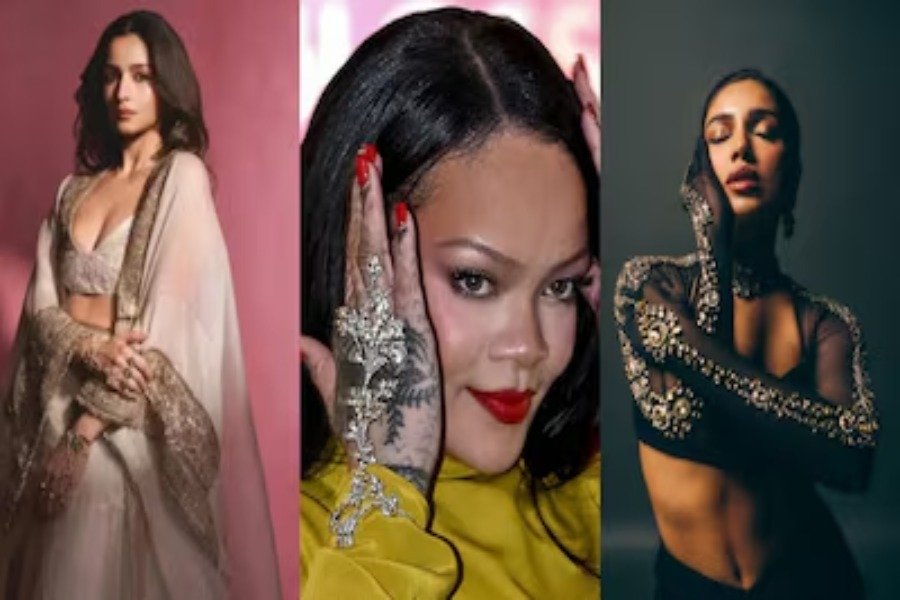
MUMBAI – Long before diamonds were a girl’s best friend, they were a Maharani’s hand-adornment. The haathphool (literally “hand flower”), a traditional ornament connecting a bracelet to one or more rings across the back of the hand, is shedding its “bridal-only” reputation. From Rihanna’s high-glam appearance in Mumbai to Alia Bhatt’s “quiet luxury” red carpet moments, the accessory is officially the breakout star of 2026.
The Global Icon: Rihanna in Manish Malhotra
At the recent Fenty Beauty launch in Mumbai (dubbed “Fenty Beauty Ki Haveli”), Rihanna proved that traditional Indian craftsmanship is a global language.
- The Look: She paired a sleek black Alaïa dress with a Signature MM Haathphool crafted in white gold and set with uncut diamonds.
- The Statement: By blending Western couture with this regal hand-piece, she transformed a heritage item into a modern fashion-forward accessory.
- The Twist: Rihanna notably made history by wearing Manish Malhotra and Sabyasachi (an Assam bracelet and ruby choker) simultaneously—a move fans dubbed a “designer peace treaty.”
The Bollywood Edit: Minimalism vs. Modernism
Bollywood’s leading ladies are leading the charge in making the haathphool wearable for the modern woman:
- Alia Bhatt: For an awards night, Alia showcased the “demure” version. Wearing an ivory Anamika Khanna lehenga, she opted for a delicate, thread-thin haathphool by The Rah Jewels. It proved that you don’t need five rings and heavy chains to make an impact.
- Bhumi Pednekar: Taking it a step further, Bhumi experimented with “jewelled clothing,” wearing a Nikhil Thampi gloved blouse where kundan stones were embroidered to mimic the structure of a haathphool.
From Persia to the Mughals: A Brief History
The haathphool’s journey is as intricate as its design:
- Origins: It originated in Persia and was brought to India by the Mughals.
- The “Hath Kamal”: Mughal royalty favored the hath kamal (hand lotus), a design featuring 12 symmetrical petals symbolizing nature and geometry.
- Rajput & Sikh Influence: As it traveled to Rajasthan and Punjab, it evolved to include Meenakari (enamel work) and intricate Jaali (lattice) patterns.
- The Bridge Era: Iconic figures like Maharani Gayatri Devi were known to wear diamond-studded haathphools even during casual social events like playing bridge.
Why We Love the 2026 Makeover
Modern jewellers like Amrapali and Manish Malhotra have reimagined the piece for the Gen-Z and Millennial market:
- Detachable Design: Many new sets allow the rings and bracelet to be detached and worn separately, making the investment practical.
- Lightweight Materials: Traditional 24k gold is being replaced by rose gold and lighter alloys, ensuring the piece doesn’t weigh down the hand during a long event.
- Daily Versatility: Toned-down, single-string versions are now being paired with everything from summer sundresses to power suits.