
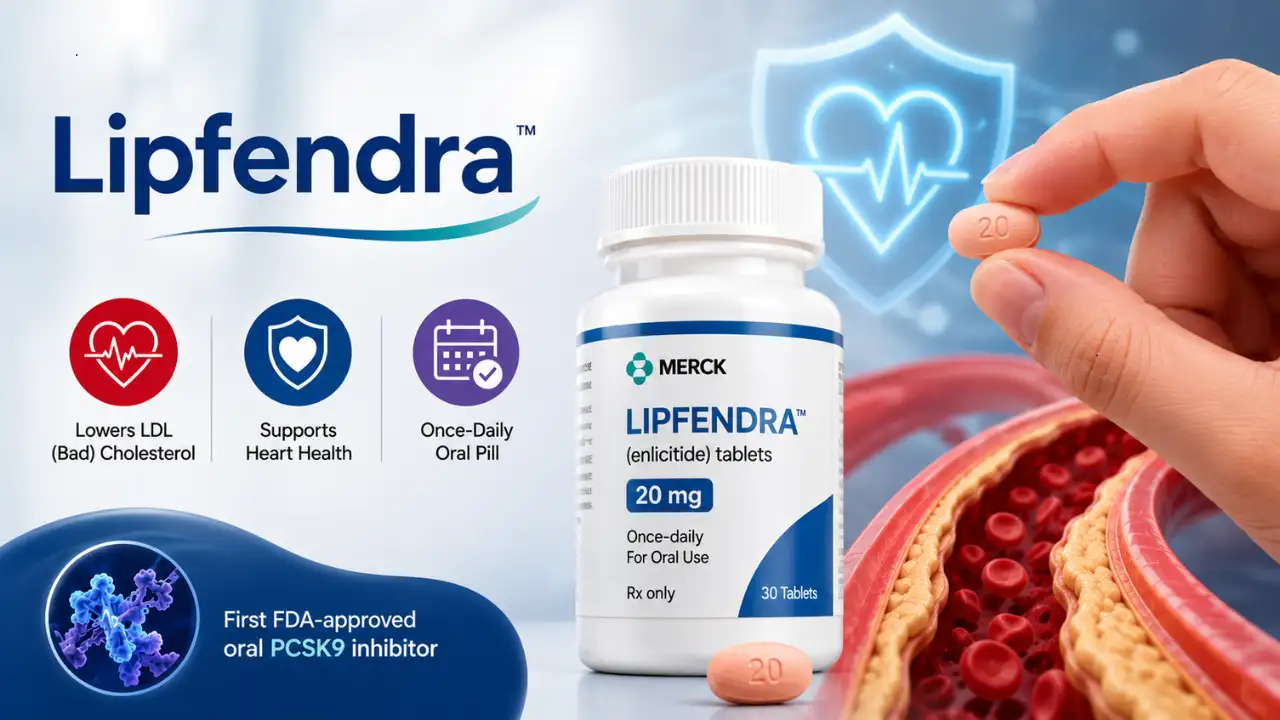


The US Food and Drug Administration (FDA) has approved Lipfendra (enlicitide), the first once-daily oral PCSK9 inhibitor for adults with certain types of high cholesterol. Developed by Merck, the medication offers a convenient alternative for patients who need additional cholesterol-lowering treatment beyond statins, eliminating the need for injectable PCSK9 therapies.
The approval marks a significant advancement in cholesterol management, particularly for people who struggle with injections or require greater LDL cholesterol reduction.
What Is Lipfendra?
Lipfendra belongs to a class of medicines called PCSK9 inhibitors, which help the body remove excess low-density lipoprotein (LDL), commonly known as “bad” cholesterol.
Normally, the liver uses LDL receptors to clear cholesterol from the bloodstream. However, the PCSK9 protein destroys these receptors, limiting the liver’s ability to remove LDL cholesterol. Lipfendra blocks this protein, allowing more LDL receptors to remain active and improving cholesterol clearance.
Unlike statins, which reduce the liver’s cholesterol production, Lipfendra enhances the body’s natural ability to eliminate circulating LDL cholesterol.
How Is It Different From Statins?
Statins remain the first-line treatment for high cholesterol and work well for most patients. However, some individuals continue to have elevated LDL cholesterol despite taking the maximum tolerated statin dose.
Until now, such patients often required injectable PCSK9 inhibitors like Repatha or Praluent. Lipfendra provides a once-daily oral alternative, offering greater convenience without compromising cholesterol-lowering benefits.
Who Can Benefit?
The FDA has approved Lipfendra as an add-on therapy, meaning it should be used alongside lifestyle changes and existing cholesterol-lowering medications rather than replacing them.
It may benefit adults who:
- Continue to have high LDL cholesterol despite statin therapy
- Have familial hypercholesterolemia or other inherited cholesterol disorders
- Require additional LDL reduction to lower cardiovascular risk
- Prefer taking a daily tablet instead of injectable medication
It is not intended as the first treatment option for people with mildly elevated cholesterol.
What Do Clinical Trials Show?
Clinical trials reviewed by the FDA found that adding Lipfendra to statin therapy reduced LDL cholesterol by approximately 56% to 60%.
The medicine was generally well tolerated, with the most commonly reported side effects including:
- Diarrhoea
- Dizziness
The rate of serious adverse events was similar to that seen in participants receiving a placebo.
Why The Approval Matters
Heart disease remains one of the leading causes of death globally, and high LDL cholesterol is a major risk factor. One of the biggest challenges in treatment is ensuring patients remain consistent with long-term medication.
By offering the first oral PCSK9 inhibitor, Lipfendra could improve treatment adherence among eligible patients who prefer pills over injections. Experts believe the approval expands available treatment options and may help more people achieve better cholesterol control and reduce their long-term cardiovascular risk.
Further research will continue to assess its long-term impact on preventing heart attacks, strokes and other cardiovascular events.