
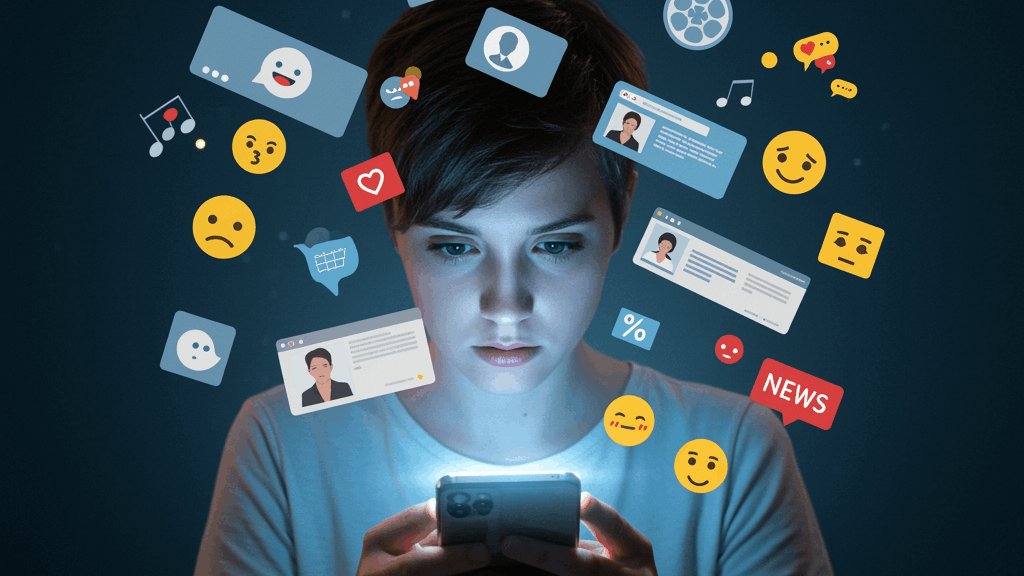


We live in an era where information is available at our fingertips. From breaking news and educational videos to podcasts, social media posts, and AI-generated answers, access to knowledge has never been easier. Yet many people today feel more confused, distracted, and overwhelmed than informed.
Experts believe the problem is not a lack of information but the way we consume it.
The Illusion of Being Informed
Modern digital platforms expose users to an endless stream of content throughout the day. While this creates a sense of staying updated, constant exposure does not necessarily lead to genuine understanding.
Many people move rapidly from one video, article, or social media post to another without taking the time to reflect, analyze, or connect what they have learned. As a result, information is consumed but rarely absorbed.
True knowledge requires context, critical thinking, and the ability to apply information in meaningful ways. Simply scrolling through content can create the illusion of learning without actually building understanding.
When Information Turns Into Noise
Technology has made learning opportunities more accessible than ever before. However, the challenge today is no longer finding information—it is filtering it.
The internet offers an overwhelming mix of facts, opinions, entertainment, advertisements, and misinformation. In this environment, the ability to evaluate sources and separate valuable insights from digital noise has become an essential life skill.
Experts say critical thinking is now more important than ever, helping individuals question assumptions, verify information, and make informed decisions.
The Hidden Mental Cost of Constant Consumption
The human brain was not designed to process a nonstop flow of notifications, headlines, short videos, and competing opinions.
Constant content consumption can contribute to:
- Mental fatigue
- Reduced attention span
- Information overload
- Increased anxiety
- Difficulty retaining information
- Reduced ability to focus deeply
While short-form content is effective at capturing attention, it often encourages quick reactions rather than thoughtful understanding.
Why Screen Time Doesn’t Always Lead to Learning
Many people spend several hours online every day but struggle to remember what they consumed just a few days earlier.
The reason is simple: learning requires engagement.
Reading, reflecting, discussing ideas, taking notes, and applying knowledge are all important parts of the learning process. Without these steps, information often remains temporary and quickly fades from memory.
The Importance of Reflection
One of the most overlooked skills in the digital age is reflection.
Meaningful learning happens when individuals pause to think about what they have read, compare different viewpoints, and connect new ideas with existing knowledge.
In a culture driven by speed, constant updates, and instant gratification, taking time to reflect has become increasingly rare—and increasingly valuable.
The Future Belongs to Thoughtful Learners
Experts suggest that future success will not depend on who consumes the most content but on who can understand, evaluate, and apply information effectively.
Access to information is no longer a competitive advantage because everyone has it. What matters now is the ability to transform information into insight and insight into action.
People who develop strong critical-thinking skills, emotional intelligence, and curiosity are likely to thrive in a world overflowing with content.
Beyond Information: The Pursuit of Wisdom
The challenge of the digital era is not finding more information—it is learning how to use it wisely.
As content continues to compete for our attention, the most valuable habit may be intentional consumption: choosing quality over quantity, slowing down to reflect, and focusing on understanding rather than simply staying updated.
In a world filled with endless scrolling, wisdom comes not from consuming more content, but from thinking more deeply about what we consume.