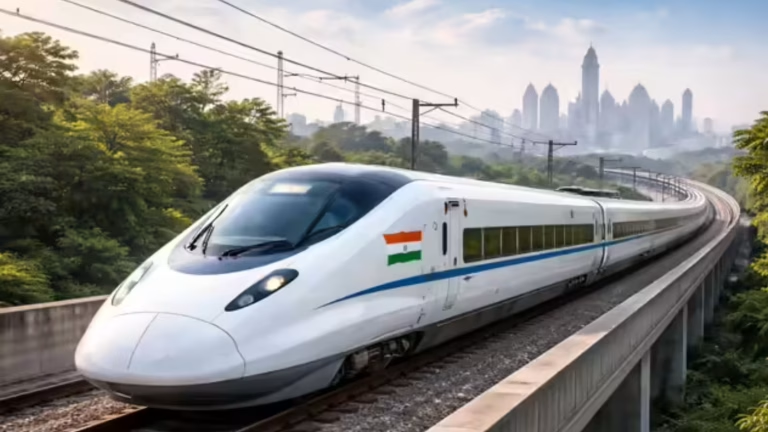
India’s high-speed rail ambitions are set for a major leap with the proposed Delhi–Varanasi bullet train corridor, which is expected to pass through Lucknow and drastically cut travel time across key cities in northern India.
The project was announced in the Union Budget 2026–27 by Finance Minister Nirmala Sitharaman and is part of a broader national push to develop multiple high-speed rail corridors. It comes as construction of India’s first bullet train project—the Mumbai–Ahmedabad High-Speed Rail Corridor—continues to progress.
Travel Time To Be Reduced Significantly
According to Railway Minister Ashwini Vaishnaw, the proposed corridor could reduce Delhi–Lucknow travel time to nearly two hours once operational.
Currently, the fastest trains on this route, including the Vande Bharat Express and Shatabdi Express, take over six hours. Under the bullet train network, Delhi–Varanasi travel time is also expected to drop to around 3 hours and 50 minutes.
Boost To Regional Economy And Connectivity
Officials say the high-speed rail corridor could reshape economic activity across northern India by integrating cities like Lucknow, Varanasi, and Patna into a more connected economic belt. Faster connectivity is expected to boost trade, business mobility, and regional development.
The Railway Minister has also suggested that high-speed rail could eventually become more competitive than short-haul air travel on several routes due to speed and convenience.
Future Corridors Under Consideration
Beyond the Delhi–Varanasi line, the government is also evaluating multiple high-speed rail projects across the country. Proposed routes include Mumbai–Pune, Pune–Hyderabad, and Hyderabad–Bengaluru corridors, which could cut travel times to under two hours in some cases.
Officials believe such developments may significantly reshape domestic aviation demand, especially for short-distance flights.
National High-Speed Rail Expansion Plan
The National High-Speed Rail Corporation Limited (NHSRCL) has been tasked with accelerating planning for seven proposed high-speed rail corridors announced in Budget 2026–27. Revised Detailed Project Reports are also being prepared to fast-track implementation.
With multiple corridors under planning and the Mumbai–Ahmedabad line already under construction, India is steadily moving toward a major transformation in its transport infrastructure, with the Delhi–Varanasi corridor positioned as one of the most significant upcoming projects.