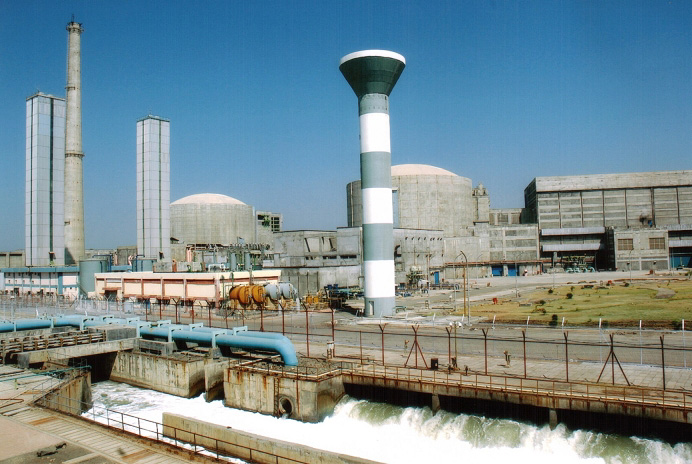
Tarapur: For nearly six decades, two green-hued buildings along India’s western coast have quietly generated electricity, surviving geopolitical tensions, technological embargoes, and the passage of time. Today, Units 1 and 2 of the Tarapur Atomic Power Station stand as the oldest commercially operating nuclear reactors in the world, with Unit 2 expected to restart soon.
During a rare media visit, officials from the Nuclear Power Corporation of India Limited showcased the refurbished facility, describing the restoration work as nothing short of performing “open-heart surgery” on a nuclear reactor.
B C Pathak, Chairman and Managing Director of NPCIL, highlighted the plant’s historic role in India’s energy journey.
“This green building has been generating clean, carbon-free power for the last 57 years,” he said. “India is now home to both the newest reactor and the world’s oldest commercially operating nuclear reactor.”
A Historic Nuclear Facility Commissioned in 1969
Commissioned in 1969, Tarapur Units 1 and 2 were built using boiling water reactor technology, a system considered advanced at the time but developed when nuclear engineering was still evolving globally—especially in developing nations.
After prolonged shutdowns for safety and maintenance, the reactors have now been refurbished and restored to commercial operation.
Each unit currently produces 160 megawatts (MW) of electricity.
- Unit 1 has already resumed operations.
- Unit 2 is expected to restart soon.
Officials emphasised that maintaining such ageing infrastructure required intensive engineering and careful planning.
“This is our oldest power plant, not only in India but in the world,” Pathak said. “What you see here is a very compact reactor, beautifully designed.”
‘Open-Heart Surgery’–Level Engineering Work
Reviving the reactors required extensive intervention similar to major surgery on a living system.
“The reactor is the heart. The heart is intact, but all the veins were replaced,” Pathak explained.
Engineers conducted non-destructive testing on the reactor pressure vessel—the most critical component of the plant—to assess its durability. Civil structures and key mechanical systems were also evaluated and upgraded.
Major refurbishment tasks included:
- Replacement of 24-inch stainless steel pipelines
- Structural upgrades to civil infrastructure
- Replacement and repair of critical equipment
- Work under strict radiation-controlled conditions
- Continuous engineering efforts over four years
Remarkably, much of the work was carried out in-house by NPCIL engineers, reducing both costs and radiation exposure risks.
The total refurbishment cost stood at around ₹400 crore, significantly lower than building a new nuclear plant of similar capacity.
“Today, this reactor is as good as a brand-new reactor,” Pathak said.
Safety Upgrades Inspired by Global Lessons
The refurbishment incorporated safety features introduced worldwide following major nuclear incidents, including the Fukushima nuclear disaster.
One of the key additions is a containment filtered venting system, designed to manage pressure and reduce radioactive release during emergencies.
“This is the safest reactor, giving clean energy at a very reasonable price,” Pathak said.
Despite modern upgrades, the facility retains its original analogue control room, equipped with traditional dials and gauges rather than fully digital interfaces.
Officials stressed that the system remains reliable and well-maintained, staffed by skilled engineers—including women officers managing real-time power output.
Self-Reliance After Technology Restrictions
Tarapur’s longevity also reflects India’s push for technological self-reliance after global cooperation declined following the India’s 1974 nuclear test.
“We indigenised everything,” Pathak said. “All components were sourced within India.”
NPCIL confirmed that fuel supply remains stable and spent fuel storage systems are functioning efficiently.
According to officials, India’s nuclear fleet has accumulated approximately 650 full-power reactor years of operational experience without major safety concerns.
“We have been operating our reactors very safely,” Pathak added. “Radioactive releases have always remained within stipulated limits.”
Tarapur’s Role in India’s Future Nuclear Strategy
The revival of Tarapur Units 1 and 2 comes at a time when India is expanding its nuclear capabilities, including development of the Prototype Fast Breeder Reactor.
Pathak described the fast breeder reactor as a “crowning glory of nuclear technology”, capable of supporting long-term energy security.
Additionally, plans are underway to introduce Bharat Small Modular Reactors (SMRs) at Tarapur, further strengthening its strategic role.
India’s broader nuclear expansion aligns with its goals of:
- Achieving carbon neutrality
- Meeting growing electricity demand
- Ensuring reliable base-load power
- Enhancing national energy security
The recently passed Shanti Act is also expected to open the door for greater private sector participation in nuclear energy projects.
A Symbol of Engineering Endurance and Energy Security
Tarapur’s revival represents more than infrastructure maintenance—it showcases India’s engineering capabilities and commitment to long-term energy sustainability.
“With relatively modest investment, we are able to generate significant electricity,” Pathak said.
As India moves toward becoming a developed nation, nuclear energy is increasingly seen as a dependable and low-carbon power source.
Tarapur Units 1 and 2, having endured decades of technological challenges and global shifts, now stand renewed—quietly supplying power once again and proving that with disciplined engineering and strong safety culture, even the oldest machines can be given a second life.