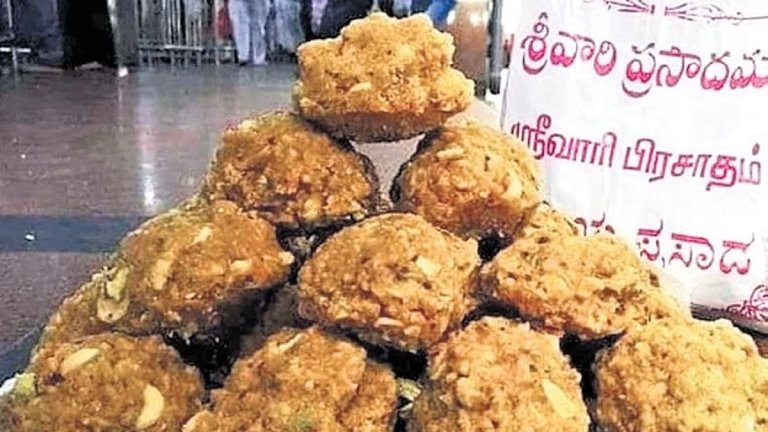
A major investigation into the preparation of the sacred Tirumala laddu prasadam has uncovered serious lapses in quality control, procurement policies, and administrative oversight. The probe found that adulterated ghee was used in making the laddus, while fake and unqualified firms were awarded supply contracts due to weak scrutiny processes.
The findings have raised concerns over governance and transparency within the Tirumala Tirupati Devasthanams, which manages the temple and its prasadam operations.
Adulterated Ghee and Quality Failures
The investigation revealed that the ghee used in preparing the revered laddus was adulterated, pointing to serious failures in quality assurance systems. Essential testing protocols, including beta-sitosterol testing, were reportedly not enforced for a significant period despite being mandatory from July 2022.
Additionally, the organisation’s internal laboratory was not upgraded to meet required testing standards, further weakening the ability to detect compromised ingredients in time. The report also noted that food safety norms set by Food Safety and Standards Authority of India were not properly implemented.
Tender Policy Violations and Entry of Fake Firms
The probe highlighted that procurement rules for ghee supply were deliberately relaxed, allowing unreliable and even fraudulent companies to secure contracts. Proper verification of supplier credentials, production capacity, and quality assurance mechanisms was either inadequate or entirely bypassed.
As a result, several fake or unqualified firms entered the supply chain, leading to compromised quality of ingredients used in the prasadam.
Accountability and Role of Key Officials
The report has identified former TTD Executive Officer A.V. Dharma Reddy as primarily responsible for the lapses. According to the findings, administrative failures under his leadership enabled adulterated ghee suppliers to gain and retain contracts.
The committee has recommended disciplinary action against multiple officials involved in the procurement process, citing negligence and lack of oversight.
Failure to Act Against Erring Suppliers
Despite detecting adulteration by certain suppliers as early as August 2022, authorities reportedly failed to take strict action. Some companies continued supplying ghee even after being disqualified, and were not blacklisted despite evidence of violations.
This inaction has been described as a major administrative failure, raising questions about enforcement mechanisms within the system.
Lack of Transparency and Oversight
The investigation also pointed out that the issue of adulterated ghee was not escalated to the governing board, indicating a lack of transparency at higher levels. Key decisions and critical quality concerns were not properly communicated, further compounding the problem.
The absence of timely reporting and corrective action allowed the issue to persist, ultimately affecting the integrity of the prasadam preparation process.
Wider Implications
The Tirupati laddu holds deep religious and cultural significance for millions of devotees. The findings of adulteration and administrative lapses have therefore triggered broader concerns about trust, governance, and quality assurance in temple management systems.
The case underscores the need for stricter procurement policies, better monitoring systems, and full compliance with food safety standards to prevent similar incidents in the future.