
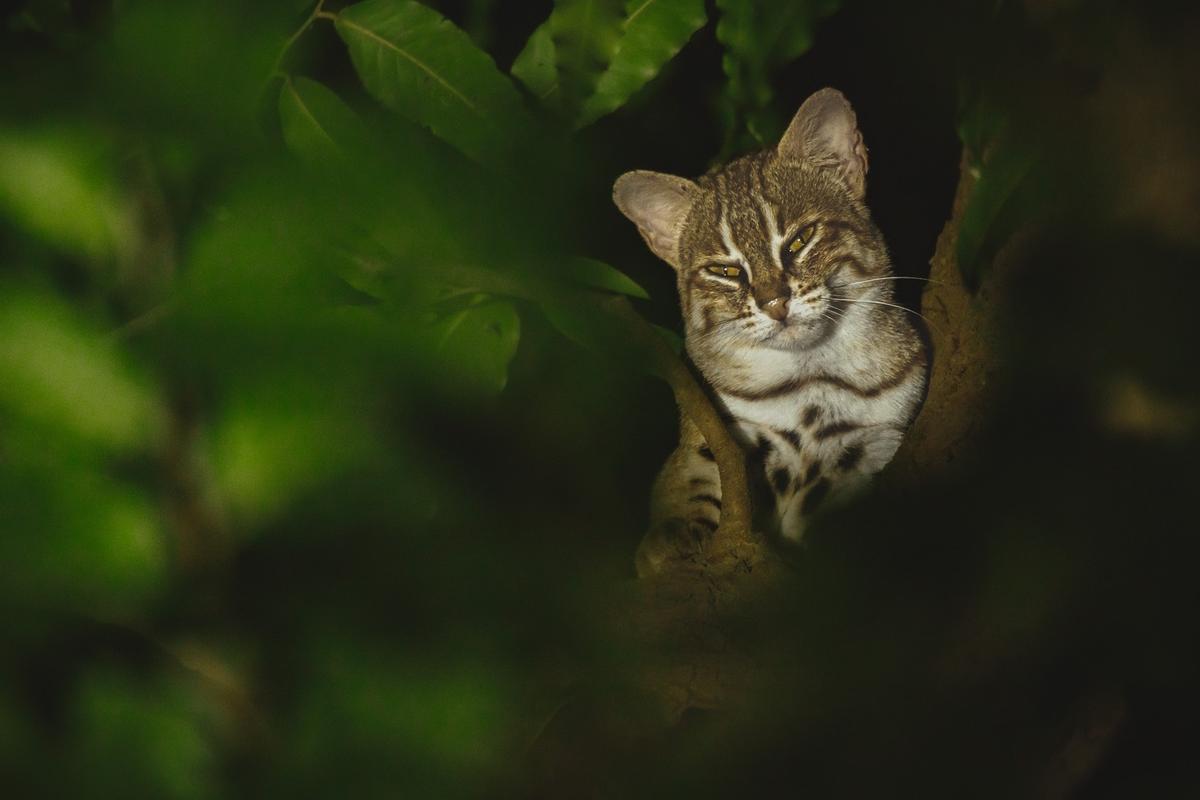


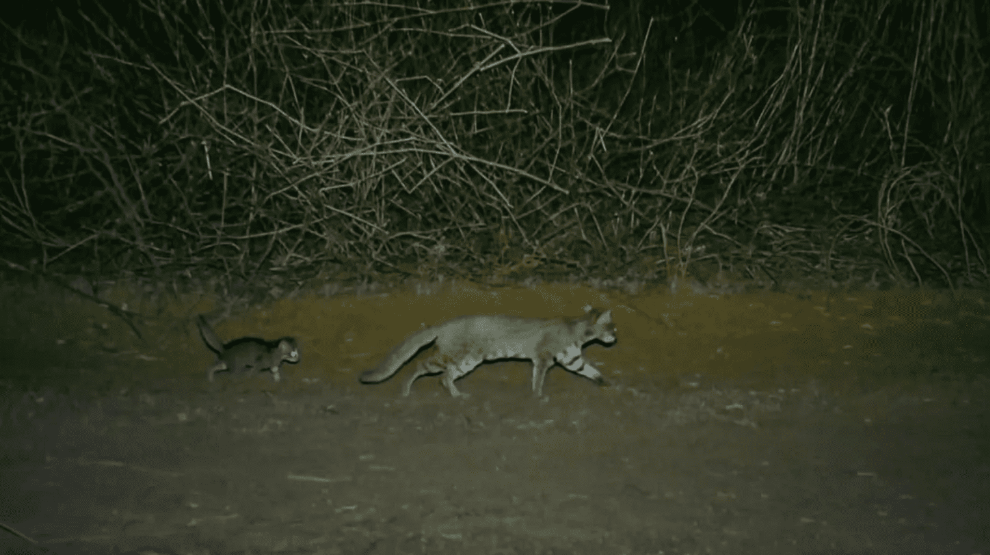
In a landmark discovery for wildlife conservation, researchers have captured the first photographic evidence of a rusty-spotted cat breeding near New Delhi. This elusive feline is officially recognized as one of the world’s smallest wildcat species. A report from The media confirmed that a female cat was photographed with her kitten in the Faridabad district of Haryana. This sighting is monumental because it proves a resident breeding population exists right on the edge of a massive urban center.
Details of the Mother-and-Kitten Encounter
The rare footage was captured in July 2025 near Kot village by researchers from Indira Gandhi University, Meerpur. Although the encounter lasted only about 15 seconds, it provided the “smoking gun” that scientists needed. The findings were recently published in the journal Zoo’s Print. Researchers Amit Kumar and Yatin Verma noted that while camera traps have picked up the species before, seeing a dependent kitten proves the Aravalli scrublands are a healthy nursery for the species.
Understanding the “Near Threatened” Species
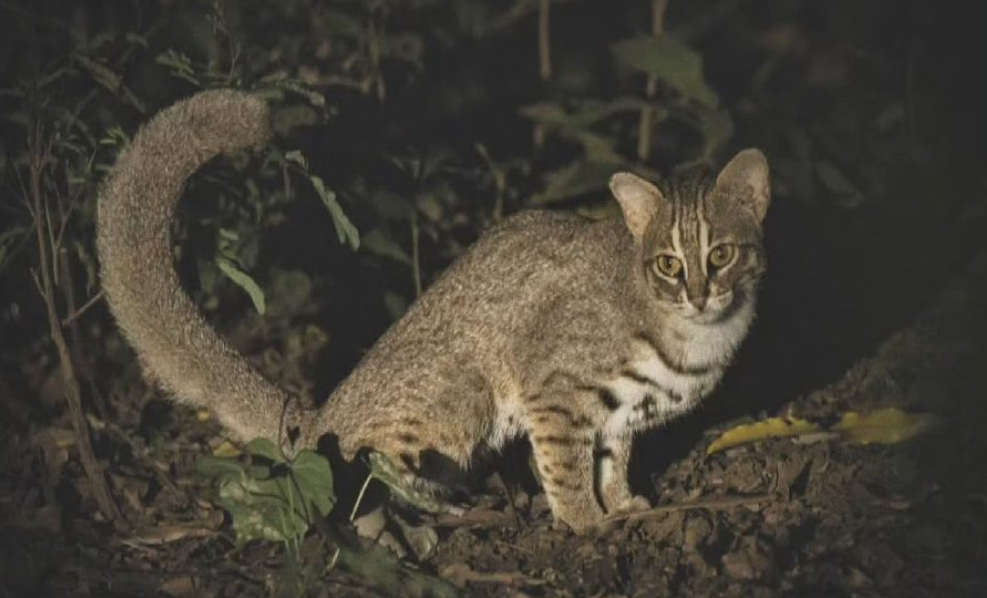
The rusty-spotted cat (Prionailurus rubiginosus) is a marvel of nature, often weighing less than a domestic house cat. It is easily identified by its reddish-grey fur and the distinct rust-colored spots that run along its back. Because it is so small and secretive, it is incredibly difficult to track. Currently, the IUCN lists the species as “Near Threatened,” and it enjoys the highest level of legal protection in India under Schedule I of the Wildlife (Protection) Act.
Challenging Assumptions About Urban Wildlife
Traditionally, experts believed these cats avoided humans at all costs. However, recent observations are changing that narrative. The cats have been spotted in “modified landscapes,” including areas near agricultural fields and human settlements. In one instance, a cat was seen using a False Ashoka tree—a common urban plant—for cover. This suggests the species is more adaptable than previously thought, provided they have enough scrub vegetation to hunt and hide.
The Aravallis: A Critical Biodiversity Corridor
This discovery highlights the vital importance of the Aravalli hills. Despite intense pressure from urban expansion and land-use changes, this landscape remains a “biodiversity hotspot.” Researchers have now identified the cat in nearly 30 different locations across the Aravallis. To ensure their survival, experts are calling for conservation plans that protect green spaces even outside of official forest zones. These “fragmented” patches of nature are clearly serving as a lifeline for some of the world’s rarest animals.