
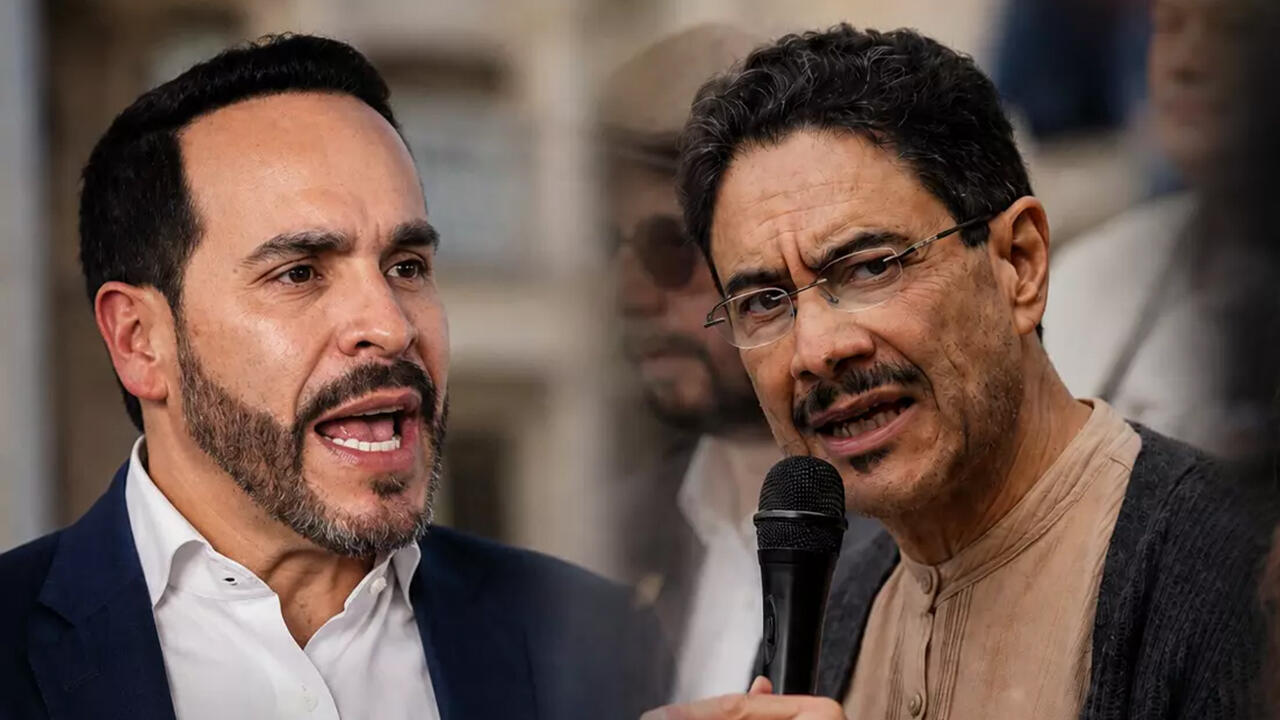


Colombia is facing a period of political uncertainty after right-wing candidate Miguel De la Espriella claimed a razor-thin victory over Senator Iván Cepeda in one of the closest presidential elections in the country’s history.
The preliminary vote count, which still requires official judicial verification, showed De la Espriella narrowly ahead of Cepeda, capping a deeply divisive campaign that exposed stark differences over economic policy, security, energy development and relations with the United States.
With 99.9 per cent of polling stations reporting, De la Espriella secured 49.7 per cent of the vote, compared to 48.7 per cent for Cepeda. However, the result was immediately challenged by President Gustavo Petro and his political ally Cepeda, both of whom insisted they would only recognise the final legally binding count.
Election Result Faces Official Review
While the preliminary tally favoured De la Espriella, Colombia’s electoral process requires multiple levels of verification before a winner can be officially declared.
According to officials from the National Electoral Council, the final certified result is expected later this week. The review process begins at the municipal level before progressing to regional commissions and eventually reaching the national stage.
During this process, ballots are examined in the presence of party representatives and election witnesses to ensure transparency.
The narrow margin has heightened concerns about political stability, particularly in a country already grappling with economic and security challenges.
“Given how closely contested this election was, Colombia is entering a very challenging period,” said Sergio Guzmán, founder of Colombia Risk Analysis.
Polarisation Deepens After Tight Vote
The election highlighted the growing ideological divide within Colombia.
De la Espriella and Cepeda represented dramatically different visions for the country’s future.
The conservative candidate campaigned on promises to crack down on crime, strengthen security, expand oil exploration and maintain close ties with the United States. Cepeda, meanwhile, advocated higher taxes on wealthy Colombians, land redistribution and environmental policies that would block fracking projects.
The tension surrounding the result was visible across major cities.
In Bogotá, some businesses boarded up storefronts amid concerns that protests could erupt following the announcement of the preliminary count.
At a gathering of Cepeda supporters, emotions ran high as activists expressed frustration and uncertainty about the outcome.
“If we have to take to the streets again, we’ll do it,” said 22-year-old psychology student Giselle Pinzón as supporters gathered around the campaign headquarters.
President Petro, however, urged his supporters to remain calm.
“There are fascist groups waiting for a confrontation today. Let’s not give them what they want,” he wrote on social media.
International Support Arrives Quickly
Despite the ongoing review process, international leaders were quick to congratulate De la Espriella.
Argentine President Javier Milei welcomed the result, describing it as another victory for freedom in Latin America.
“Freedom is advancing across all Latin America and there is no turning back,” Milei wrote on X.
US President Donald Trump also expressed support for De la Espriella, having previously endorsed his candidacy during the campaign.
Trump pledged “total support” for Colombia if the conservative leader ultimately assumes office.
De la Espriella’s Vision For Colombia
If the election result is confirmed, De la Espriella will take office on August 7 and inherit a country facing serious economic and security challenges.
Colombia continues to battle record levels of cocaine production, rising violence from armed groups and significant fiscal pressures.
The 47-year-old politician has promised aggressive action against organised crime, including the construction of mega prisons modelled on policies implemented in El Salvador.
He has also vowed to intensify military operations against drug-trafficking organisations and authorise new oil and gas exploration projects, including hydraulic fracturing.
Throughout the campaign, De la Espriella adopted a confrontational style that earned both praise and criticism.
He previously described Colombian leftists as a “mangy plague” and argued they should be treated as enemies rather than political opponents.
However, his tone shifted after the vote.
In his victory speech, De la Espriella attempted to reassure voters by pledging to respect democratic institutions and govern for all Colombians.
He said his administration would uphold the constitution and would not pursue political persecution.
Markets Expected To Respond Positively
Financial markets are widely expected to react favourably if De la Espriella’s victory is confirmed.
Investors have generally viewed him as a market-friendly candidate and were concerned that a Cepeda presidency could lead to greater government spending and increased intervention in economic institutions.
Analysts expect Colombian stocks, bonds and the peso to strengthen when trading resumes.
Many investors had expressed concerns that Cepeda’s economic proposals could increase public debt and weaken the independence of the central bank.
From High-Profile Lawyer To Presidential Front-Runner
Before entering politics, De la Espriella built a national profile as one of Colombia’s most recognisable defence attorneys.
His legal career included representing several high-profile clients, including businessman Alex Saab, model Natalia Paris and David Murcia, who was convicted in the United States on money laundering charges.
His work also placed him in contact with controversial figures connected to Colombia’s long-running armed conflict.
Early in his career, he founded a non-profit organisation that participated in peace negotiations between right-wing paramilitary groups and the Colombian government.
The experience exposed him to some of the country’s most notorious figures, including individuals designated as terrorists by the United States.
Critics have frequently cited these past associations to question his tough-on-crime credentials.
Cepeda has even sought legal action against De la Espriella, accusing him of offences including the alleged financing of terrorism.
The conservative leader has consistently denied wrongdoing, maintaining that his interactions with armed groups were solely linked to peace-building efforts.
Challenges Await The Next President
Even if his victory is officially confirmed, De la Espriella will face a difficult governing environment.
He is expected to encounter resistance from a fragmented Congress while also dealing with growing social tensions following the tightly contested election.
His administration will inherit a security crisis driven by powerful criminal organisations and a challenging fiscal situation that limits the government’s room for manoeuvre.
With millions of Colombians sharply divided over the country’s future direction, the next few days of vote verification are likely to be closely watched both domestically and internationally.
For now, Colombia remains in suspense as electoral authorities work to determine whether the preliminary result will withstand formal scrutiny and whether Miguel De la Espriella will officially become the nation’s next president.