


Islamabad: Even as Pakistan draws international attention for helping broker a ceasefire between the United States and Iran, tensions have sharply escalated along its western border with Afghanistan following a deadly cross-border military operation.
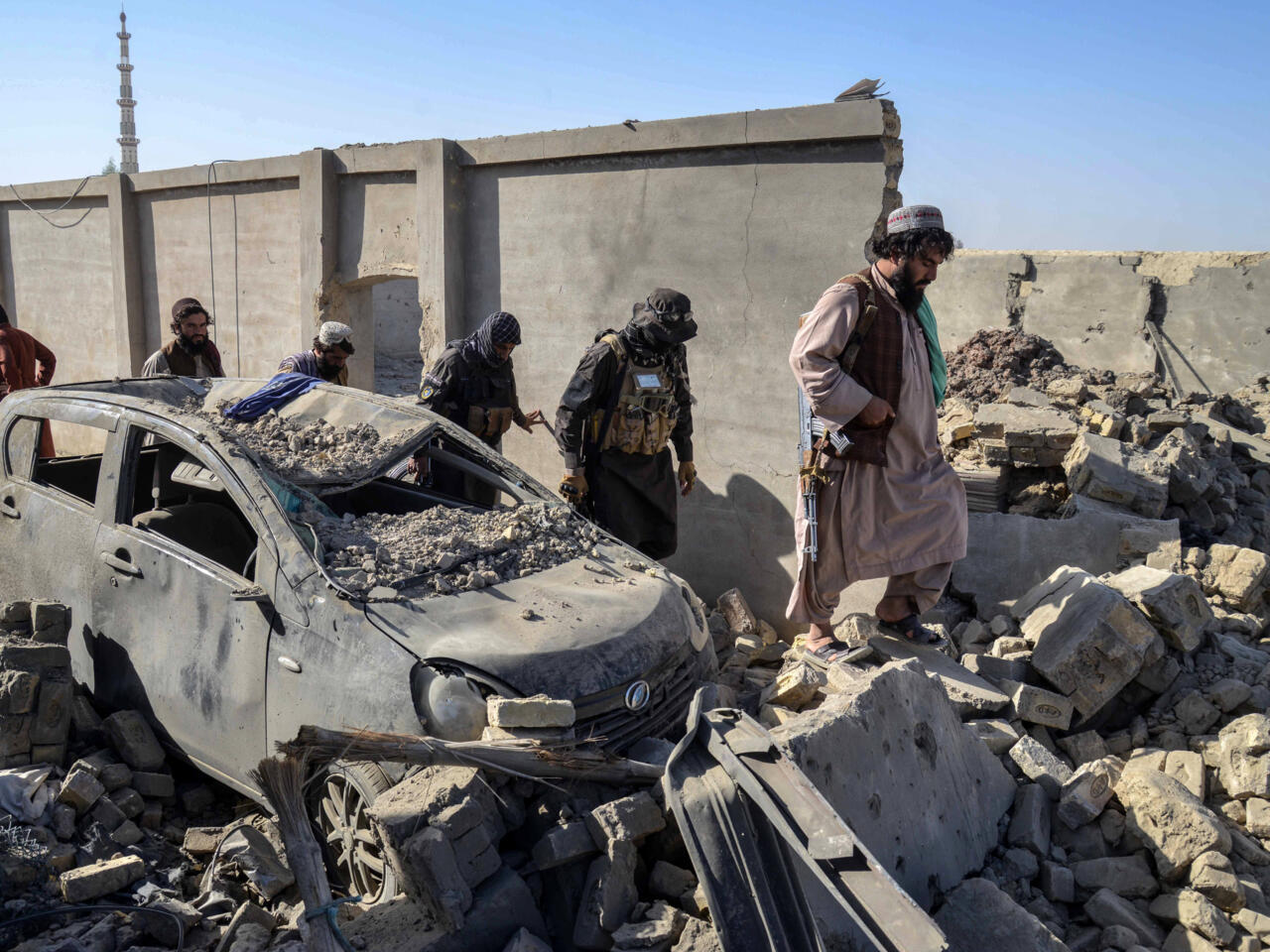
Pakistan says its security forces killed at least 35 militants linked to banned terror outfits during coordinated air and ground operations along the Afghanistan border. However, the Taliban-led Afghan government has rejected Islamabad’s claims, alleging that the strikes killed dozens of civilians, including women and children.
The incident has further strained already fragile relations between the two neighbouring countries, which have repeatedly traded accusations over cross-border terrorism.
What Is A ‘Double-Tap’ Attack?
The operation has drawn particular attention because of allegations that Pakistan employed a controversial military tactic known as a “double-tap” strike.
A double-tap attack refers to a second strike carried out shortly after an initial bombardment on the same location. Human rights groups have long criticised the tactic because emergency responders, medical workers and civilians attempting rescue operations may be present when the second strike occurs.
Afghan authorities claim this is exactly what happened during Pakistan’s latest operation.
How The Operation Unfolded
According to available information, Pakistan Air Force fighter jets reportedly launched strikes around 12:30 AM (IST), targeting locations in three eastern Afghan districts:
- Gyan district in Paktika province
- Chamkani district in Paktia province
- Marawara district in Kunar province
Afghan officials allege that approximately 25 minutes later, another round of airstrikes hit the same locations as residents attempted to rescue victims trapped beneath collapsed buildings.
Kabul claims the second wave of strikes significantly increased casualties, with hospitals receiving more than 100 injured people.
Pakistan Says Operation Targeted Terror Groups
Pakistan maintains that the operation was conducted against terrorist hideouts rather than civilian areas.
Information Minister Attaullah Tarar said the military action was launched in response to a series of recent terrorist attacks inside Pakistan, including last week’s assault on a Pakistan Rangers camp in Karachi, where three paramilitary personnel were killed.
In a statement posted on X, Tarar said the intelligence-based operation targeted hideouts belonging to Jamaat-ul-Ahrar, a faction associated with the Tehrik-e-Taliban Pakistan (TTP).
According to Pakistan, precision strikes destroyed three militant targets located in Paktia, Paktika and Kunar, followed by a coordinated ground operation along the border.
Pakistan also claimed that 29 militants, whom it referred to as “Khwarij,” were killed during the operation.
Afghanistan Rejects Pakistan’s Claims
The Taliban government has strongly disputed Pakistan’s version of events.
Taliban spokesperson Zabihullah Mujahid condemned the strikes, describing them as a “cowardly act of aggression.”
“We strongly condemn this cowardly act of aggression and consider it a crime and an act of brutality,” Mujahid said.
Afghan authorities claim the strikes killed more than 35 civilians, including elderly people and children between the ages of four and nine, while leaving more than 100 others injured.
Kabul has consistently denied Pakistan’s repeated accusations that militant groups operate from Afghan territory.
Residents Describe The Attack
Hospital footage circulating after the strikes reportedly showed injured civilians, including children, receiving treatment.
Several survivors interviewed by local media rejected Pakistan’s claim that militant camps existed in the targeted areas.
One resident said there were “no TTP militants or military personnel” in the vicinity when the strikes occurred, adding that ordinary civilians were caught in the bombardment.
Another resident from Chamkani claimed that neighbours had gathered to rescue women and children trapped under collapsed buildings before another airstrike struck the area.
These accounts could not be independently verified.
Long-Running Border Tensions
The latest strikes represent another escalation in the deteriorating relationship between Pakistan and Afghanistan since the Taliban returned to power in 2021.
Although both countries agreed to a ceasefire earlier this year after weeks of cross-border clashes, sporadic violence has continued.
Pakistan insists it conducts precision operations against militant infrastructure belonging to groups such as the TTP, which it accuses of carrying out attacks inside Pakistan.
Afghanistan, meanwhile, maintains that Pakistani military operations frequently result in civilian casualties and has repeatedly denied harbouring terrorist groups.
Pakistan Faces Growing Internal Security Challenges
The border strikes come against the backdrop of several major domestic security and political developments inside Pakistan.
Karachi Rangers Camp Attack
Last week, heavily armed militants attacked the regional headquarters of the Pakistan Rangers in Karachi, killing three security personnel.
Security forces later killed three attackers and arrested another suspect, whom Pakistan identified as an Afghan national.
Jamaat-ul-Ahrar claimed responsibility for the attack.
Following the incident, some Pakistani officials attempted to link India to the assault, allegations that New Delhi dismissed as “baseless.”
Baloch Activist Sentenced
Separately, an anti-terrorism court in Balochistan sentenced prominent rights activist Mahrang Baloch to life imprisonment over the death of a paramilitary soldier during protests in Gwadar in 2024.
While Pakistani authorities said the verdict followed due legal process, several human rights organisations criticised the trial, raising concerns about freedom of expression and political dissent in the province.
Geo News Taken Off Air
Pakistan also temporarily suspended broadcasts of Geo News in several parts of the country after remarks made during one of its programmes triggered allegations of blasphemy.
Although the broadcaster issued an apology, the incident once again highlighted the sensitive nature of blasphemy allegations in Pakistan and their impact on media organisations.
Regional Tensions Continue
The latest military operation underscores the continuing volatility along the Pakistan-Afghanistan border, where both governments continue to exchange accusations over terrorism and cross-border violence.
With diplomatic efforts by countries including China failing to produce a lasting settlement, tensions remain high, raising concerns over further instability in the region.