
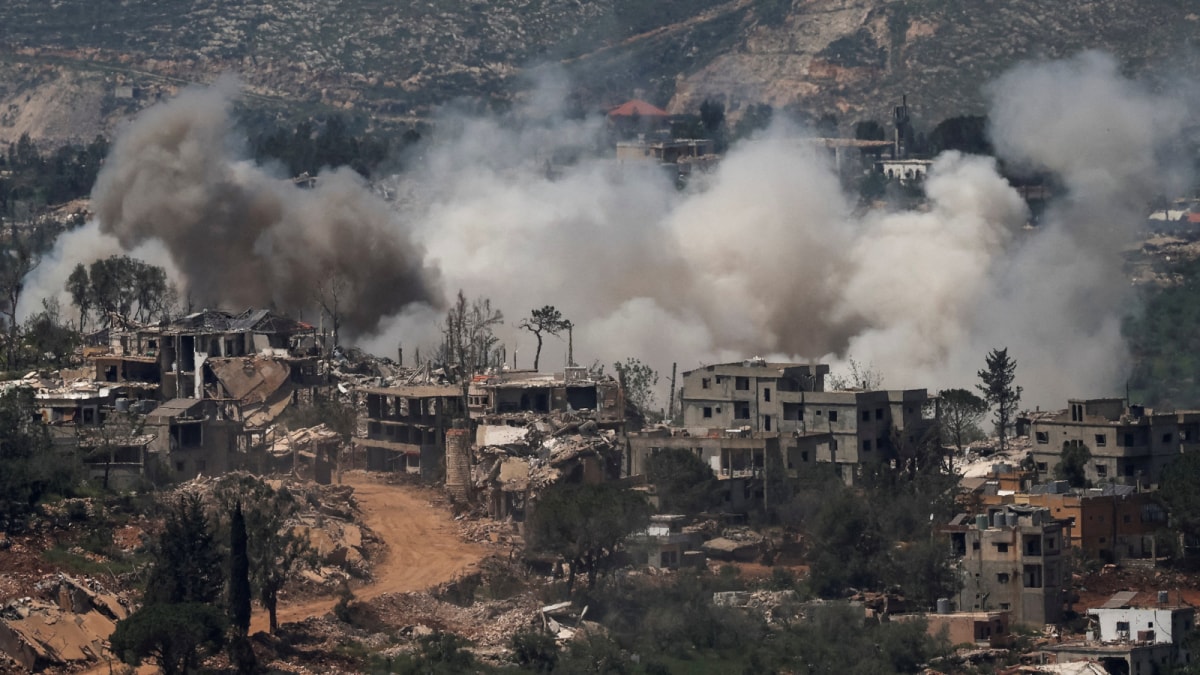


Lebanon has accused Israel of committing “ecocide” during military operations in southern Lebanon between October 2023 and December 2024, citing extensive environmental destruction. The claim, based on a report by Lebanon’s National Council for Scientific Research (CNRS-L), has revived global debate over whether severe environmental damage should be treated as an international crime.
The allegation comes amid ongoing regional tensions and a fragile ceasefire, with Lebanon’s environment minister describing the damage as large-scale, deliberate, and long-lasting.
What Ecocide Actually Means
The term ecocide refers to widespread or long-term damage to ecosystems caused by human activity.
It was first coined in 1970 by biologist Arthur W. Galston during the Vietnam War to describe environmental harm caused by herbicides like Agent Orange. The idea later gained international attention when it was referenced at the 1972 UN Conference on the Human Environment.
A commonly cited modern definition, proposed by experts in 2021, describes ecocide as unlawful or reckless acts committed with knowledge that they are likely to cause severe, widespread, or long-term environmental damage.
However, ecocide is not yet recognised as an international crime under global law, even though some countries have begun incorporating it into domestic legislation.
Why Lebanon Is Making the Accusation
Lebanon’s report claims that Israeli military operations caused extensive damage to forests, farmland, water systems, and air quality in southern Lebanon.
According to the findings, the destruction includes:
- Large-scale loss of forest cover and biodiversity zones
- Destruction of agricultural land, including orchards and staple crops
- Soil contamination in affected regions
- Air pollution from military activity and explosions
The report argues that this level of damage goes beyond collateral impact and constitutes systematic ecological destruction.
Lebanon’s environment minister described the consequences as affecting not just nature, but also food security, public health, livelihoods, and long-term national recovery.
How International Law Currently Treats Environmental Damage
International law does address environmental harm, but indirectly.
Under the Rome Statute of the International Criminal Court, it is a war crime to intentionally cause environmental damage that is widespread, long-term, and severe—especially when it affects civilian populations.
The Geneva Conventions also prohibit military actions that cause unnecessary environmental destruction. Meanwhile, the ENMOD Convention bans deliberate environmental modification for hostile purposes.
However, these laws primarily focus on human harm, not the environment as an independent victim.
Why Activists Want Ecocide Recognised as a Crime
Supporters of recognising ecocide argue that existing laws are not strong enough because:
- Environmental damage is only treated as a crime in wartime
- Prosecutions are extremely rare or nonexistent
- Accountability is difficult when states are not party to international courts
- Legal frameworks prioritise human impact over ecosystems themselves
This has led to growing pressure to formally criminalise ecocide at the international level.
Recent Global Legal Developments
In recent years, there has been movement toward stronger environmental protections:
- The International Union for Conservation of Nature (IUCN) endorsed ecocide as a crime in 2025
- The Council of Europe adopted a treaty in 2025 allowing prosecution of severe environmental destruction across borders
Despite these steps, ecocide still lacks universal recognition under international criminal law.
The Bigger Debate
The Lebanon–Israel dispute highlights a broader global question: should large-scale environmental destruction be treated like genocide or war crimes?
Supporters say yes—arguing ecosystems deserve legal protection in their own right. Critics say existing frameworks are sufficient but need better enforcement.
For now, ecocide remains a powerful political and legal concept—but not yet a globally enforceable crime.