
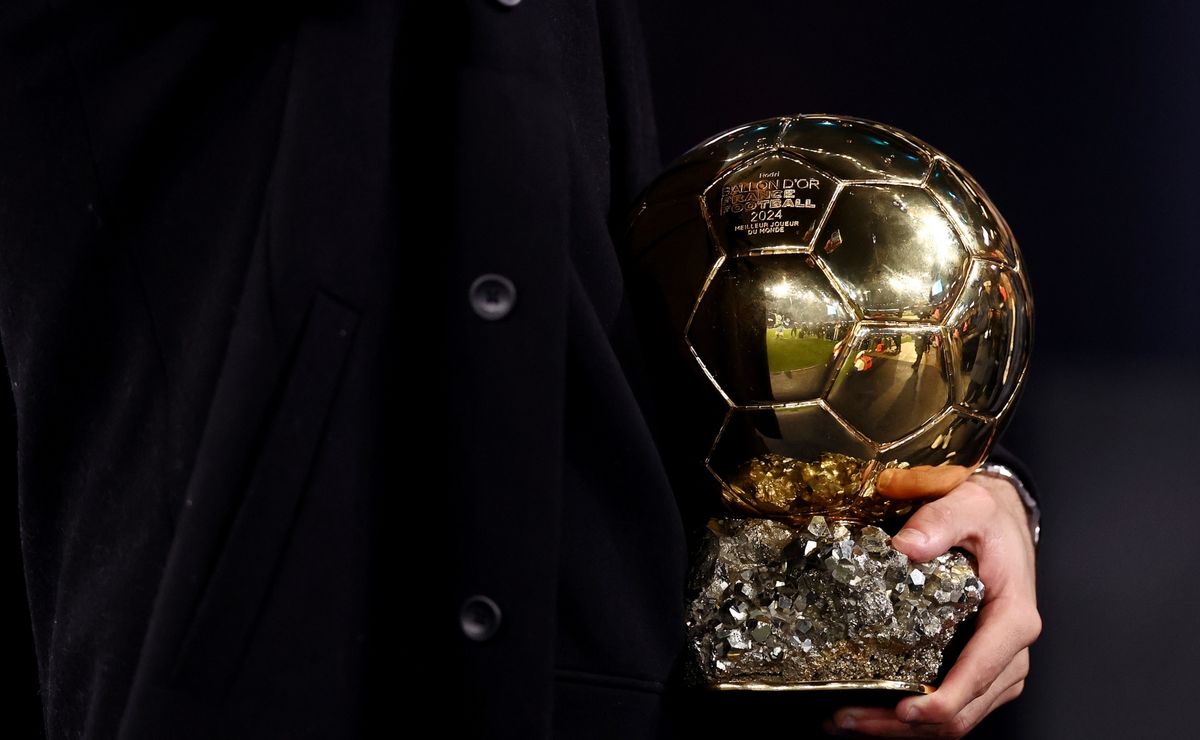


Since the Ballon d’Or opened its voting to players of all nationalities in 1995, only four of the seven World Cups have produced a Ballon d’Or winner from the champion team.
World Cup success has often influenced Ballon d’Or voting
A memorable World Cup campaign can significantly strengthen a player’s chances of winning the Ballon d’Or.
In 1998, Zinedine Zidane won the award after inspiring France to their first World Cup title. His two goals in the final against Brazil became one of the defining moments in football history.
Four years later, Ronaldo Nazário claimed the 2002 Ballon d’Or after finishing as the World Cup’s top scorer with eight goals. He also scored both goals in Brazil’s victory over Germany in the final.
The trend continued in 2006, when Fabio Cannavaro became one of the few defenders to win the Ballon d’Or after captaining Italy to World Cup glory.
More recently, Lionel Messi won his record-extending eighth Ballon d’Or after leading Argentina to the 2022 FIFA World Cup title. Messi also received the tournament’s Golden Ball for his outstanding performances in Qatar.
When club performances mattered more than the World Cup
Despite the importance of the World Cup, it has not always determined the Ballon d’Or winner.
In 2010, Spain lifted the World Cup in South Africa. However, Lionel Messi won the Ballon d’Or after another exceptional season with Barcelona. Spain’s votes were largely divided between Andrés Iniesta and Xavi, reducing the chances of either player finishing first.
A similar situation unfolded in 2014. Germany won the World Cup in Brazil, but Cristiano Ronaldo secured the Ballon d’Or thanks to a remarkable season with Real Madrid, where he played a key role in winning the UEFA Champions League.
In 2018, Luka Modrić ended the decade-long dominance of Messi and Ronaldo. Although Croatia finished runners-up at the World Cup, Modrić combined his outstanding international performances with another Champions League title for Real Madrid, giving him the edge over France’s World Cup-winning stars.
Why World Cup winners don’t always win the Ballon d’Or
One of the biggest reasons is vote splitting.
When a national team wins the World Cup through a collective effort, several players receive recognition. As a result, votes are divided among multiple teammates instead of concentrating on one standout performer.
At the same time, club football now carries greater weight than ever before.
Players compete across domestic leagues, continental competitions and cup tournaments for nearly ten months every season. The UEFA Champions League, in particular, provides another major stage where elite players can strengthen their Ballon d’Or credentials.
Because of this, voters increasingly judge players based on their performances over an entire season rather than a single month-long tournament.
Can the 2026 FIFA World Cup decide the next Ballon d’Or?
The upcoming 2026 FIFA World Cup final could have a major influence on this year’s Ballon d’Or race, especially if one player delivers a memorable performance on football’s biggest stage.
However, history suggests that winning the World Cup alone may not be enough. Club achievements, consistency throughout the season and individual statistics will also play a crucial role when voters cast their ballots.
While the World Cup remains one of the most important factors in Ballon d’Or voting, it is no longer the only measure of football’s greatest individual prize.