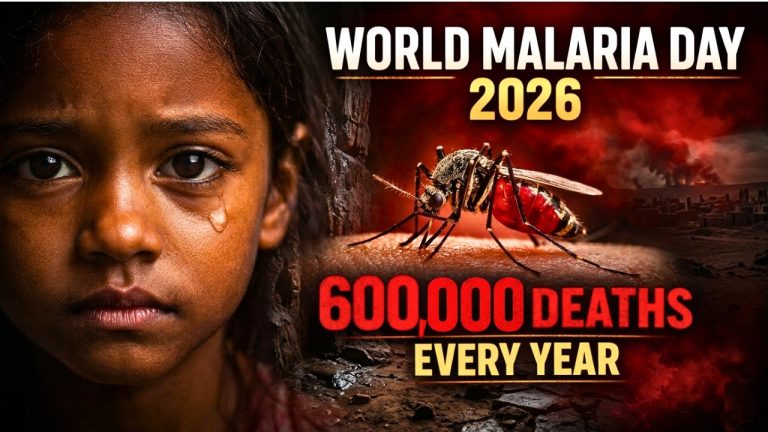
NEW DELHI – Today, April 25, 2026, marks World Malaria Day, a global initiative established by the WHO to accelerate the fight against one of the world’s oldest and deadliest diseases. While the journey toward a malaria-free world has seen historic milestones—including the rollout of the RTS,S vaccine in 25 countries—the battle remains critical as 2024 saw a slight uptick in global cases to 282 million.
The 2026 Theme
This year’s theme is: “Driven to End Malaria: Now We Can. Now We Must.” The campaign emphasizes that with current scientific breakthroughs and next-generation insecticide-treated nets (now 84% of all new distributions), the tools for eradication are finally in our hands.
Recognizing the Symptoms
Malaria symptoms typically appear 7 to 30 days after an infective bite. Early detection is the difference between a 5-day recovery and a life-threatening emergency.
- Primary Signs: High fever, intense shivering (chills), and profuse sweating.
- Physical Ailments: Severe headache, muscle aches, and joint pain.
- Gastrointestinal Distress: Nausea, vomiting, and diarrhea.
- Severe Warning Signs: Jaundice (yellowing of eyes/skin), anemia, convulsions, or respiratory distress.
The Diagnostic Revolution: Expert Insights
Experts are shifting focus from “guesswork” to Precision Management.
- Asymptomatic Reservoirs: Dr. Praveen K. Bharti (ICMR-NIRTH) warns that traditional tests often miss “silent” infections. Molecular point-of-care tests are now the key to India’s 2030 elimination goal.
- Drug Resistance: Dr. Aakash Shah (Neuberg Diagnostics) emphasizes that accurate lab diagnosis prevents the misuse of ACT (Artemisinin-based Combination Therapy), which otherwise “trains” parasites to become drug-resistant.
- Invisible Strains: New HRP2-deleted strains of parasites are now “invisible” to standard rapid tests, making PCR and high-sensitivity microscopy vital.
Prevention and Control
- The “Three L’s”: Use Long-sleeved clothes, Long-lasting insecticide nets, and Lotions (repellents).
- Stagnant Water: Drain even small amounts of standing water (flower pots, tires, coolers) where mosquitoes breed.
- Vaccination: Ensure eligible children receive the malaria vaccine series as per national health guidelines.
Treatment Protocol
- ACTs: Artemisinin-based Combination Therapies remain the gold standard.
- Pregnancy Care: Tailored treatments (Quinine + Clindamycin) are required for the first trimester.
- Relapse Prevention: For P. vivax strains, specific liver-stage treatment is necessary to prevent the disease from returning months later.