
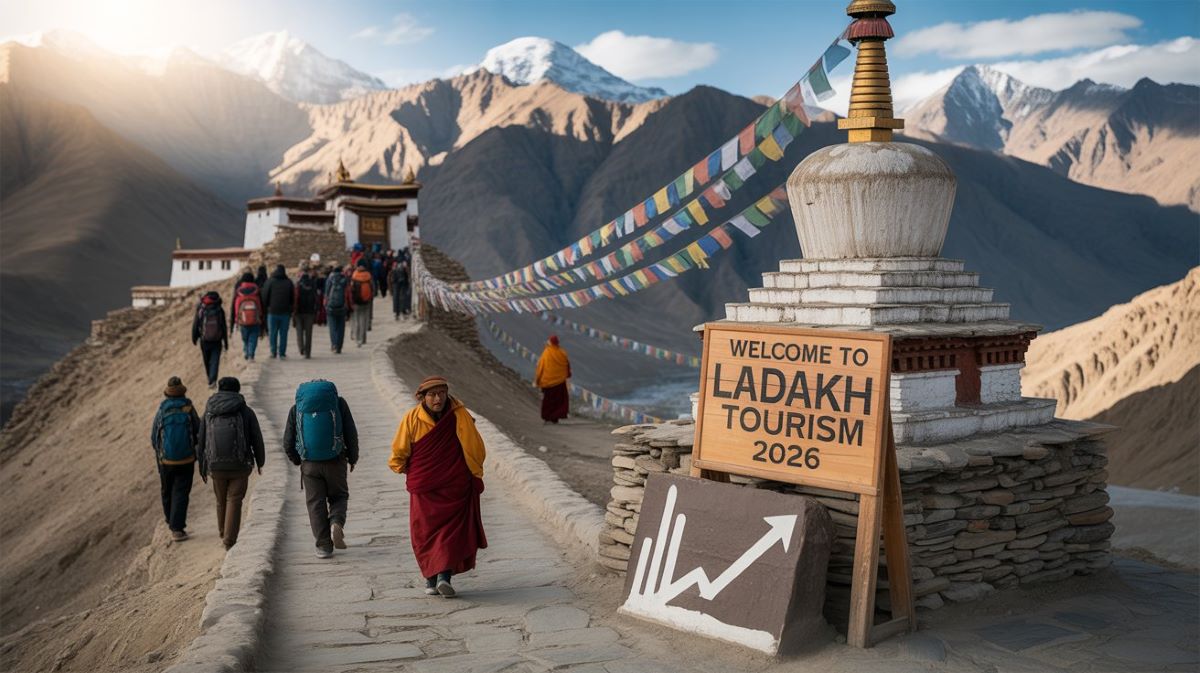


In a major boost to Himalayan tourism, the Ladakh administration has granted official ‘industry’ status to the hospitality sector. Approved by Lieutenant Governor VK Saxena, the reform will come into effect from June 1, 2026, and is expected to transform tourism infrastructure across Leh and Kargil.
The move is being seen as a significant step towards making Ladakh a more sustainable, affordable, and tourist-friendly destination while supporting local businesses and employment.
What Does ‘Industry’ Status Mean For Ladakh Hotels?
Under the new policy, hotels, guesthouses, homestays, and tourism-related establishments in Ladakh will now receive the same benefits offered to industrial units.
This primarily includes reduced utility costs, easier access to loans, and eligibility for government support schemes.
According to reports, Ladakh currently has around 1,257 registered hotels and guesthouses spread across Leh and Kargil.
Electricity And Water Costs To Reduce
One of the biggest advantages for hotel owners will be lower electricity and water tariffs.
Key Changes Include:
- Electricity charges may reduce from ₹5.49 per unit to ₹4.10 per unit
- Water tariffs could drop from ₹46 per kilolitre to ₹26 per kilolitre
These reduced operational expenses are expected to help hospitality businesses improve services and possibly offer more competitive room prices to travellers.
Better Hotels And Improved Tourist Experience
Lower operational costs could encourage hotel owners to reinvest in infrastructure upgrades and better facilities.
Travellers visiting Ladakh may benefit from:
- Improved heating systems during cold nights
- Better water management
- Enhanced internet connectivity
- Improved cleanliness and waste management
- More eco-friendly accommodations
The policy also supports the development of sustainable tourism practices in ecologically sensitive regions.
Big Boost For Homestays And Local Entrepreneurs
Ladakh has become especially popular among travellers seeking authentic mountain experiences through homestays and boutique properties.
The new industry status is expected to benefit local entrepreneurs by offering:
- Easier access to concessional bank loans
- Government subsidies
- Financial support for property upgrades
- Incentives for eco-tourism projects
Officials believe this will create more employment opportunities for local youth while preserving Ladakh’s cultural identity.
Why This Matters For Tourists Visiting Ladakh
Tourism in Ladakh is highly seasonal because harsh winters force many hotels to shut down for months.
With reduced expenses and better financial support, more accommodations may now remain operational for longer periods, potentially extending the tourism season into spring and autumn.
This means tourists could enjoy:
- Less crowded travel periods
- More accommodation options
- Better travel experiences outside peak season
- Improved safety and hospitality standards
Popular Destinations Likely To Benefit
Tourist hotspots across Ladakh are expected to see major improvements under the new hospitality framework.
Key Areas Include:
- Leh
- Kargil
- Pangong Tso
- Nubra Valley
- Tso Moriri
- Magnetic Hill
- Khardung La
Improved infrastructure in these destinations could further strengthen Ladakh’s position as one of India’s most sought-after travel destinations.
A Major Step Towards Sustainable Himalayan Tourism
The Ladakh administration says the decision is aimed at balancing tourism growth with environmental sustainability and regional development.
By supporting local businesses and reducing operational burdens, the government hopes to create a more resilient tourism economy that benefits both visitors and residents alike.
For travellers planning a Himalayan getaway, 2026 may become one of the best times to experience Ladakh with better facilities, improved stays, and a stronger focus on sustainable tourism.