
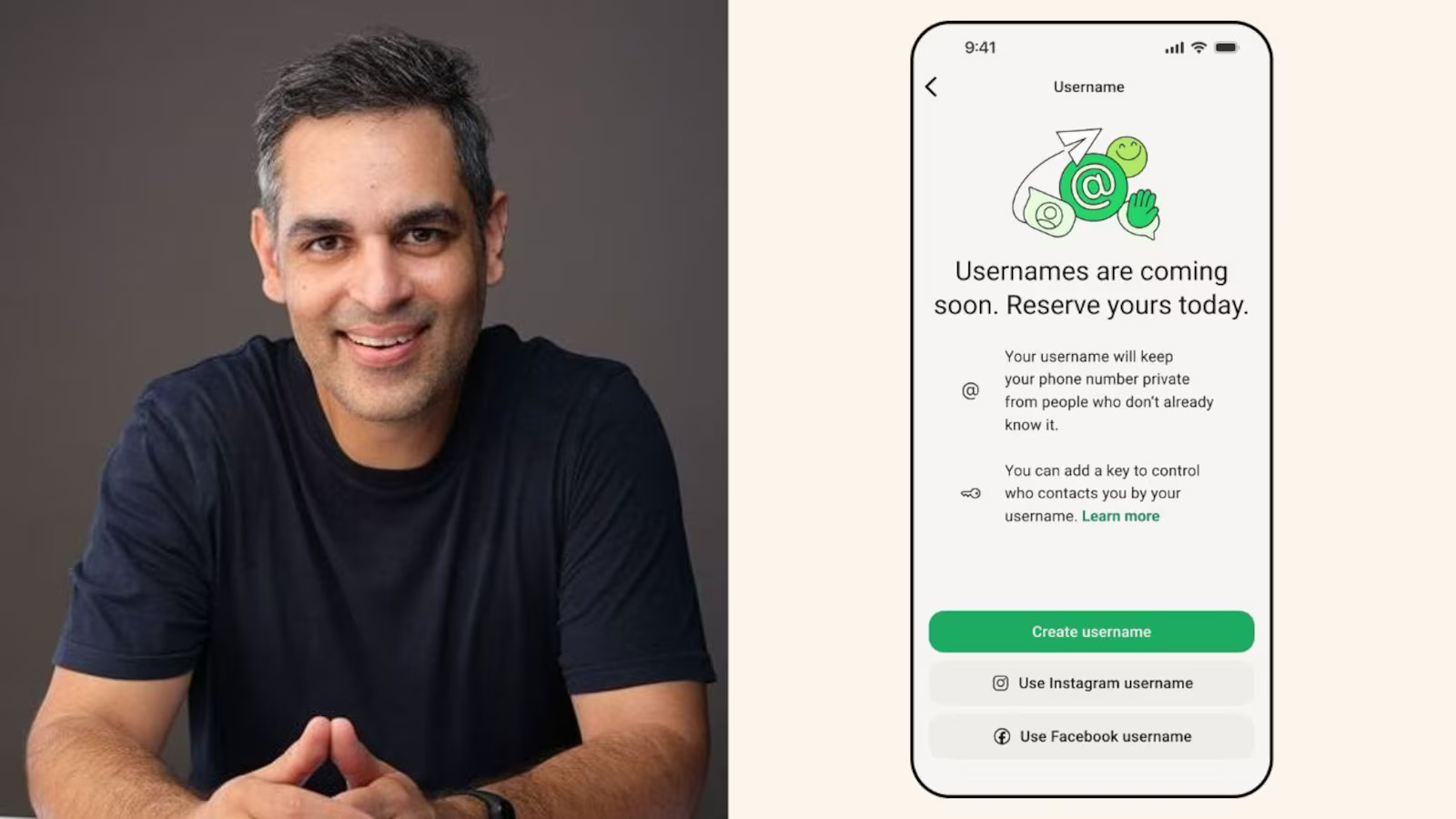


WhatsApp is preparing to introduce one of its most significant privacy features in years by allowing users to create usernames instead of sharing their phone numbers while connecting with others. The upcoming update is designed to offer an additional layer of privacy, especially when interacting with people outside a user’s contact list.
According to Meta, the feature has been developed to protect users’ phone numbers by enabling conversations through unique usernames. Each username will have to follow WhatsApp’s naming guidelines and must be unique across the platform.
While the feature has been welcomed as a major privacy enhancement, it has also raised concerns about the possibility of impersonation scams, particularly in countries like India where online fraud remains a growing problem.
Ankur Warikoo warns of impersonation risks
Entrepreneur and content creator Ankur Warikoo was among the first prominent voices to highlight the potential dangers of the feature. In a post on X, he cautioned that fraudsters could create usernames closely resembling those of public figures and use them to deceive users into sending money or joining fraudulent investment groups.
“In a country such as India, this could be a disaster if the right anti-abuse systems are not set up by WhatsApp,” Warikoo wrote.
He explained that scammers could register usernames such as “warikoo,” “awarikoo,” “ankur_warikoo,” or similar variations to appear genuine while messaging unsuspecting users.
Warikoo’s concerns stem from personal experience. He has previously fought a legal battle against Meta over AI-generated scam advertisements that allegedly used his likeness without permission to lure people into fraudulent WhatsApp investment groups.
“I have fought a legal case against Meta’s lack of attempt to bring down AI-generated ads showing my face, luring people into investment WhatsApp groups. I understand how massive this scam is and how easy it is in our country to execute it. So forgive me if, from a public figure’s standpoint, this feature raises some serious concerns,” he added.
Dhruv Rathee questions Meta’s record on tackling scams
YouTuber Dhruv Rathee also criticised Meta’s track record in dealing with fraudulent content across its platforms.
“They don’t care. Team Zuckerberg’s only goal is to extract as much money as possible. They willingly let scams and fraud ads run on their other platforms. Now they’ll probably let the same happen on WhatsApp,” Rathee commented.
His remarks reflect broader concerns over whether Meta has adequate systems in place to prevent misuse of the upcoming username feature.
Paytm founder hints at verification concerns
Paytm founder Vijay Shekhar Sharma also weighed in on the discussion, suggesting that impersonation could become a challenge without verified identities.
“Soon you will have verified username on WhatsApp, and then unverified similar-sounding usernames which in turn will…,” Sharma wrote, hinting at the confusion that could arise between verified and fake accounts.
Privacy boost comes with security questions
The username feature is expected to allow WhatsApp users to communicate without revealing their phone numbers, making interactions with businesses, communities and new contacts more private.
However, cybersecurity concerns have quickly accompanied the announcement. Critics argue that while the update strengthens user privacy, it could also provide fraudsters with new opportunities unless WhatsApp introduces robust verification mechanisms, impersonation detection systems and stronger reporting tools.
Several social media users echoed similar concerns, urging Meta to implement comprehensive anti-abuse safeguards before rolling out usernames globally.
One user warned that although the feature is being introduced in the name of privacy, it could become “a haven for scammers” in India if adequate protections are not accompany the launch.
Industry observers believe the success of WhatsApp’s username system will ultimately depend on how effectively Meta balances privacy with user safety, ensuring that genuine users can benefit from greater anonymity without creating new opportunities for online fraud.