
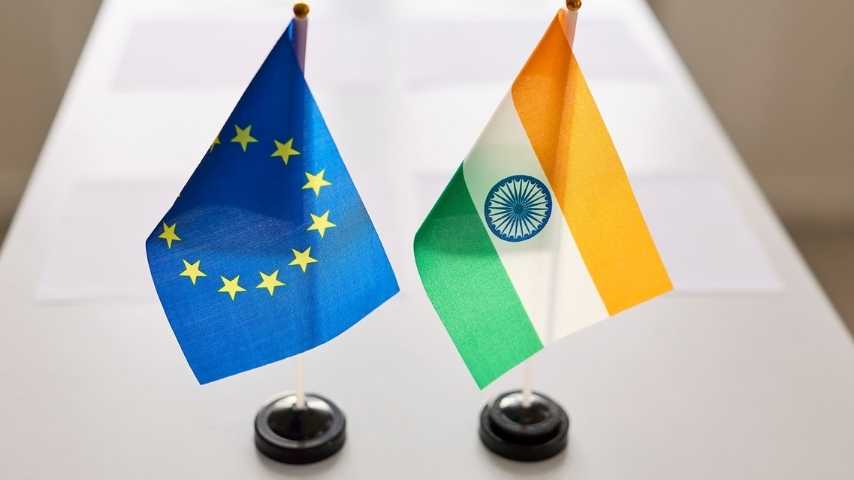


After nearly two decades of intermittent negotiations, the long-pending India-European Union Free Trade Agreement (FTA) is finally approaching the finish line. According to European Union Ambassador to India Herve Delphin, the landmark trade pact could be signed by the end of 2026 and come into force in early 2027.
In an exclusive interview with NDTV, Ambassador Delphin said negotiations have entered their final phase, with both sides currently working on legal vetting and technical annexes, including complex issues such as water management.
“We are on a good track,” the ambassador said, expressing confidence that the remaining formalities can be completed in time for the agreement to be signed later this year.
Signing Ceremony May Depend On Leaders’ Schedules
While officials are optimistic about concluding the deal in 2026, Delphin noted that the exact timing of the signing ceremony could depend on Prime Minister Narendra Modi’s packed international calendar, which includes the G20 Summit and other high-level engagements.
The ambassador said both India and the European Union are keen to mark the occasion with a high-profile event.
“We want to celebrate it in style,” he said, drawing parallels with the symbolic significance of the European Union leadership attending India’s Republic Day celebrations as chief guests earlier this year.
‘FTA 2.0’ Began In 2022
Negotiations on the India-EU Free Trade Agreement have stretched for nearly 19 years, prompting questions about why the deal is finally nearing completion.
Delphin rejected suggestions that recent global tariff disputes or trade tensions forced India and the EU closer together.
Instead, he described the current negotiations as “FTA 2.0”, a fresh phase that began in 2022 after Prime Minister Narendra Modi and European Commission President Ursula von der Leyen agreed during a virtual summit that the talks needed a complete restart.
According to the ambassador, the renewed negotiations were driven by long-term strategic interests rather than short-term geopolitical developments.
Shared Interests And Strategic Trust
The ambassador said India and the European Union increasingly view each other as natural strategic partners because their economies complement one another and both support a rules-based international order.
He argued that successive global disruptions—including the COVID-19 pandemic, the Gulf conflict, Russia’s invasion of Ukraine and changing US trade policies—have reinforced the importance of dependable partnerships.
“In this environment, the EU and India offer each other stability, predictability and scale,” Delphin said, adding that these qualities have become increasingly valuable as global supply chains undergo major changes.
European Companies Expanding Presence In India
Highlighting the growing economic relationship, Delphin said around 6,000 European companies currently operate in India.
These firms account for roughly 6% of India’s export value, reflecting Europe’s deep commercial engagement with the country.
He added that European businesses are increasingly viewing India not just as a consumer market but also as a major manufacturing hub, particularly as companies seek to diversify supply chains and reduce dependence on China.
An Investment Protection Agreement, being negotiated alongside the FTA, is expected to further strengthen investor confidence and encourage long-term investments.
FTA Part Of A Broader Strategic Partnership
The ambassador stressed that the Free Trade Agreement represents only one pillar of the wider India-EU relationship.
Describing it as “the big tree in a big forest,” he said the agreement sits within a much broader strategic partnership encompassing trade, connectivity, technology, security and investment cooperation.
However, he acknowledged that the FTA carries significant symbolic importance.
“This symbol and coming together in substance reflect the trust that is really at the core of our relationship,” Delphin said.
Agreement Could Take Effect In Early 2027
With legal scrutiny now underway and political commitment evident on both sides, officials are targeting a formal signing before the end of 2026.
One possibility under discussion is a signing ceremony during a visit by Prime Minister Narendra Modi to Brussels later this year.
If completed on schedule, the India-EU Free Trade Agreement is expected to come into force in early 2027, marking one of India’s most significant trade agreements with a major economic bloc.