
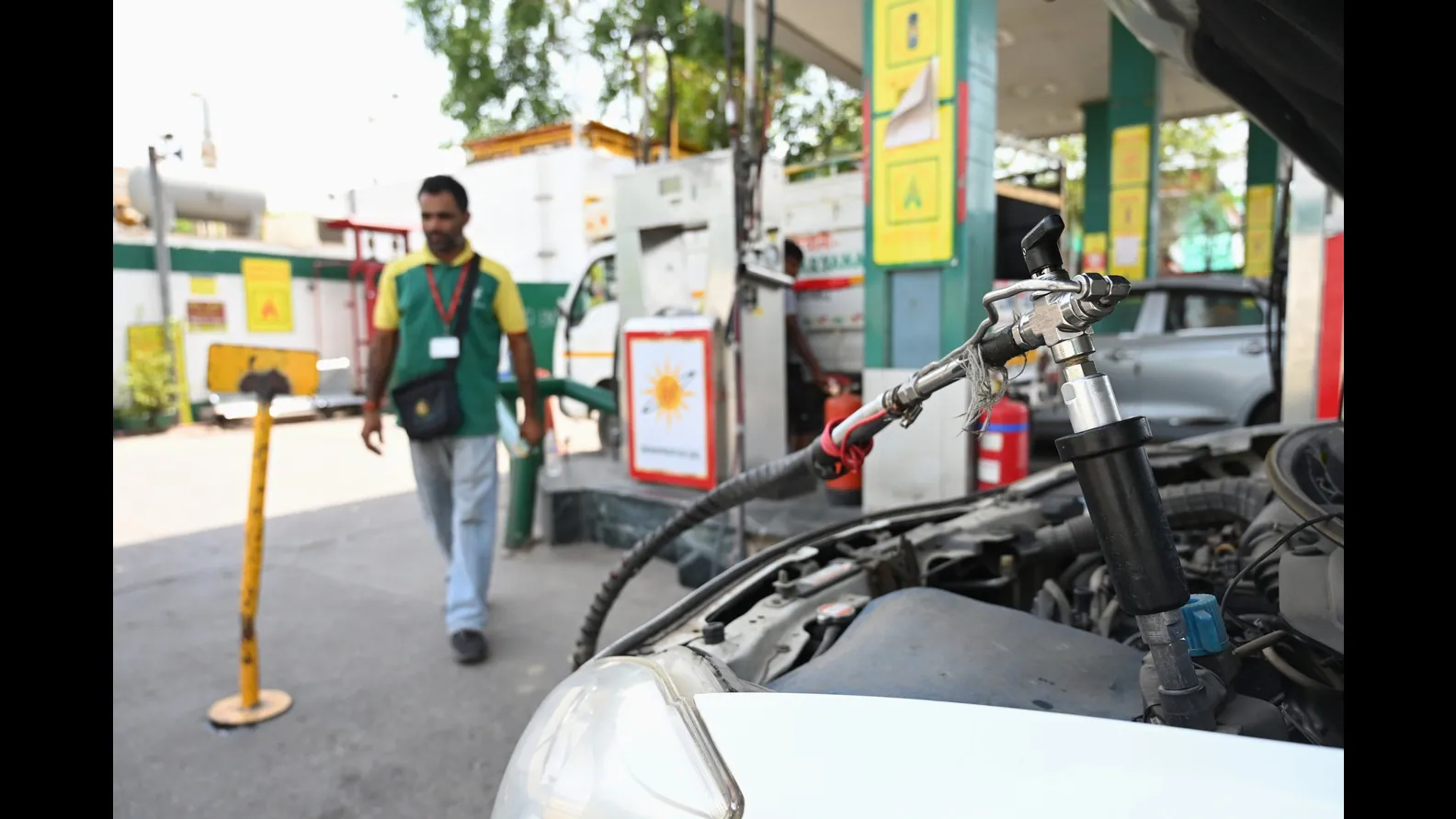

 announced another steep increase in Compressed Natural Gas (CNG) rates on Tuesday morning)
The financial burden on daily commuters continues to expand rapidly. Indraprastha Gas Limited (IGL) announced another steep increase in Compressed Natural Gas (CNG) rates on Tuesday morning. Consequently, this latest adjustment marks the fourth upward revision in CNG prices within a brief span of less than two weeks.
The newest price cycle added ₹2 per kg to the existing retail rate in the National Capital Region (NCR). This aggressive shift closely follows a separate ₹1 per kg increase implemented just days prior. The successive revisions are quickly impacting regular commuters, auto drivers, and commercial cab operators who choose clean energy vehicles to keep their operating costs manageable.
Breakdown of Revised Fuel Rates Across Metro Cities
The sudden wave of energy price revisions is not limited to natural gas. State-run oil marketing companies also executed a massive upward revision for liquid transport fuels. Due to these changes, petrol successfully breached the significant ₹100 per litre mark in the national capital.
| Fuel Type | Delhi Price | Mumbai Price | Kolkata Price | Chennai Price |
| Petrol (per litre) | ₹102.12 | ₹111.21 | ₹113.51 | ₹107.77 |
| Diesel (per litre) | ₹95.20 | ₹97.83 | ₹99.82 | ₹99.55 |
| CNG (per kg) | ₹83.09 | ₹81.00 | — | — |
Note: CNG prices across surrounding NCR territories have also adjusted upwards. Rates in Noida, Greater Noida, and Ghaziabad have officially climbed to ₹91.70 per kg, while prices in Gurugram reached ₹88.12 per kg.
Global Geopolitical Friction Drives Domestic Energy Costs
Domestic retail fuel rates in India remain intrinsically tied to international crude benchmarks, currency exchange variations, and local structure levies. The primary cause behind this sudden cluster of hikes points directly to intense, ongoing geopolitical conflicts in the Middle East.
Timeline of Recent Liquid Fuel Adjustments:
• May 15: Initial steep increase of ₹3.00 per litre for both fuels
• May 19: Subtle secondary upward revision of 90 paise per litre
• May 23: Marginal rise of 87 paise for petrol and 91 paise for diesel
• May 25: Massive increase of ₹2.61 for petrol and ₹2.71 for diesel
Before the outbreak of recent international hostilities, global crude oil sat comfortably at a stable baseline of roughly $70 per barrel. However, consistent supply disruptions along critical international shipping routes quickly pushed those trading figures close to the stressful $100 per barrel threshold. Because India depends heavily on international imports to satisfy roughly 85% of its crude requirements, local supply companies are finding it impossible to fully insulate consumers from these global shocks.
Logistics Expenses Set to Inflate Retail Markets
The consecutive increases in essential commercial transport fuels like diesel and CNG will inevitably trigger a cascading effect across the domestic economy. Freight carriers and heavy logistics firms are already altering their base tariffs to handle the heightened operational costs.
As road transportation expenses increase, ordinary citizens should prepare for secondary inflation hitting everyday necessities, including fresh produce, dairy goods, and packaged fast-moving consumer goods.
To help ease the sudden transition, the central government previously absorbed a significant revenue impact of nearly ₹14,000 crore by executing a strategic excise duty reduction of ₹10 per litre. According to Sujata Sharma, Joint Secretary in the Ministry of Petroleum and Natural Gas, that critical buffer was deployed to safeguard public interest when international markets first destabilized. However, as global supply lines face prolonged pressure, retail distributors are forced to align local prices with modern market realities.