
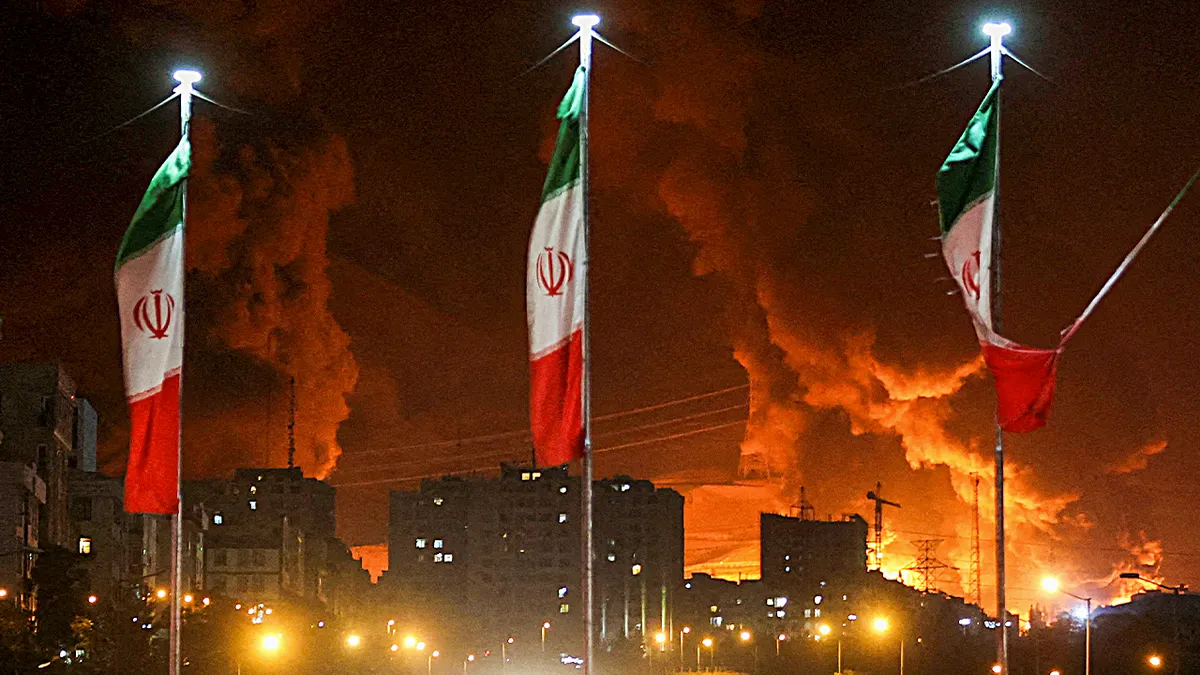


New Delhi: The United Arab Emirates has accused Iran of launching its first direct attack since a fragile ceasefire came into effect in early April, raising fears of renewed escalation in the region.
According to the UAE Defence Ministry, Iran fired four cruise missiles, three of which were intercepted, while the fourth fell into the sea. Separately, a drone strike reportedly sparked a fire at a key oil facility in Fujairah, a strategic emirate on the Gulf of Oman.
Shipping Routes Under Fire as Strait Tensions Rise
The attacks come amid heightened tensions around the Strait of Hormuz—a vital global energy corridor that has remained largely restricted since the outbreak of the US-Israel conflict with Iran in late February.
The United States has recently intensified efforts to reopen the strait, with two American-flagged merchant ships successfully transiting the waterway under naval protection. The move is part of a broader initiative aimed at restoring commercial shipping and easing global economic pressures.
However, Iran has warned that such actions violate the ceasefire and has threatened to target any foreign military presence in the region.
Fires at Sea, Vessels Hit Amid Escalation
The British military reported that two cargo vessels were ablaze off the UAE coast, while South Korean authorities confirmed an explosion and fire aboard a vessel operating in the strait. No casualties have been reported so far, but the incidents have heightened concerns over maritime safety.
The UAE also alleged that a tanker linked to its national oil operations was targeted by Iranian drones while navigating the strait.
Global Oil Supply at Risk
The Strait of Hormuz, which lies between Iran and Oman, is one of the world’s most critical oil transit routes. Its disruption has already triggered a surge in global fuel prices and raised alarm across energy-dependent economies in Europe and Asia.
To mitigate risks, the US-led Joint Maritime Information Center has advised vessels to use alternative routes through Omani waters and warned of potential hazards, including uncharted sea mines and increased military activity.
Diplomatic Uncertainty Clouds Ceasefire
The latest flare-up has cast doubt on the durability of the ceasefire that has held for over three weeks. Iran has reiterated that any passage through the strait must be coordinated with its military, while US officials have warned that obstruction attempts will be dealt with forcefully.
Meanwhile, Iran has proposed a framework to end the conflict, demanding the lifting of sanctions, withdrawal of US forces, and an end to hostilities. However, key issues such as its nuclear programme remain unresolved, complicating diplomatic efforts.