
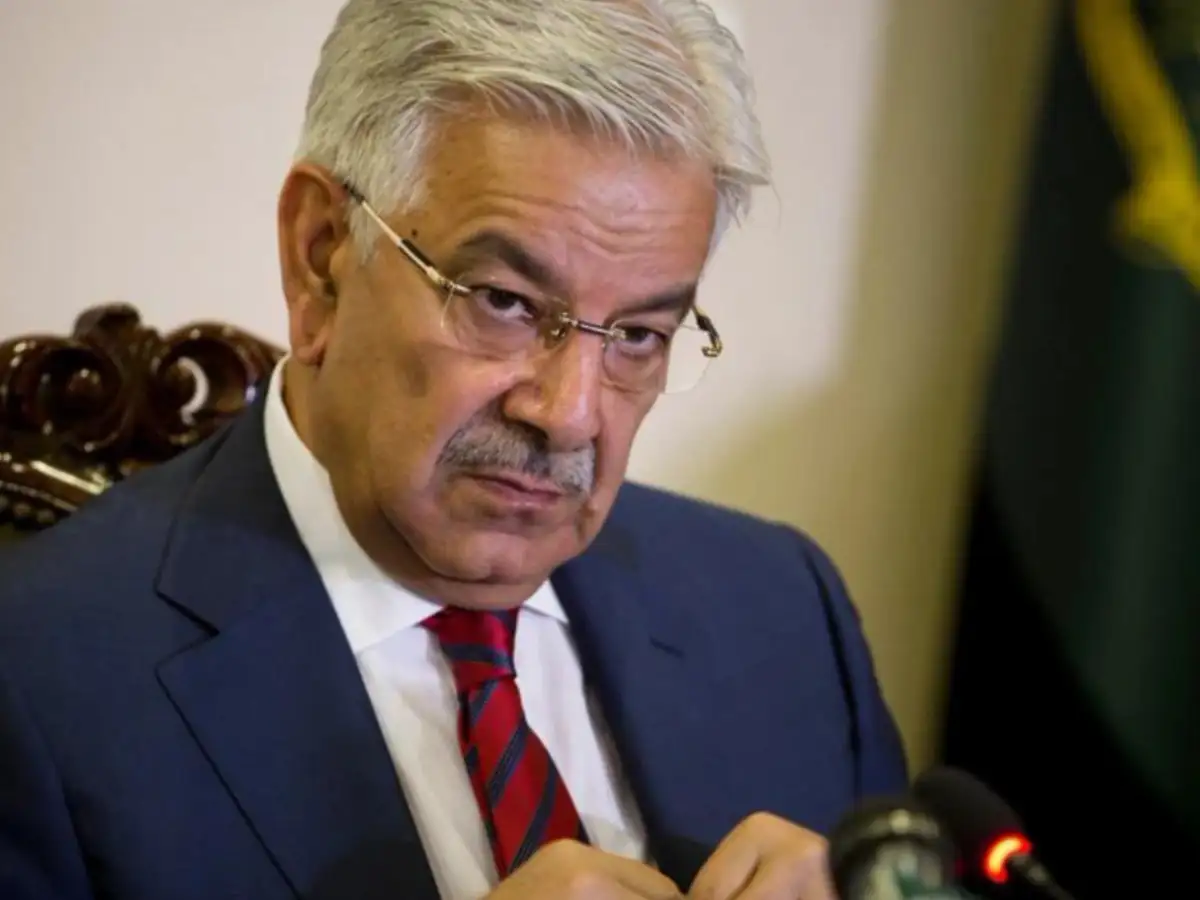


Islamabad: Pakistan Defence Minister Khawaja Asif has issued a fresh warning against India, claiming that Islamabad could consider military action if it believes its water security is under threat. His remarks come at a time when Pakistan is grappling with a worsening domestic water crisis, with experts and regional leaders increasingly pointing to decades of poor planning and mismanagement as the primary cause.
Speaking to ARY News on Saturday, Asif described water as a vital component of Pakistan’s national security and said the country would not hesitate to respond if it perceived a serious threat from India.
“The moment we feel that our national security, and water is part of our national security, is being threatened, we will go to war against India. Definitely,” Asif said during the interview.
He further claimed that military action could become an option if Pakistan found evidence that India was moving at what he described as an “alarming speed” to interfere with water flows destined for Pakistan.
Remarks Come After Suspension Of Indus Waters Treaty
The comments come months after India suspended its participation in the 1960 Indus Waters Treaty following the deadly terror attack in Pahalgam in April 2025 that claimed 26 lives.
New Delhi has maintained that the treaty will remain suspended until Pakistan takes credible and verifiable action against cross-border terrorism and terror infrastructure operating from its territory.
The Indus Waters Treaty, brokered by the World Bank, has long governed water-sharing arrangements between the two countries. Under the agreement, Pakistan has access to a significant share of the waters from the Indus river system, which supports much of its agricultural economy.
Asif Accuses India Of ‘Weaponising Water’
During the interview, Asif accused India of using water as a political tool and alleged that New Delhi was manipulating the flow of rivers, particularly the Chenab, while withholding critical hydrological information.
He claimed India was “weaponising water” and creating uncertainty for Pakistan’s agricultural sector.
However, the defence minister’s allegations were accompanied by an admission that he lacked updated information regarding recent developments. While referring to earlier inspection activities carried out by Pakistani teams, Asif acknowledged that he did not possess current details about what had transpired over the past year.
His remarks have drawn attention to the broader challenges facing Pakistan’s water management system, with critics arguing that the country’s internal issues have played a far greater role in creating the present crisis.
Pakistan Faces Growing Internal Water Emergency
Even as political leaders focus attention on India, Pakistan is dealing with an increasingly severe water shortage that is affecting millions of people across the country.
The crisis is particularly acute in Sindh and Balochistan, where nearly one-third of the population is experiencing water-related difficulties.
Official figures from Sindh’s irrigation department paint a concerning picture of the state’s water infrastructure.
Data shows that the North West Canal is operating with a water deficit of more than 64 per cent. The Rice Canal is facing a shortfall of approximately 38 per cent, while the Dadu Canal has recorded an alarming deficit of 82 per cent.
Water levels at the strategically important Sukkur Barrage have also continued to decline, further intensifying concerns among farmers and local communities dependent on irrigation.
Local Leaders Warn Of Economic Consequences
Regional leaders and agricultural stakeholders have warned that continued shortages could have devastating economic consequences, particularly for farming communities already struggling with rising costs and unpredictable weather conditions.
Several local representatives have described the situation as an “economic massacre,” arguing that unresolved disputes over water distribution and inadequate infrastructure maintenance have worsened the crisis.
Experts have repeatedly stressed that addressing Pakistan’s long-term water challenges will require major investments in storage facilities, canal modernisation, conservation measures and more efficient water management practices.
Water Security Emerges As Major Political Issue
With agricultural production heavily dependent on river water, water security has increasingly become one of Pakistan’s most sensitive political and strategic issues.
As tensions with India remain high following the suspension of the Indus Waters Treaty, the debate over water resources is expected to remain a key issue in bilateral relations.
However, analysts note that alongside external concerns, Pakistan faces growing pressure to address the structural weaknesses within its own water management system to prevent further shortages and economic disruption in the years ahead.